

Amul’s High-Protein Strategy | Tackling India’s Nutrition Gap
Over the past few months, Amul has quietly rolled out a bunch of high-protein products — from protein-packed lassi to protein coffee, each with at least 10 grams of protein. Health-conscious folks are loving it, especially since good, affordable sources of protein can be hard to come by in India.
But things really took off this weekend when Amul launched… a high protein kulfi. Yes, you read that right. A traditional Indian frozen dessert — now with gains.
Social media exploded. People were thrilled at the idea of getting their daily protein fix through a sweet treat. But of course, the internet being the internet, it quickly spiraled into something far more ridiculous — and way more fun.
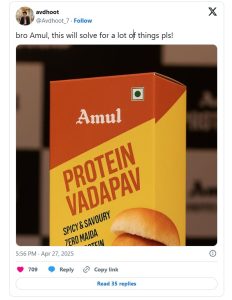
The Protein Meme Frenzy
Social media users ran wild with the trend, pitching everything from protein-loaded snacks to completely outlandish product ideas — all powered by Amul. Among the best (and most absurd) ideas:
-
Amul Protein Samosas (with shredded paneer for extra strength)
-
Protein Vada Pav — because why not bulk during your commute?
-
Protein Cigarettes (no explanation needed)
-
And the fan favorite: Amul Protein Hair Serum, for “strong roots, strong biceps”

One user posted, “Amul is single-handedly making India fitter, leaner, and stronger – 10g at a time!” — alongside an AI-generated image of a samosa with six-pack abs.
Even smokers and bald men found it hard to resist the humor.
Why Amul’s Protein Strategy Might Actually Matter
Underneath the humor, though, there’s a real issue: India’s diets are seriously lacking in protein.
A nationwide survey called PRODIGY found that 73% of urban Indians don’t get enough protein, and 90% fall short of daily recommended levels. The Indian Council of Medical Research (ICMR) suggests adults should consume 0.8 to 1 gram of protein per kilogram of body weight, but the average Indian is only getting around 0.6 grams.
So, what’s behind the shortfall?
-
Many Indian meals are heavy on carbs and light on protein
-
Economic barriers limit access to protein-rich foods
-
Vegetarian diets, while healthy in many ways, often lack complete proteins
-
A lot of people just don’t realize how important protein really is
So while the memes are having their moment, Amul’s move is actually addressing something important. It’s making protein easier to access and maybe even a little more fun.
Because let’s face it, if a kulfi can get you closer to your daily protein goals, we’re all winning.