
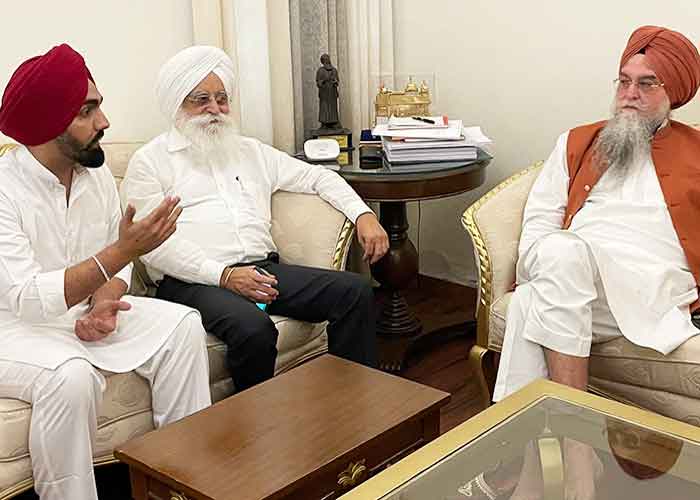
Punjab Vidhan Sabha Speaker S. Kultar Singh Sandhwan convened a meeting with a group of professors and renowned Punjabi actor Ammy Virk to gather suggestions for commemorating the 350th martyrdom anniversary of Sri Guru Tegh Bahadur Ji.
During the session, participants proposed a visionary roadmap to honour the legacy of the ninth Sikh Guru, whose extraordinary sacrifice for religious liberty, inclusiveness, and human dignity continues to inspire people worldwide.
They suggested that the event, titled “Sri Guru Tegh Bahadur Ji 350th Centenary: The Shield of Humanity,” should integrate cultural preservation, immersive technology, and global outreach to share Guru Ji’s message with the world. A key outcome of this initiative would be the publication of a landmark reference book and the organization of international events that present Guru Ji as a symbol of compassion, interfaith dialogue, and enduring moral courage.
The professors emphasized using modern mediums—like virtual museums, VR experiences, music, films, and academic forums—to disseminate Guru Ji’s teachings globally. They advocated for preserving and digitally archiving historical sites, art, and literature related to Guru Ji while creating a comprehensive educational and cultural resource accessible to international audiences.
They proposed including a Virtual Museum of Religious Pluralism, complete with interactive 3D walkthroughs enhanced by AI, multilingual narration, and digitally recreated scenes from Guru Ji’s life, journeys, dialogues, martyrdom, and legacy. These would be linked through QR codes and digital storytelling techniques.
Additionally, immersive cinematic productions—such as animated shorts and VR documentaries—should be developed to depict Guru Ji’s journey toward martyrdom. The suggestions also included launching a Shabad and Classical Raga Series, to be distributed via digital platforms and showcased through live concerts.
The experts recommended global academic engagement, including international symposiums on Guru Ji’s contributions to religious pluralism and partnerships with UNESCO, Harvard University, and Sikh Research Institutes.
A key recommendation was the creation of a tri-lingual (Punjabi-Hindi-English) high-end publication titled “Sri Guru Tegh Bahadur: The Saint of Otherness”. This book would blend scholarly insight, design innovation, and technological integration to immortalize the Guru’s philosophy and relevance in today’s world. More than a publication, it would serve as an interactive gateway into the ethical, spiritual, and cultural dimensions of Guru Ji’s life—designed to be a lasting resource for global academic institutions, museums, and libraries, and to anchor a larger digital commemoration platform.
Speaker Sandhwan remarked that the integrated plan honors Sri Guru Tegh Bahadur Ji not just as a defender of a single faith, but as a universal protector of all religious beliefs and the human right to practice freely. By fusing modern technology with art, music, and global outreach, Punjab has the opportunity to redefine how martyrdom and pluralism are commemorated in the contemporary world. This initiative, he noted, serves as a call for global action—not just remembrance.
Prominent attendees at the meeting included actor Ammy Virk, Professor Amarjeet Singh Grewal, Professor Gurwinder Singh Bawa, and Ramandeep Singh Khatra representing the NRI diaspora.