
Prahaar Movie Review: Rajkummar Rao impresses as Ujjwal Nikam, while Lalit Prabhakar delivers a powerful performance as Ajmal Kasab.
Prahaar Movie Review: Rajkummar Rao leads this courtroom drama as public prosecutor Ujjwal Nikam, while Lalit Prabhakar delivers a striking performance as Ajmal Kasab. Directed by Avinash Arun, the film explores the legal battle following the 26/11 Mumbai terror attacks, highlighting the importance of justice, due process and the Indian judicial system.
Released in theatres on October 16, 2026, Prahaar focuses on a chapter of the 26/11 tragedy that has received comparatively less attention on screen: the courtroom proceedings that led to the conviction of the lone surviving terrorist, Ajmal Kasab. Produced by Dinesh Vijan’s Maddock Films and written by Sumit Roy, the film attempts to balance the emotional weight of a national tragedy with the complexities of a legal battle.
Prahaar Movie Review: A Story Beyond the 26/11 Attacks
Films based on the 26/11 Mumbai terror attacks have often concentrated on the violence, the victims and the immediate aftermath. Prahaar, however, takes a different route by focusing on the legal proceedings and the responsibility of ensuring that justice is delivered within the framework of the law.
The narrative follows public prosecutor Ujjwal Nikam and his determination to secure Kasab’s conviction. Rather than turning the courtroom into a platform for excessive patriotic speeches, director Avinash Arun keeps the story focused on the legal process, the evidence and the challenges faced by those involved in the trial.
The film acknowledges the public anger surrounding the attacks while underlining that even the most serious criminal allegations must be addressed through established legal procedures. This approach gives the courtroom drama its central tension and prevents the story from becoming merely an emotional retelling of a familiar tragedy.
Rajkummar Rao Anchors the Film as Ujjwal Nikam
Rajkummar Rao is the film’s strongest pillar, bringing restraint and conviction to his portrayal of Ujjwal Nikam. The actor captures the prosecutor’s determination, professional discipline and intense commitment to his work without making the character unnecessarily larger than life.
Rao has previously earned acclaim for portraying real-life personalities, and his performance here reflects that experience. While the transformation may not be as complete as his acclaimed portrayal of lawyer Shahid Azmi in Shahid, he convincingly conveys the mindset of a lawyer working under extraordinary pressure.
Nikam is shown as a man who refuses to allow public anger to dictate the course of justice. His approach reflects a central idea of the film: delivering justice requires patience, evidence and adherence to the law, even when the circumstances provoke overwhelming emotions.
The screenplay occasionally gives the character forceful courtroom dialogue, but Rao largely maintains a measured performance. His controlled expressions and firm delivery keep the proceedings grounded. As a result, his portrayal becomes the emotional and dramatic backbone of the film.

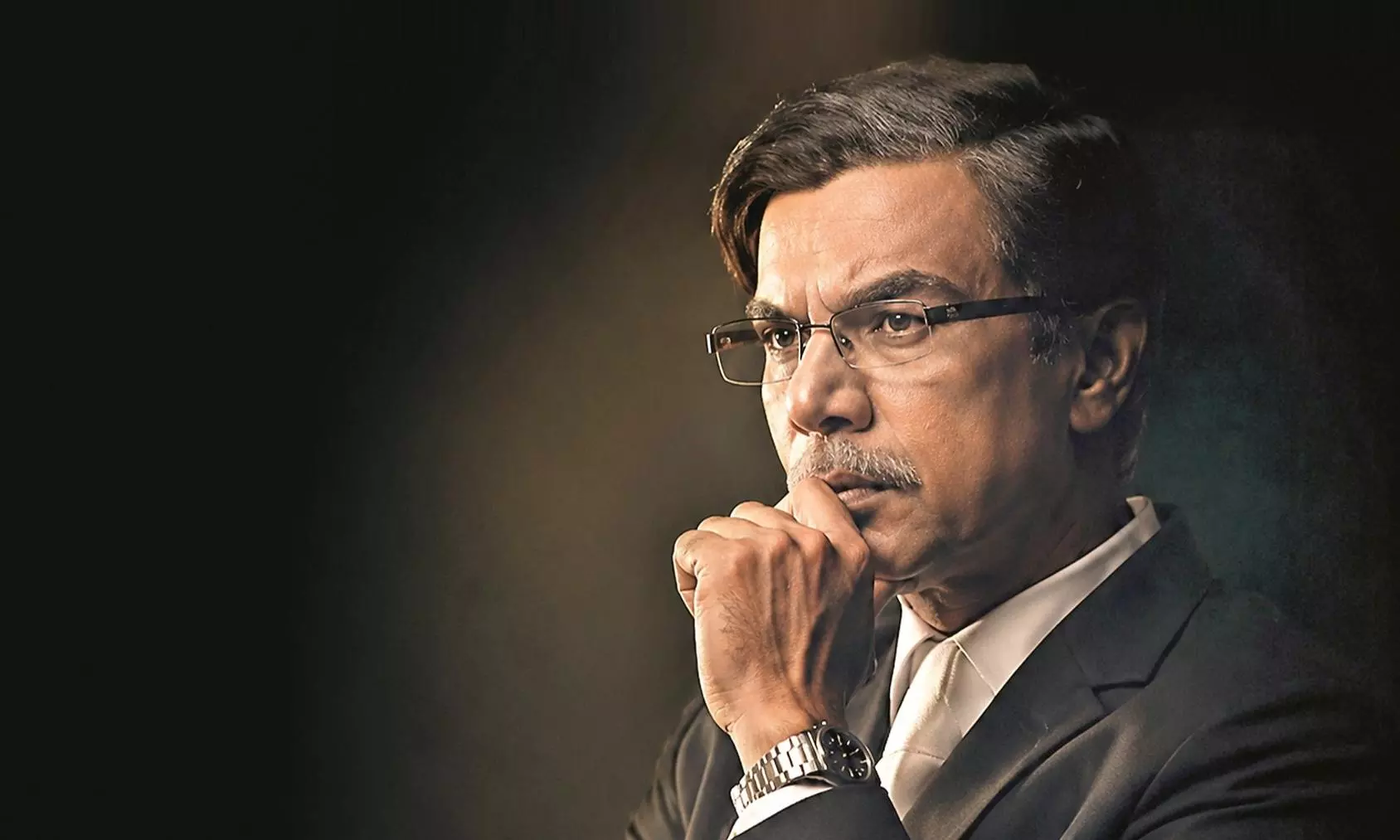
Lalit Prabhakar’s Transformation into Ajmal Kasab Stands Out
One of the biggest highlights of Prahaar is Lalit Prabhakar’s portrayal of Ajmal Kasab. His transformation into the convicted terrorist is striking, and his performance adds considerable intensity to the courtroom sequences.
Prabhakar avoids presenting Kasab as a one-dimensional figure. Instead, the film explores the circumstances of radicalisation and indoctrination that shaped the accused, without attempting to excuse or minimise the brutality of the attacks.
This distinction is important to the narrative. Understanding how an individual becomes involved in terrorism is not the same as justifying the crimes committed. The film maintains that separation while keeping the victims and the devastating consequences of the attacks firmly in view.
Prabhakar’s performance stands out for its conviction and attention to character detail. His scenes with the lawyers help sustain the tension, particularly when the proceedings expose the difference between public sentiment and the legal standards required to establish guilt.
The Defence Lawyer Adds Complexity to the Courtroom Drama
Sikandar Kher plays a fictional Muslim defence lawyer who represents Kasab during the proceedings. Rather than reproducing every lawyer involved in the real case, the screenplay combines elements of the legal battle into a single character.
The lawyer faces hostility because of his association with an accused terrorist, even though defending an accused person is a legitimate part of the judicial system. The film uses this character to examine an uncomfortable but important question: can the rule of law survive when public opinion has already reached its verdict?
His position becomes especially difficult because the evidence against his client has been widely reported. Yet the film makes clear that a defence lawyer’s professional responsibility does not disappear simply because a case attracts national outrage.
This subplot adds depth to the narrative by showing that the justice system depends on the rights and responsibilities of all parties involved, not just the prosecution.
Avinash Arun’s Direction Keeps the Story Under Control
Director and cinematographer Avinash Arun brings a restrained visual style to the film. Instead of relying on dramatic camera movements or exaggerated courtroom confrontations, he uses carefully composed frames to maintain the seriousness of the proceedings.
The direction allows the audience to observe the characters and their arguments without constantly instructing viewers on how to feel. This balance between emotional involvement and narrative distance distinguishes Prahaar from conventional courtroom dramas.
The film also explores Nikam’s personal life, offering a glimpse into the cost of his professional commitment. Wamiqa Gabbi plays his wife, Jyoti, while Ritvik Sahore portrays his son, Aniket.
Nikam’s demanding career leaves limited time for his family, creating emotional distance at home. The 26/11 attacks occur as he prepares for his daughter’s wedding, forcing his professional responsibilities to take priority over personal celebrations.
Although these domestic scenes occasionally slow the pace, they provide useful context for understanding the sacrifices associated with his work. They also remind viewers that the people pursuing justice have personal lives and relationships affected by their responsibilities.
Jaideep Ahlawat Makes an Impact in a Brief Role
Jaideep Ahlawat leaves a mark despite his limited screen time as a Pakistani lawyer who crosses paths with Nikam. His character introduces another perspective into the legal conflict and is allowed to present his arguments rather than functioning solely as an opponent.
The film’s strongest emotional moment comes through a courtroom sequence involving a 10-year-old victim of terrorism. Instead of repeatedly recreating the horrors of the attacks, the scene brings the consequences of the violence into sharp focus by highlighting the suffering of innocent people.
This decision reflects the film’s broader approach: it channels anger and grief through the legal proceedings instead of relying on graphic depictions or prolonged dramatic spectacle.
Prahaar Movie Review: Final Verdict
Prahaar is a courtroom drama that places the judicial process at the centre of a story shaped by one of India’s darkest moments. Its focus on the prosecution of Ajmal Kasab gives it a distinct perspective, while its measured treatment of the legal battle prevents the narrative from becoming an exercise in excessive glorification.
Rajkummar Rao delivers a dependable performance as Ujjwal Nikam, and Lalit Prabhakar emerges as a major highlight with his portrayal of Kasab. Avinash Arun’s restrained direction and the screenplay’s attention to legal complexities further strengthen the film.
The narrative does have moments of emphatic dialogue and stretches where the personal-life sequences interrupt the courtroom momentum. Nevertheless, the film largely stays focused on its central purpose.
For More Hindi News: http://newz24india.com