
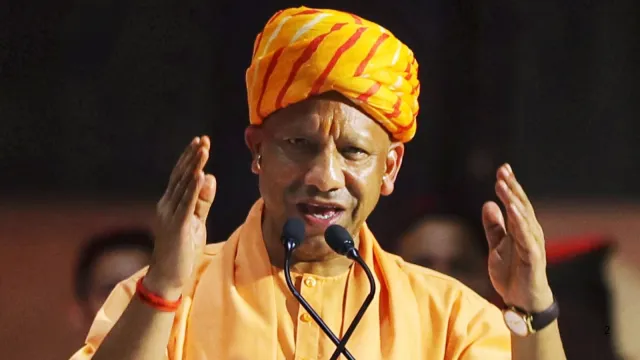
UP SIR controversy intensifies as Yogi Adityanath claims 1.27 crore Hindu voters’ names were deleted, while Akhilesh Yadav questions the Election Commission.
The political battle over the Special Intensive Revision (SIR) of electoral rolls has intensified in Uttar Pradesh, with Chief Minister Yogi Adityanath and Samajwadi Party chief Akhilesh Yadav exchanging sharp remarks. The controversy centres on Yogi Adityanath’s claim that the names of 1.27 crore Hindu voters were deleted from the electoral rolls, while the proportion of Muslim voters reportedly increased by 1.63 per cent after the revision exercise.
The remarks have triggered fresh political discussions ahead of the upcoming Uttar Pradesh Assembly elections. While the BJP has defended the SIR exercise and raised concerns over the voter data, the opposition has questioned the basis of the Chief Minister’s statement and demanded transparency in the process.
The UP SIR controversy has now become a major political issue, with both the ruling BJP and the Samajwadi Party presenting different arguments over voter deletions, electoral data and the role of the Election Commission of India (ECI).
Yogi Adityanath’s Claim Over 1.27 Crore Hindu Voters
Uttar Pradesh Chief Minister Yogi Adityanath has alleged that the SIR exercise resulted in the deletion of 1.27 crore Hindu voters’ names from the electoral rolls. He also claimed that the proportion of Muslim voters in the state had increased by 1.63 per cent following the revision.
According to Adityanath, the state government has raised the matter with the Election Commission of India. He questioned the opposition’s criticism of the SIR process and alleged that Samajwadi Party president Akhilesh Yadav would not object to the developments because of an increase in his party’s vote bank.
The Chief Minister’s remarks have added a new dimension to the UP SIR controversy, bringing the issue of voter demographics and electoral representation into the centre of political debate.
Akhilesh Yadav Questions How CM Got Access to SIR Data
Samajwadi Party chief Akhilesh Yadav strongly reacted to Yogi Adityanath’s statement, questioning how the Chief Minister knew that 1.27 crore Hindu voters had been removed from the electoral rolls.
Akhilesh alleged that the Election Commission might have shared the SIR data with the Chief Minister’s Office before making it publicly available. He questioned the transparency of the process and suggested that all political parties should receive electoral information at the same time.
Speaking on November 6, the SP chief said that the Election Commission appeared to have provided the information to the government first, while the public and political parties received it later.
Akhilesh also challenged the political significance of the BJP’s own figures. He argued that if 1.27 crore voters had been removed, it would mean an average reduction of approximately 31,000 votes per Assembly constituency. According to him, this indicated that the BJP was facing a difficult electoral situation even before polling began.
His response has further intensified the UP SIR controversy, with questions being raised about access to electoral data and the transparency of the revision exercise.
What Does the Election Commission’s SIR Data Reveal?
The Election Commission of India released the final electoral roll for Uttar Pradesh on April 11 after completing the Special Intensive Revision exercise.
According to the published figures, more than 2.04 crore names were removed from the electoral rolls during the revision process. At the same time, over 84 lakh new voters were added to the list.
The final electorate stood at 13,39,84,792 voters. The electoral data also provided a detailed breakdown based on gender and age.
also read:- CM Yogi Adityanath Hears Grievances Of 125 People At Gorakhpur Janata Darshan…
Uttar Pradesh Final Electoral Roll: Key Figures
Category Number of Voters
Total electorate 13,39,84,792
Male voters 7,30,71,071
Female voters 6,09,09,525
Third-gender voters 4,206
New voters added Over 84 lakh
Names removed Over 2.04 crore
Voters aged 18–19 17,63,360
According to the Election Commission’s figures, male voters account for approximately 54 per cent of the electorate, while female voters represent around 45.46 per cent. The gender ratio stands at 834 female voters for every 1,000 male voters.
Young voters between 18 and 19 years of age account for approximately 1.32 per cent of the total electorate.
These figures have become particularly important amid the political debate over the UP SIR controversy, as parties continue to examine the impact of the revised electoral rolls.
Lucknow Records Highest Decline in Voter Numbers
The Election Commission’s district-wise data also highlighted significant changes in voter numbers across Uttar Pradesh.
Lucknow recorded the largest decline in absolute numbers, with more than 9.14 lakh voters removed from its electoral rolls.
Other districts that witnessed substantial reductions included:
– Prayagraj: More than 8.26 lakh voters removed.
– Kanpur Nagar: More than 6.87 lakh voters removed.
– Agra: More than 6.37 lakh voters removed.
– Ghaziabad: More than 5.74 lakh voters removed.
These figures indicate the scale of the electoral roll revision across several major districts of the state.
SIR Becomes a Major Political Issue Ahead of UP Elections
The Special Intensive Revision has emerged as a significant point of confrontation between the BJP and opposition parties in Uttar Pradesh. While the BJP has defended the exercise and highlighted concerns over voter deletions, the Samajwadi Party has questioned the process and demanded greater transparency.
The controversy has also brought attention to the importance of accurate electoral rolls, equal access to official information and the role of the Election Commission in maintaining the credibility of elections.
With Assembly elections approaching, the UP SIR controversy is likely to remain an important political talking point. The competing claims made by Yogi Adityanath and Akhilesh Yadav have added to the political debate, while the Election Commission’s published figures provide the statistical background to the dispute.
The key question now is how political parties interpret the revised voter data and whether further clarification from the Election Commission addresses the concerns raised by both sides.
For More Hindi News: http://newz24india.com