
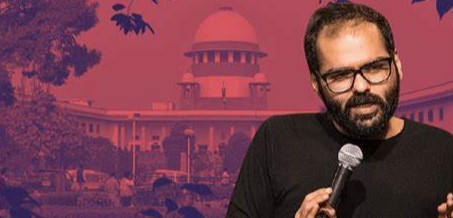
Bombay HC’s New Priority: Silencing Stand-Up Comedy While Real Issues Go Unheard
New Delhi, May 1, 2025 — In a classic display of prioritizing parody over policy, the Bombay High Court on Wednesday refused to entertain a plea filed by a legislator from the Eknath Shinde-led Shiv Sena faction, who appeared more rattled by comedian Kunal Kamra‘s punchline than any pressing public concern.
The plea, filed by MLA Kiran Samant, accused stand-up comedian Kunal Kamra of “misusing” social media—because apparently satire is now a greater threat than unemployment, inflation, or potholes.
Samant, clearly hurt by Kunal Kamra’s March performance where the comedian sang a parody and did not even name anyone, claimed Kunal Kamra was ridiculing the judiciary and leaders—something comedians have been doing since time immemorial, just now with more Wi-Fi.
Despite dragging in Google, the Centre, occupying valuable court time over a matter concerning jokes, the bench politely suggested that Samant, as a legislator, should perhaps focus on his legislative duties. In essence, they implied, ‘Why bring this matter to the courtroom when you should be addressing it through appropriate legislative channels?’
In his plea, Samant’s legal team claimed Kunal Kamra “consistently mocked the courts and judges,” suggesting that India’s judiciary, which is supposed to uphold constitutional values, needs a content filter for sarcasm. The plea called Kamra’s content “contemptuous,” yet couldn’t explain how satire—protected under freedom of speech—suddenly qualified as a constitutional emergency.
To really drive home the absurdity, Samant even asked the court to create a “social media vigilance and censor committee” to decide what comedians can or cannot joke about. That’s right—a censorship squad to patrol punchlines. Because nothing says democracy like deciding comedy in a courtroom.
Fortunately, the bench wasn’t fully on board with this comedy crackdown. They reminded the petitioner that existing rules under the IT Act and intermediary guidelines already cover such concerns. If the content in question was truly objectionable, the law already offers remedies—some of which, as the court noted, have already been invoked.
Still, the irony wasn’t lost on observers: a lawmaker, using public machinery and judicial bandwidth, to try and clamp down on a satirist, because he felt “offended.” Meanwhile, Kunal Kamra continues to perform across the country, reminding us all that laughter—unlike politics—isn’t so fragile.