
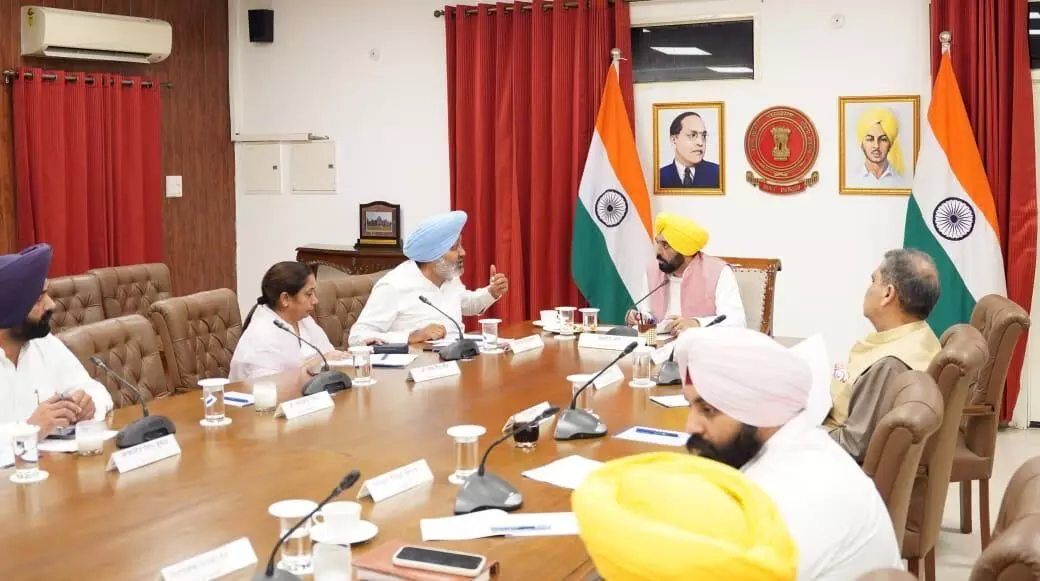
Under the leadership of CM Bhagwant Mann, the Punjab Cabinet on Tuesday approved a set of farmer-centric amendments to the Land Pooling Policy-2025. The most notable change is that farmers will now receive a significantly increased annual livelihood allowance of ₹1 lakh—five times more than the ₹20,000 provided under previous administrations. This payment will continue until the government develops the acquired land.
Additionally, this amount will grow by 10% every year, offering long-term financial support. To promote transparency and timely processing, the government will now issue a Letter of Intent (LOI) to landowners within 21 days. This LOI can be sold or used to access bank loans. Until development begins, farmers can continue cultivating their land and will also receive an extra ₹50,000 annually during this period.
Importantly, the government has ensured there will be no curbs on buying, selling, or registering the pooled land, allowing farmers full freedom over their property.
These changes aim to simplify the land acquisition process for PUDA and other urban development authorities. The Land Pooling Policy-2025, originally launched to bring landowners, companies, and promoters together for urban development, has now been refined following consultations with village sarpanches, union leaders, and farmers.
In response to the suggestions received, several progressive and practical updates have been added. Under the revised policy, landowners giving up their land will receive 125 square yards of residential space and 25 square yards of commercial space for every kanal surrendered. The LOI provided to them will also serve as eligibility for bank financing.
Upon issuance of the LOI, landowners will be granted a one-time subsistence allowance of ₹50,000. After the government takes possession of the land, the landowners will receive ₹1 lakh per year—rising annually by 10%—until the developed plots are handed back to them.
Moreover, land pooling projects involving 50 acres or more will only be subject to External Development Charges (EDC), with no additional levies. If a landowner opts out of commercial land allocation, they will be compensated with triple the residential space. For instance, if a farmer contributes one acre and forgoes a 200-square-yard commercial plot, they will receive a 600-square-yard residential plot instead—resulting in a total of 1,600 square yards of residential land per acre in the urban estate.