
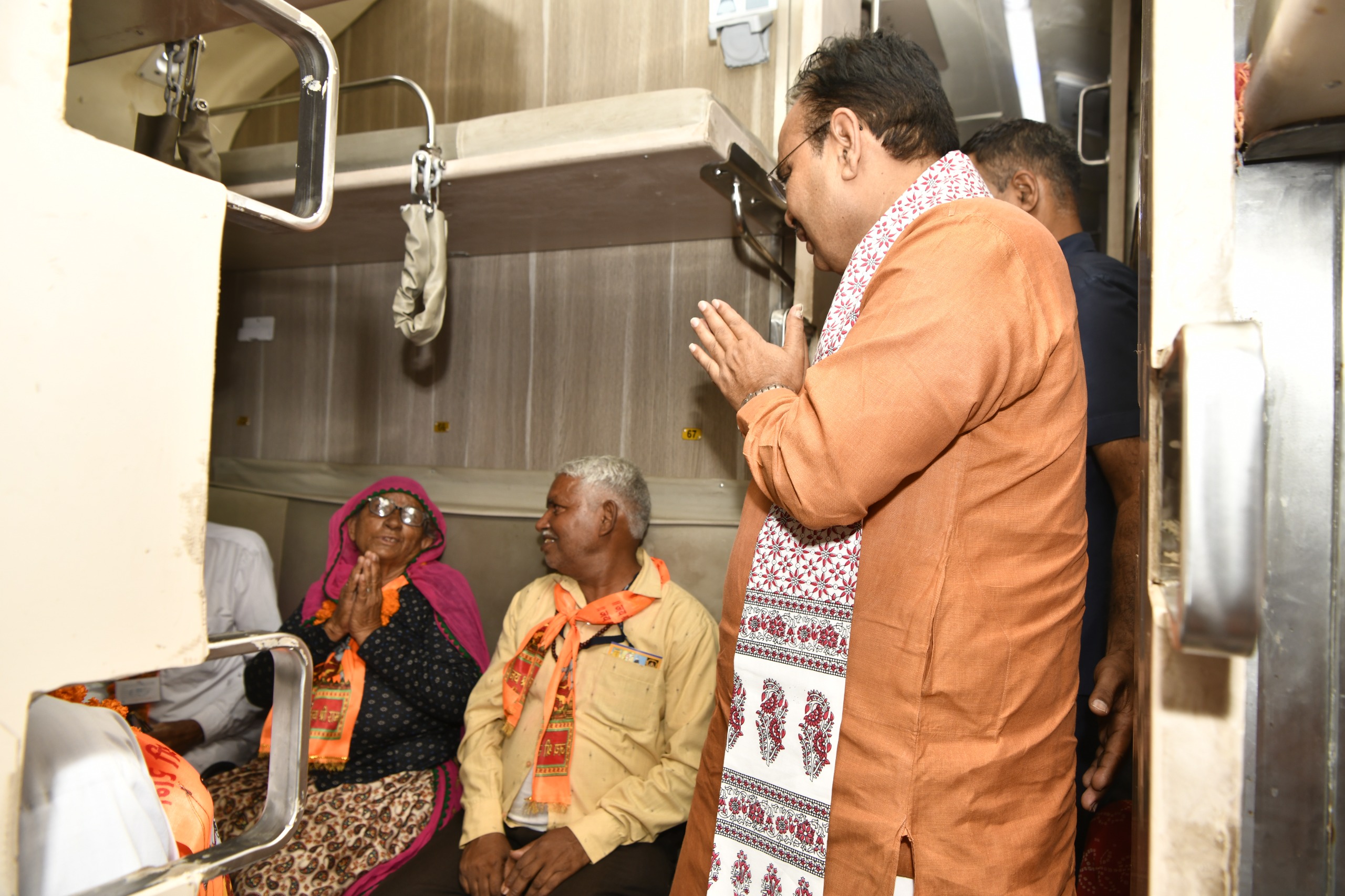
Elders are the pillars of society whose experience and knowledge form the foundation of a civilized and strong nation. It is with this spirit that the State Government under the leadership of CM Bhajan Lal Sharma is running the ‘Senior Citizen Pilgrimage Scheme “which is an excellent example of service and respect. This scheme is an attempt to repay the ‘debt’ that every generation feels towards their ancestors.
The scheme provides one-time free pilgrimage to senior citizens of Rajasthan who are 60 years of age and above and are not income tax payers. Under the scheme, the government not only bears the entire cost of their travel but also ensures safe, dignified and convenient travel.
56 thousand senior citizens will get the opportunity to go on pilgrimage.
According to the budget announcement of the state government, a total of 56 thousand senior citizens will get the opportunity to go on pilgrimage this time. Out of these, 50 thousand will be airlifted and 6 thousand passengers will be airlifted. Chief Minister Shri Bhajan Lal Sharma had launched the Senior Citizen Pilgrimage Scheme 2025-26 on 6th June. He flagged off the first air-conditioned ‘Rajasthan Vahini Bharat Gaurav Tourist Train’ under the scheme from Durgapura Railway Station. The senior citizens travelled to the pilgrim centres of Rameswaram and Madurai by this AC train. On July 23 (Wednesday) also, another train is leaving from Jaipur to Rameswaram-Madurai.
The application for the pilgrimage can be made online
As part of the next phase of the scheme, the Devasthan department has again started the process of online application. Under this, applications can be made on the department’s website till August 10. Passengers who were selected in previous years and did not travel voluntarily will not be included this time. After the online application, a committee formed at the district level will select the eligible people. A waiting list of 100 per cent additional passengers will also be prepared for the journey. Selected candidates will be sent on a tour. One train can carry 800 senior citizens.
About 40 pilgrimage sites can be visited by 15 trains.
Under this scheme, senior citizens will be able to visit the Pashupatinath temple in Nepal through air travel. At the same time, by rail travel, there will be an opportunity to visit about 40 pilgrimage sites through 15 trains. Apart from the Golden Temple, the other Sikh shrines included in the list are Hazur Sahib (Maharashtra) and Patna Sahib (Bihar). Seniors will be able to visit Haridwar, Rishikesh, Ayodhya, Varanasi, Sarnath, Sammedshikhar, Pavapuri, Mathura, Vrindavan, Barsana, Agra, Dwarikapuri, Nageshwar, Somnath, Tirupati, Padmavati, Kamakhya, Guwahati, Gangasagar, Kolkata, Jagannathpuri, Konark, Rameswaram, Madurai, Vaishno Devi, Amritsar, Wagha Border, Mahakaleshwar, Ujjain-Omkareshwar, Trimbakeshwar, Grishneswar, Ellora, Bihar Sharif, Patna Sahib, Sri Hazur Sahib, Nanded and other places of worship in Goa.
Special attention is given to the health and safety of the elderly.
During the journey, special care is taken for the safety of the elderly, health, food and dignified behaviour with fellow passengers. Doctors and paramedical staff will also be available on the train. Apart from this, hotels, transport and temple darshan facilities for the stay of all the passengers as well as morning and evening meals and breakfast for the passengers are also provided by the Devasthan department. Along with Rajasthani folk dances, folk arts, Teej festival, temples, forts, other tourist places and sanctuaries of Rajasthan are also depicted on the coaches of the trains taken for pilgrimage. They reflect the art and culture of Rajasthan.
The most positive aspect of the Senior Citizen Pilgrimage Scheme is that it reflects the sensitivity, accountability and social concern of the Government. The Rajasthan government has not limited this scheme to just a ‘yatra’ but has made it an emotional and spiritual rejuvenation process. It not only reflects the welfare policies of the State Government but also revives the social customs and culture.