
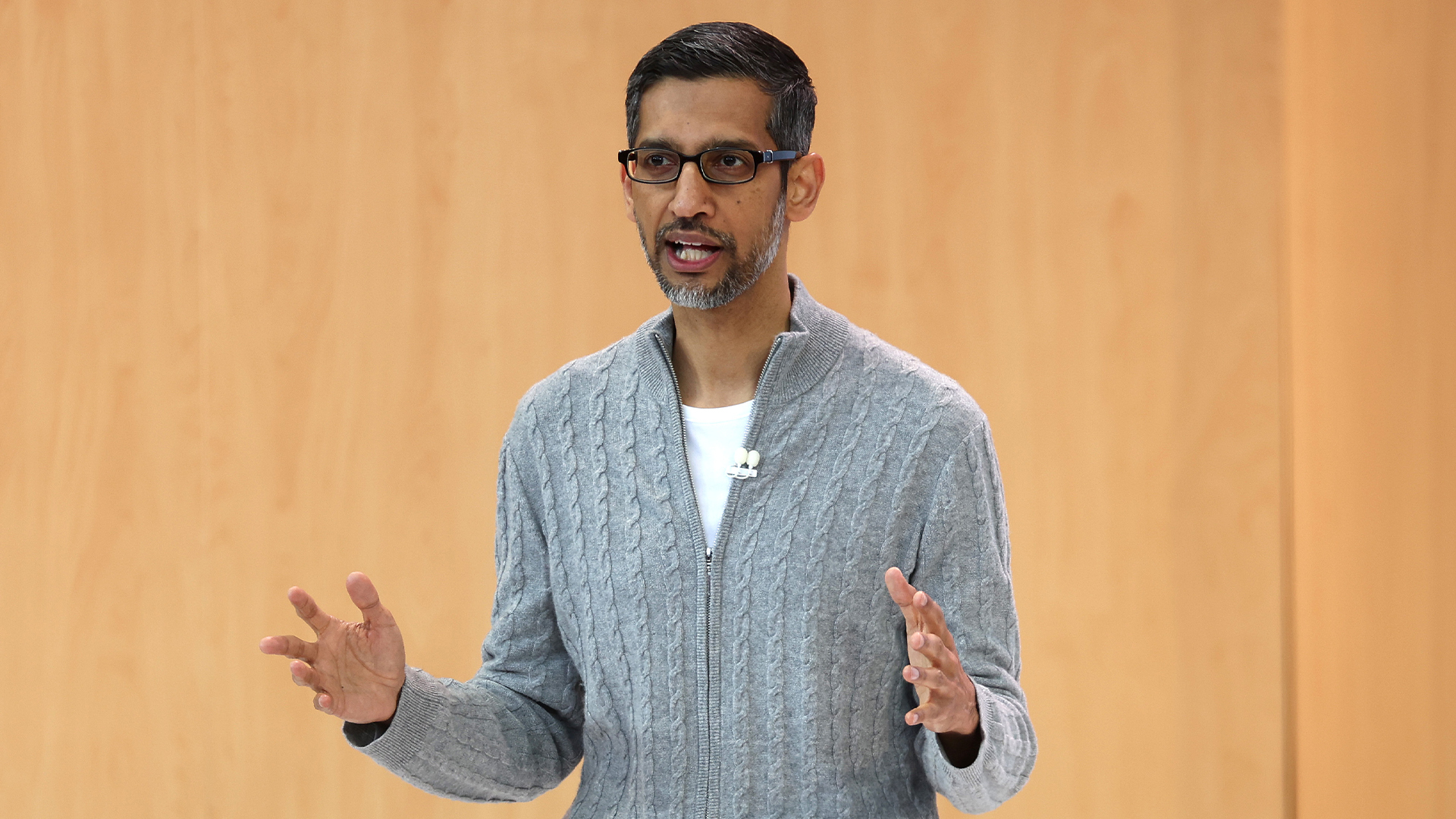
Google AI research strategy prioritises internal AI development over Cloud revenue as Sundar Pichai highlights computing capacity challenges.
Google AI Research Strategy: Google is putting the development of advanced artificial intelligence models ahead of some short-term Cloud revenue opportunities, according to CEO Sundar Pichai. The company is directing part of its limited computing capacity towards internal Google AI research, even as demand from paying Cloud customers continues to increase.
The decision highlights the growing infrastructure pressures facing major technology companies as they compete to build more capable AI systems. Pichai believes that maintaining access to powerful computing resources is essential for Google’s long-term AI ambitions, even if it means sacrificing revenue the company could earn in the near term.
Google AI research strategy Takes Priority Over Cloud Customers
Speaking on the Big Technology Podcast with Alex Kantrowitz, Pichai acknowledged that Google is allocating some computing resources to its Google AI research teams instead of making them available to external Cloud customers.
He described access to computing power for Google DeepMind as a non-negotiable requirement. The research division develops advanced AI models that could eventually support Google’s products and services.
The Google AI research strategy reflects the company’s determination to remain competitive in the rapidly evolving AI industry. Rather than focusing exclusively on immediate commercial returns, Google is investing in technologies that could create new opportunities over the coming years.
However, the decision also highlights a difficult balancing act. The company must support its expanding Cloud business while ensuring that its internal research teams have sufficient resources to develop next-generation AI systems.
Computing Shortages Could Affect Future Cloud Growth
Google’s decision comes amid intense competition for specialised chips, servers and data centre infrastructure. Training and operating advanced AI models require enormous amounts of computing power, putting pressure on the infrastructure available across the technology sector.
Pichai indicated that securing enough capacity for customers planning their requirements for 2027 could be particularly challenging.
He also explained that infrastructure investments take considerable time to complete. The computing capacity available today is partly the result of investment decisions made in 2024, demonstrating how long it can take for new infrastructure to become operational.
These constraints could influence how quickly Google expands its services and accommodates additional customers. Even when demand is strong, the company cannot immediately increase computing capacity because new infrastructure requires planning, equipment and substantial investment.
Google Cloud Revenue Continues to Increase
Despite the capacity challenges, Google Cloud has recorded strong growth. According to the figures provided, the business generated $24.8 billion in revenue during the second quarter, representing an 82% increase compared with the same period a year earlier.
Its contracted revenue backlog reportedly stood at approximately $514 billion at the end of June, indicating substantial demand for future services.
These figures illustrate why computing capacity has become an important strategic issue for Google. Cloud customers are seeking access to infrastructure for AI development, data processing and other computing-intensive workloads.
By directing some resources towards internal research, Google risks missing out on certain near-term commercial opportunities. At the same time, advances developed by DeepMind could strengthen the company’s AI products and services over the longer term.
The Google AI research strategy therefore involves balancing immediate customer demand against the potential benefits of developing more advanced models.
Why Sundar Pichai Wants to Build More Advanced AI Models
Pichai believes that access to advanced computing resources is crucial for Google DeepMind to develop frontier AI models. These systems can help the company explore new capabilities and potentially introduce improvements across its wider product portfolio.
He also highlighted the possibility that increasingly capable AI systems could assist researchers in building subsequent generations of models.
This approach is sometimes described as recursive self-improvement. It involves AI systems helping with research-related activities such as writing code, conducting experiments, evaluating results and testing new ideas. Such assistance could accelerate parts of the development process, although the extent of these gains remains uncertain.
Pichai also rejected the idea that Google should concentrate exclusively on smaller and less expensive models, such as Gemini Flash. His comments indicate that the company intends to continue competing at the frontier of AI development while also serving customers who need efficient, cost-effective models.
ALSO READ:- YouTube Custom Feeds: Create Personalized Video Feeds…
Gemini Demand Adds Pressure on Computing Resources
Demand from Google’s own AI products is creating another challenge for its infrastructure. Pichai said Gemini 4 Argon processed nearly 25 trillion tokens during its first 72 hours, approximately three times the volume handled by Gemini 3 over the same period.
The reported usage highlights the scale at which AI services can consume computing resources when adoption rises rapidly. Google was already experiencing capacity constraints while serving the model.
AI services require computing power not only during training but also when responding to user requests. As more people and businesses use AI tools, the infrastructure needed to operate these services can increase significantly.
This means Google must plan for competing requirements: providing reliable services to customers, supporting consumer-facing AI products and giving its research teams the resources needed to develop more capable systems.
Alphabet Plans Massive Investment in AI Infrastructure
Alphabet, Google’s parent company, expects capital expenditure to reach between $195 billion and $205 billion in 2026, according to the figures provided. A substantial share of this spending is expected to support AI and Cloud infrastructure.
The investment reflects the growing importance of computing capacity to Google’s business. Additional data centres, specialised chips and supporting infrastructure could help the company accommodate rising demand over time.
Nevertheless, spending more money does not eliminate capacity constraints immediately. Infrastructure projects take time to complete, and Google must decide how to distribute available resources among different priorities.
The company’s long-term challenge will be to expand its infrastructure quickly enough to serve external customers while continuing to invest in advanced Google AI research.
What Google’s Decision Means for the AI Industry
Google’s approach illustrates a broader shift in the technology sector, where access to computing power has become a strategic advantage. Companies are competing not only to develop advanced AI models but also to secure the infrastructure required to train and operate them at scale.
For Google, prioritising research over some short-term Cloud revenue opportunities signals that it considers advanced AI capabilities essential to its future competitiveness.
The Google AI research strategy could help the company develop more powerful systems and improve its products over time. However, its success will depend on whether future technological gains justify the near-term commercial trade-offs.
As demand for AI and Cloud services continues to grow, Google’s ability to expand its computing capacity while balancing internal research with customer needs will remain a key factor in its long-term performance.
For More Hindi News: http://newz24india.com