
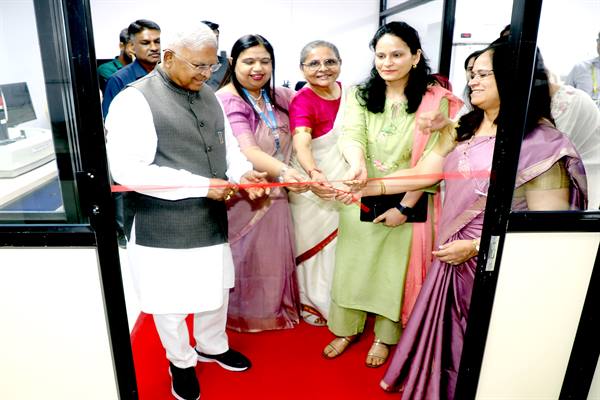
Governor Mangubhai Patel emphasised that every individual’s contribution is crucial in eliminating sickle cell disease. He said that only the combined efforts of the government and society can eradicate this genetic disorder. Significant work is already being done in screening, treatment, medicine distribution, and issuing genetic cards; society must now come forward to support.
Governor Mangubhai stated that by 2047, no child should be born with sickle cell disease, and to achieve this goal, everyone should actively participate with the spirit of ‘Mera bhi yogdan ho’ (Let me also contribute). He appreciated the installation of a DNA sequencer machine at the Bhopal Memorial Hospital and Research Centre (BMHRC) as a positive initiative in the fight against sickle cell.
Governor Mangubhai was addressing a seminar focused on sickle cell awareness at BMHRC. The event was organised on the occasion of the inauguration of the Genetic Analysis Laboratory. Before the seminar, Governer Shri Patel inaugurated the laboratory, distributed diagnostic kits to patients, and released a guidebook from the BMHRC Resource Centre.
Responsible Marriages and Awareness Key to Prevention
The Governor emphasised that people must avoid marriages between two individuals with sickle cell disease, as their offspring would certainly inherit the disorder. Even carriers of the trait should avoid marrying each other, since every pregnancy would carry a 25% risk of producing an affected child. He added that prenatal testing must be conducted in such cases.
At the same time, he clarified that a marriage between a healthy person and a carrier or patient is not problematic. He also stressed the importance of a healthy lifestyle, nutrition, and daily routine for both carriers and patients, which requires active community participation.
Scientific Breakthroughs for Eradication
Governor Mangubhai highlighted the genetic nature of the disease, calling it complex and challenging. However, with the advent of gene-level analysis, our scientists have paved the way for the targeted elimination of the disease. The laboratory is expected to play a crucial role in understanding the complexities and unique features of sickle cell disease and offering potential solutions.
The newly inaugurated machine, he noted, is likely to revolutionise personalised treatment research and improve early prediction of disease severity.
Government’s Widespread Efforts
Tribal Affairs Minister Dr. Kunwar Vijay Shah said that sickle cell screening will be conducted at the time of admission in all departmental hostels. He praised Governor Shri Patel as the first constitutional head to reach out to the remotest corners and understand the hardships of marginalised communities, leading to a significant improvement in their lives.
He added that Madhya Pradesh is leading the nation in its efforts to eradicate sickle cell disease, with specialised institutes worth Rs.382 crore being established in Bhopal and Indore as contributions from the Tribal Affairs Department.
Nationwide Recognition of Madhya Pradesh’s Model
Dr. Saloni Sidana, Director of the National Health Mission, noted that Madhya Pradesh is the first state to take a holistic approach to tackling sickle cell, including vaccination for children aged 2 to 20. Over 1 crore individuals have been screened so far, with 2 lakh carriers and 28,000+ patients identified.
Treatment and management are being conducted using both allopathy and AYUSH systems. Tribal communities have also started using genetic cards to make informed marriage decisions.
Commendation from National Experts
Dr. Rajiv Bahl, Director General of ICMR, joined the seminar virtually and praised Madhya Pradesh’s efforts as exemplary. He acknowledged the state’s integrated approach to improving the lives of those affected and its strong mission implementation.
Dr. Manisha Madkaikar from the National Institute of Immunohaematology, Mumbai, also addressed the event. Dr. Manisha Srivastava, Director-in-Charge of BMHRC, gave the welcome address, and patients and carriers shared their personal stories. Dr. Anurag Yadav, Medical Superintendent of the institute, delivered the vote of thanks.