
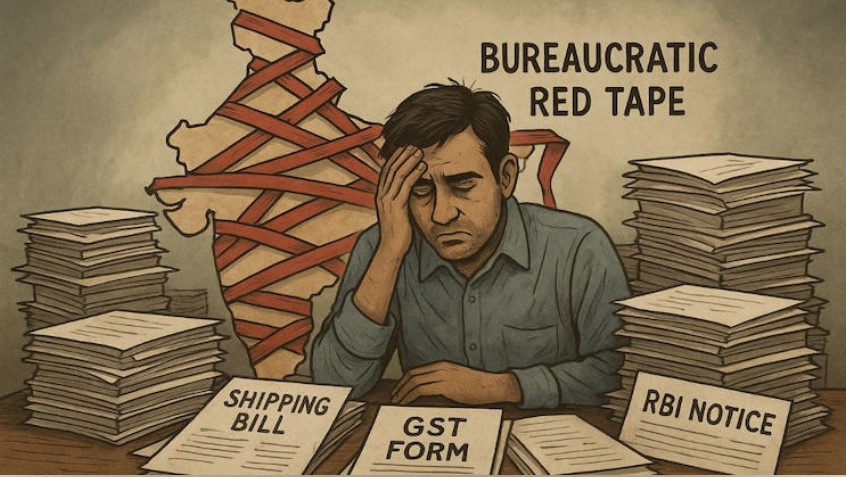
“Don’t Try Exporting from India”- Why One Entrepreneur Gave Up on Exporting from India?
New Delhi | 18 April 2025 — While India continues to celebrate its rising ease of doing business rankings, an entrepreneur’s viral Reddit post has shown how hard it really is for small businesses to export from India.
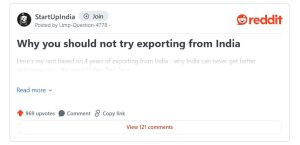
The post, titled “Why you should not try exporting from India Vent & Rant,” details how over four years, he struggled with India’s complicated export process, dealing with endless paperwork, strict rules, and system glitches until it all got too much and he had to shut his business down.
Red Tape, GST Chaos, and ₹8 Lakh in Fees: The Hidden Cost of Exporting from India
The entrepreneur, who began his journey in a small Indian village, found success in the domestic e-commerce space, handling 300–400 daily orders. But things changed in 2022 when international customers expressed interest in his products. What followed was a maze of documentation and bureaucracy that, in his words, made a $30 export “completely nonsensical.”
From acquiring an Importer Exporter Code (IEC) to registering on ICEGATE, securing an AD code from a bank, and navigating mandatory shipping channels, the entrepreneur felt weighed down by processes he says are “meant to discourage small exporters.” He described exporting from India as a process so tedious that it overshadowed any potential profit or growth.
A ₹50 Lakh Headache No Entrepreneur Should Have to Face
One of the most shocking claims involved a rejected international shipment that was returned to India. Despite not making any money on the order, the business was forced to pay GST twice—once when the product left the country and again upon its return. “We had to pay GST TWICE on a shipment on which we did not earn a penny,” the entrepreneur wrote.t, pointing to just one of the many frustrating aspects of exporting from India.

Things escalated further when he discovered approximately ₹50 lakh worth of open shipping bills, known as CSB 5 forms, in 2024. These forms are mandatory for exports, but due to a lack of integration between the Customs, GST, and RBI systems, closing each bill cost ₹400. With around 2,000 bills to process, he faced a bill of ₹8 lakh—almost 16% of his total turnover.
Unable to meet the deadline, the RBI eventually marked his account as non-compliant and froze it, effectively ending his ability to operate as an exporter. “It was the final nail in the coffin,” he wrote.
Despite multiple appeals to various regulatory bodies, including the RBI and the Commerce Ministry, the entrepreneur claims he received no meaningful response. Even detailed diagrams explaining his situation reportedly went unanswered.
The post also criticized how the fear of GST audits discourages small businesses from claiming Input Tax Credit (ITC), even when they are legally entitled to it. “We honestly don’t have the funds, people or stamina to deal with one more bureaucratic nightmare,” he added.
The entrepreneur drew comparisons between India and the UK, where he claims he was able to set up a company and bank account in just two days. “Sitting in India, I can’t set up a company in 2 months despite bribes,” he wrote, highlighting the disparity in ease of business processes.
What stings most is the human cost. Over 50 rural women who found employment through the business have reportedly returned to their earlier lives after operations ceased. For the entrepreneur, the impact of red tape wasn’t just financial—it reversed real progress for a local community.
As India pushes to become a global manufacturing and export hub, stories like these raise serious questions about whether small and mid-size enterprises (SMEs) are being left behind in the process and what exporting from India really looks like for them.