
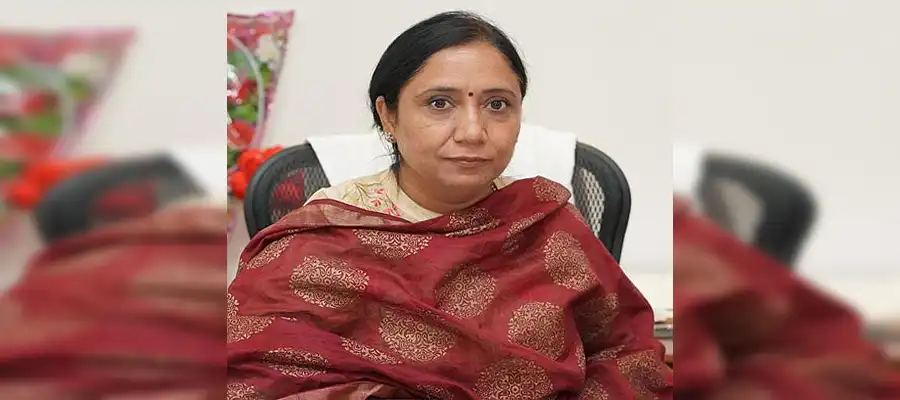
Minister Baljit Kaur, Punjab’s Cabinet Minister for Social Justice, Empowerment, and Minorities, represented the state at the National Chintan Shivir hosted by the Ministry of Social Justice and Empowerment, Government of India, in Dehradun. She emphatically voiced Punjab’s key concerns related to the welfare of Scheduled Castes (SC), Backward Classes, and Minorities, urging the Central Government to address pressing issues.
Minister Baljit Kaur appreciated the forum for giving states the opportunity to present the practical challenges they face in executing welfare schemes. She reaffirmed that under the leadership of Chief Minister S. Bhagwant Singh Mann, the Punjab Government is fully committed to the inclusive growth of disadvantaged communities.
Emphasizing Punjab’s responsibility as the state with the highest SC population in India, Minister Baljit Kaur stressed the need for targeted interventions to uplift these groups. She noted that both Central and State-run welfare programs are being actively and effectively implemented across the state.
Reform in Scholarship Criteria and Timely Disbursal:
Minister Baljit Kaur urged a revision of the current ₹2.5 lakh income cap for scholarship eligibility, calling it outdated. She recommended raising this limit to broaden access for deserving students. Highlighting administrative delays, she noted that central funds for 2017–2020 are still pending, negatively impacting students and institutions. She appealed for immediate release of these dues.
She also advocated for an increase in scholarship amounts for students from OBC, EBC, and DNT communities and emphasized the need to cover the full cost of education to prevent disruptions in learning for economically weaker students.
Faster Disbursement under Adarsh Gram Yojana:
Minister Baljit Kaur pointed out that although Punjab had selected 3,293 villages under the Adarsh Gram Yojana and received a sanction of ₹684 crore, only ₹101 crore has been released so far. She called on the Centre to release the balance funds urgently for improving rural infrastructure.
To ensure impactful development, she proposed raising the per-village grant from ₹20 lakh to ₹1 crore.
Greater Transparency in Housing Programs:
Minister Baljit Kaur acknowledged the positive role of housing schemes for SCs and economically weaker families but flagged concerns over lack of transparency at the panchayat level in selecting beneficiaries. She suggested transferring the responsibility of beneficiary identification and scheme monitoring to the Department of Social Justice to ensure fairness and accountability.
State-Led Initiatives and Innovations:
Highlighting Punjab’s efforts, Minister Baljit Kaur discussed several progressive schemes. She cited the Ashirwad Scheme, under which eligible SC, BC, and EWS families receive ₹51,000 for the marriage of up to two daughters, offering vital financial relief.
She also mentioned the waiver of ₹70 crore worth of loans for SC beneficiaries, which has benefited over 5,000 individuals—giving them a fresh start.
In a major step towards inclusivity, she noted that Punjab is the first state in India to include sign language interpretation during live Assembly sessions, promoting accessibility for individuals with hearing and speech impairments.
Under the “Project Jeevan Jot” initiative, launched in 2024, Minister Baljit Kaur reported the rescue and rehabilitation of 268 child beggars. Nineteen of them are now in state-run care homes with access to education, food, and healthcare, while others have been safely reunited with their families through Child Welfare Committees.
Closing Remarks:
In her concluding statement,Minister Baljit Kaur said that the Chintan Shivir opened avenues for collective progress and mutual understanding. She reaffirmed the Punjab Government’s unwavering commitment to ensuring that all welfare schemes effectively reach the underprivileged and marginalized sections of society.
for Social Justice, Empowerment, and Minorities, represented the state at the National Chintan Shivir hosted by the Ministry of Social Justice and Empowerment, Government of India, in Dehradun. She emphatically voiced Punjab’s key concerns related to the welfare of Scheduled Castes (SC), Backward Classes, and Minorities, urging the Central Government to address pressing issues.
Minister Baljit Kaur appreciated the forum for giving states the opportunity to present the practical challenges they face in executing welfare schemes. She reaffirmed that under the leadership of Chief Minister S. Bhagwant Singh Mann, the Punjab Government is fully committed to the inclusive growth of disadvantaged communities.
Emphasizing Punjab’s responsibility as the state with the highest SC population in India, Minister Baljit Kaur stressed the need for targeted interventions to uplift these groups. She noted that both Central and State-run welfare programs are being actively and effectively implemented across the state.
Reform in Scholarship Criteria and Timely Disbursal:
Minister Baljit Kaur urged a revision of the current ₹2.5 lakh income cap for scholarship eligibility, calling it outdated. She recommended raising this limit to broaden access for deserving students. Highlighting administrative delays, she noted that central funds for 2017–2020 are still pending, negatively impacting students and institutions. She appealed for immediate release of these dues.
She also advocated for an increase in scholarship amounts for students from OBC, EBC, and DNT communities and emphasized the need to cover the full cost of education to prevent disruptions in learning for economically weaker students.
Faster Disbursement under Adarsh Gram Yojana:
Minister Baljit Kaur pointed out that although Punjab had selected 3,293 villages under the Adarsh Gram Yojana and received a sanction of ₹684 crore, only ₹101 crore has been released so far. She called on the Centre to release the balance funds urgently for improving rural infrastructure.
To ensure impactful development, she proposed raising the per-village grant from ₹20 lakh to ₹1 crore.
Greater Transparency in Housing Programs:
Minister Baljit Kaur acknowledged the positive role of housing schemes for SCs and economically weaker families but flagged concerns over lack of transparency at the panchayat level in selecting beneficiaries. She suggested transferring the responsibility of beneficiary identification and scheme monitoring to the Department of Social Justice to ensure fairness and accountability.
State-Led Initiatives and Innovations:
Highlighting Punjab’s efforts, Minister Baljit Kaur discussed several progressive schemes. She cited the Ashirwad Scheme, under which eligible SC, BC, and EWS families receive ₹51,000 for the marriage of up to two daughters, offering vital financial relief.
She also mentioned the waiver of ₹70 crore worth of loans for SC beneficiaries, which has benefited over 5,000 individuals—giving them a fresh start.
In a major step towards inclusivity, she noted that Punjab is the first state in India to include sign language interpretation during live Assembly sessions, promoting accessibility for individuals with hearing and speech impairments.
Under the “Project Jeevan Jot” initiative, launched in 2024, Minister Baljit Kaur reported the rescue and rehabilitation of 268 child beggars. Nineteen of them are now in state-run care homes with access to education, food, and healthcare, while others have been safely reunited with their families through Child Welfare Committees.
Closing Remarks:
In her concluding statement, Minister Baljit Kaur said that the Chintan Shivir opened avenues for collective progress and mutual understanding. She reaffirmed the Punjab Government’s unwavering commitment to ensuring that all welfare schemes effectively reach the underprivileged and marginalized sections of society.