
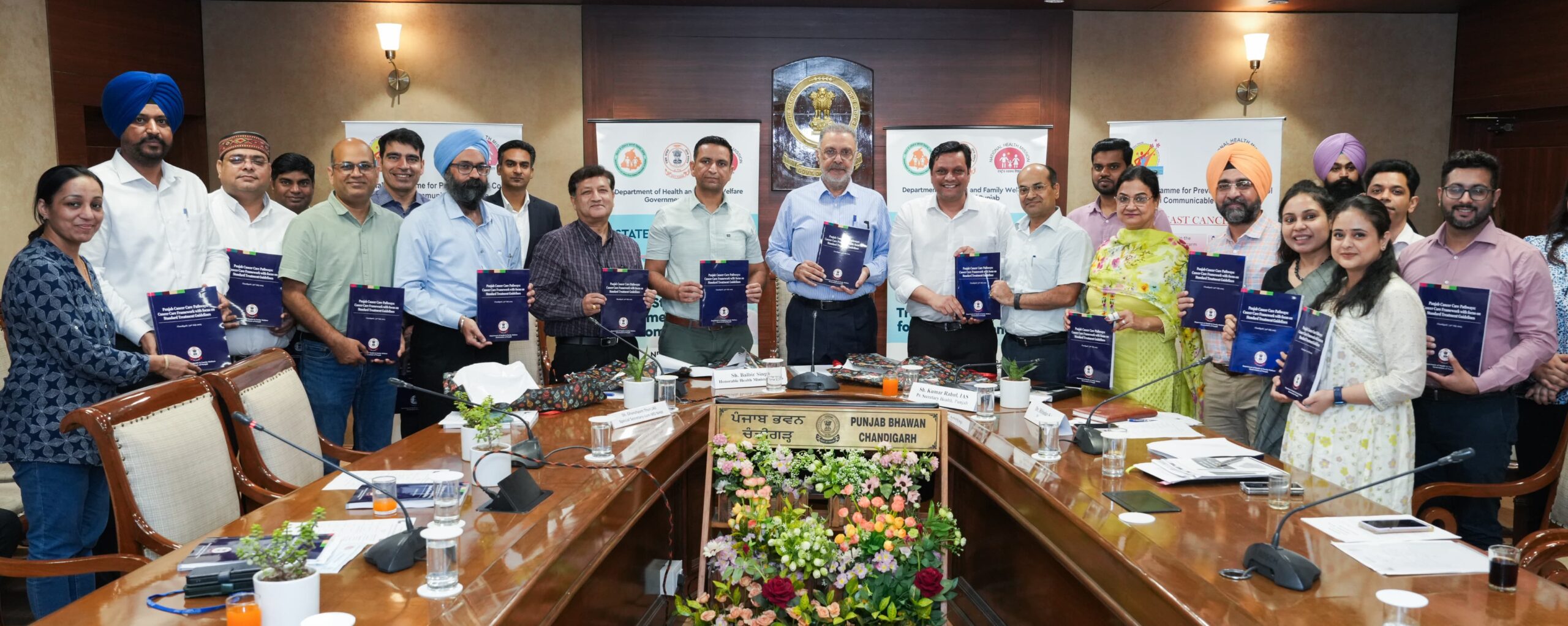
In a groundbreaking move to tackle the growing cancer burden, the Punjab Govt, in partnership with the World Health Organization (WHO) India, has rolled out a comprehensive, patient-focused Cancer Care Pilot Project in Bathinda, SAS Nagar (Mohali), and Gurdaspur. The initiative was officially launched by Punjab Health Minister Dr. Balbir Singh and WHO India Representative Dr. Roderico H. Ofrin, marking a significant step in the state’s effort to provide equitable, early, and quality cancer treatment.
This first-of-its-kind initiative focuses on the early detection, timely diagnosis, and efficient treatment of oral, breast, and cervical cancers—three of India’s most common but preventable cancers. Adopting a decentralized, system-based model, the program is aligned with the National Programme for Prevention and Control of Non-Communicable Diseases (NP-NCD). It seeks to embed cancer care at every level of Punjab’s public health system—from Ayushman Arogya Kendras to tertiary hospitals—with the goal of reducing the current trend where over 60% of cancers are diagnosed in late stages.
Speaking at the launch, Dr. Balbir Singh stressed that cancer is not a death sentence and is highly treatable if caught early. He called the initiative a reflection of the state’s commitment to health as a fundamental right, urging citizens to adopt healthier lifestyles by avoiding junk food and ensuring regular physical activity.
Dr. Roderico Ofrin praised Punjab’s public health leadership, stating that Mission Umeed offers a model for comprehensive cancer care in India. He added that with sustained commitment, Punjab is on course to meet Sustainable Development Goal 3 (SDG-3) targets related to non-communicable diseases by 2030. WHO will continue to provide full technical assistance for replicating this model nationwide.
The pilot follows a three-tier referral system, including universal screening for individuals 30 years and older, training of frontline and clinical staff, integrated referral systems, digital tracking via the NP-NCD portal, and community outreach by ASHAs, CHOs, and local bodies.
This initiative also builds on Punjab’s existing collaboration with WHO, such as the India Hypertension Control Initiative, and extends their partnership into cancer prevention and care. The project aims to reduce pressure on tertiary hospitals, reinforce community-level health infrastructure, and offer a scalable model for other states and nations.
Additionally, Dr. Balbir Singh released updated Standard Treatment Guidelines (STGs)—developed with inputs from AIIMS Delhi, PGI, Homi Bhabha Institute, and state medical experts—to standardize and improve the quality of cancer care delivery across Punjab.
Senior officials present at the launch included Principal Secretary Kumar Rahul, MD-NHM Ghanshyam Thori, Director Dr. Hitinder Kaur, and WHO India representatives including Dr. Abhishek Kunwar, Dr. Ashish Bhat, and Dr. Abhishek Khanna.