
Chief Minister Shri Vishnu Deo Sai Congratulates Health Teams; Says the Achievement Reflects “Broad, Scientific and Structural Reforms in Chhattisgarh’s Health System”
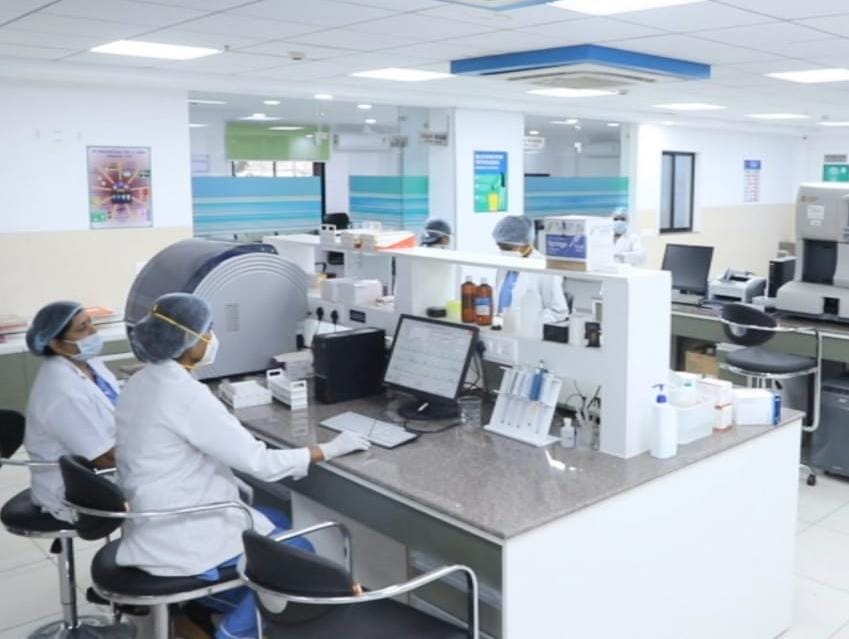
Vishnu Deo Sai: In a significant leap for public healthcare, Chhattisgarh has secured two national distinctions that mark a transformative moment in its health services. The Integrated Public Health Labs (IPHLs) of District Hospital Pandri, Raipur, and District Hospital Balodabazar have been awarded national-level quality certification under the Government of India’s National Quality Assurance Standards (NQAS). While the IPHL at Pandri has been recognized as the first quality-certified IPHL in the country, Balodabazar’s IPHL has been certified as the second such laboratory nationwide—and the second in the state. This milestone underlines Chhattisgarh’s rapid progress in expanding scientific, reliable, and high-quality diagnostic services across its public health network.
This achievement is the result of sustained efforts by the State Government to strengthen healthcare quality. Between January 2024 and November 2025, 832 health institutions across Chhattisgarh have undergone rigorous assessment and certification on national parameters, covering even the most remote regions, such as Chintagufa in Dantewada. It is noteworthy that, for the first time in the country, such a large and systematically organized network of laboratories has been evaluated and accredited in any State — a development that has earned Chhattisgarh a distinct and prestigious position at national level.
The certification followed detailed evaluations carried out by expert assessors nominated by the Ministry of Health & Family Welfare, Government of India. The Pandri IPHL was evaluated on September 10, 2025, and the Balodabazar IPHL on September 11, 2025. Both teams conducted comprehensive reviews covering patient-centric services, quality control measures, workflow efficiency, safety protocols, documentation, and timely reporting. The Pandri IPHL received an impressive 90% score, while Balodabazar IPHL secured 88%, both of which fall under the “excellent” category of national health quality standards.
The core purpose of establishing IPHLs is to ensure that patients have access to pathology, biochemistry, and microbiology diagnostics under one roof. This integrated model enhances both speed and reliability of testing while reducing dependence on costly private laboratories. Patients benefit from accurate, affordable, and timely reports at a single location—a critical service particularly for rural, tribal, and economically weaker communities.
also read:- Uttarakhand Secures ₹100 Crore Central Incentive for…
Pandri’s IPHL has emerged as the state’s model lab, conducting over 3,000 tests daily and offering more than 120 types of diagnostic services. Operating on a hub-and-spoke model, it processes samples received from multiple Community Health Centres and Primary Health Centres across Raipur district. During emergencies, the lab has also handled samples from medical colleges and neighbouring districts, demonstrating both its capacity and statewide utility.
Similarly, the Balodabazar IPHL is rapidly establishing itself as a key diagnostic hub, performing 1,000–1,200 tests per day and offering over 100 types of diagnostic services. With advanced equipment, trained technicians, and efficient turnaround times, the lab has significantly eased access to diagnostics for thousands of patients, particularly those from rural and tribal areas who previously had to travel long distances or rely on private facilities.
The Pandri IPHL has been recognized earlier as well at the national platform. Teams from more than 13 states have visited the lab to study its functioning. Moreover, the Government of India has featured the image of the Raipur IPHL on the cover page of its comprehensive guidelines for the establishment of IPHLs nationwide under PM–ABHIM, adopting this model as a benchmark for the national IPHL network.
The NQAS framework mandates strict adherence to parameters such as cleanliness, safety, patient satisfaction, equipment calibration, biomedical waste management, record-keeping, technical quality, and staff capacity building. Both labs have excelled on every count, demonstrating the strength and discipline of Chhattisgarh’s public health system.
For More Hindi News: http://newz24india.com