
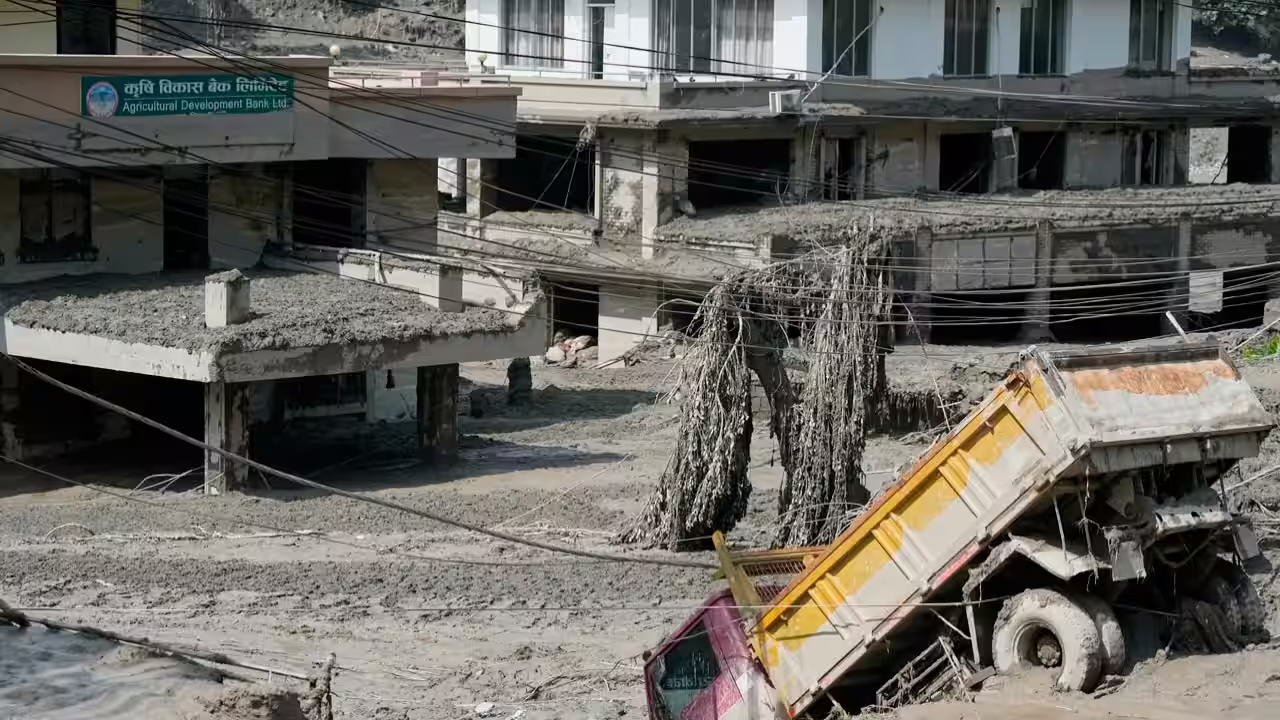
Nepal flood disaster kills at least 175 people, with over 1,300 missing as China rejects Nepal’s dam collapse claim and calls it “fake news.”
China has rejected Nepal’s allegation that the collapse of a geological disaster dam on the Chinese side triggered the devastating floods that caused widespread destruction near the Gyirong-Rasuwagadhi border. Beijing described the claim as “fake news” and disputed the suggestion that a failure to provide an early warning contributed to the deaths and disappearances.
The response came after a powerful surge of water, mud, rocks, sediment and ice swept through the Himalayan border region. The disaster has reportedly killed at least 175 people, while more than 1,300 others have been reported missing.
China Disputes Nepal’s Account
The Chinese embassy in Nepal said the Nepal flood disaster was linked to an earthquake or an earthquake-like glacier collapse that occurred on the Nepali side on the morning of August 26.
According to the embassy, the geological event triggered large mudslides, resulting in heavy casualties and people being reported missing on both sides of the Gyirong-Rasuwagadhi border.
China’s statement directly challenges Nepal’s account of the incident. The embassy argued that blaming the Chinese side would not help address the humanitarian emergency.
Beijing Denies Early Warning Failure
The Chinese embassy also rejected claims that Nepal was not alerted before the disaster. It maintained that the alleged absence of an early warning was not responsible for the deaths and disappearances.
The embassy emphasized the need for cooperation between the two sides during the ongoing crisis. Its statement stressed that accusations would not help the situation and called for joint efforts to save lives.
The dispute over the cause of the Nepal flood disaster comes as rescue and relief operations continue in the affected areas.
also read:- India Post GDS Recruitment 2026: Notification Released,…
Villages Swept Away, Infrastructure Damaged
The sudden flooding caused extensive destruction across the affected region. Villages were inundated or swept away, while roads and buildings were damaged or completely destroyed.
The surge carried a mixture of water, sediment, rocks and ice, making the disaster particularly destructive. The scale of the destruction has complicated rescue operations and efforts to locate people reported missing.
Authorities on both sides of the border are dealing with the aftermath as the death toll and number of missing people continue to draw international attention.
China Calls for Cooperation
The Chinese embassy’s response focused on the importance of cooperation rather than assigning blame. It argued that coordinated efforts are essential during a disaster of such magnitude.
The statement comes amid continuing uncertainty over the precise chain of events that caused the devastating surge. While Nepal has raised concerns about a possible dam-related incident on the Chinese side, Beijing has strongly rejected that explanation.
Investigation Into Cause Continues
The conflicting accounts have put the circumstances surrounding the Nepal flood disaster under increased scrutiny. Determining whether the flooding was caused by a natural geological event, a dam-related incident or a combination of factors will require further investigation and evidence.
For now, the immediate priority remains rescue and relief operations. With hundreds dead and more than a thousand people still reported missing, authorities face a major humanitarian challenge in the border region.
The destruction caused by the disaster has also highlighted the vulnerability of communities and infrastructure in the Himalayan region to sudden floods, landslides, glacier-related events and other geological hazards.
As rescue efforts continue, the disagreement between Nepal and China over the origin of the disaster remains unresolved. Further assessments and official findings are expected to provide greater clarity on what triggered the catastrophic flooding.
For More Hindi News: http://newz24india.com