
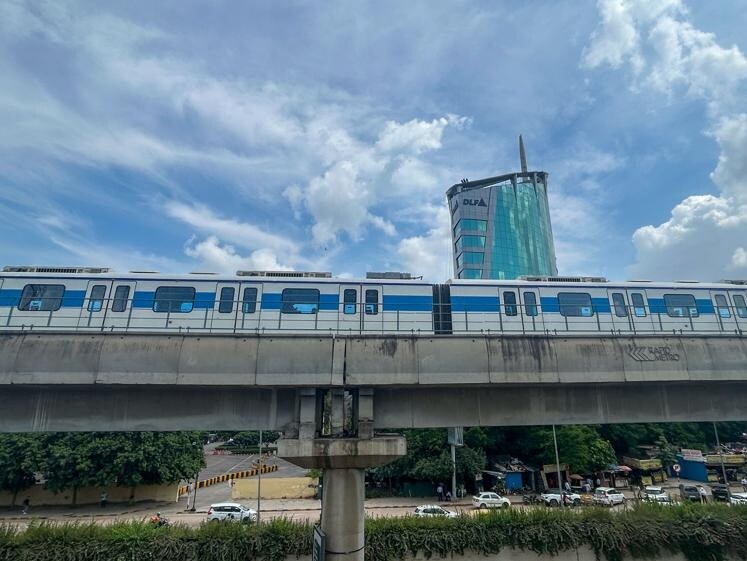
Gurugram Rapid Metro ridership rises 11.62% to 88.81 lakh as Haryana advances major metro and Namo Bharat corridor projects.
Gurugram Rapid Metro: Gurugram’s urban transport network is witnessing growing passenger demand, with the Rapid Metro recording an 11.62% rise in ridership between April and August 2026. The increase highlights the expanding use of public transport in the city, while Haryana is also advancing several major metro and rapid transit projects to strengthen connectivity across the state and the National Capital Region (NCR).
The latest figures were presented during the 66th board meeting of the Haryana Mass Rapid Transport Corporation Limited (HMRTC), chaired by Haryana Chief Secretary Anurag Rastogi on October 8 in Chandigarh. The meeting reviewed passenger growth, revenue performance and the progress of proposed transport corridors.
Gurugram Rapid Metro Records 88.81 Lakh Passengers
The Gurugram Rapid Metro carried 88.81 lakh passengers from April to August 2026, compared with 79.57 lakh during the same period in 2025. This represents an increase of 11.62% year-on-year.
The passenger growth indicates greater use of the existing metro network for daily travel. The system’s financial performance also improved during the five-month period, with revenue from operations reaching ₹18.60 crore, up from ₹16.66 crore in the corresponding period last year.
Non-fare revenue also recorded substantial growth, increasing by 64.34% compared with the previous year. Rental income from spaces licensed at Rapid Metro stations rose to ₹3.50 crore from ₹2.82 crore.
also read:- IND Vs WI 2nd T20I: Dew Could Make Toss Crucial In…
Meanwhile, the e-auction of sites for advertising rights generated ₹23.14 crore, compared with ₹13.39 crore during the corresponding period last year. These figures reflect improvements in both passenger-related earnings and revenue generated through commercial opportunities.
Delhi-Panipat-Karnal Namo Bharat Corridor Planned
Haryana is also working on major regional transport projects designed to improve connectivity between Delhi and key commercial and industrial centres.
One of the important proposals discussed at the meeting was the 136.30-kilometre Delhi-Panipat-Karnal Namo Bharat corridor. The project has an estimated cost of ₹33,051.15 crore and is planned to include 17 stations, with provision for four additional stations in the future.
The proposed corridor is intended to improve rapid transit connectivity between Delhi, Panipat and Karnal. Better connections could support commuters travelling between residential areas, industrial zones and commercial centres along the route.
The project forms part of Haryana’s broader efforts to strengthen regional transport infrastructure and improve links with the National Capital Region.
Gurugram-Faridabad-Noida Rapid Transit Plan Moves Forward
Another major proposal is the Gurugram-Faridabad-Noida-Greater Noida Namo Bharat corridor. The planned connection aims to link important employment hubs, commercial districts and residential areas across Haryana and Uttar Pradesh.
According to the information presented during the HMRTC meeting, the route alignment and proposed stations for the Gurugram and Faridabad sections have been finalised at the state level.
The detailed project report has also been forwarded to the concerned stakeholder departments and development authorities for their comments. Further progress will depend on the subsequent review and approval process.
If implemented, the proposed corridor could improve regional connectivity and provide additional travel options for people commuting between major urban centres in the NCR.
Ballabhgarh-Palwal Metro Extension Gets Approval for Feasibility Report
The Ballabhgarh-Palwal Metro extension has reached an important stage in the planning process, with the Chief Minister approving its final feasibility report.
The project’s detailed report has been submitted to the Union Ministry of Housing and Urban Affairs for further consideration.
The proposed extension is expected to strengthen metro connectivity in southern Haryana. Its progress marks another step in the state’s plans to expand public transport links beyond existing urban networks.
However, further implementation milestones will depend on the subsequent approvals and project development process.
Gurugram-Panchgaon Metro Corridor to Have 28 Stations
The proposed metro corridor connecting Sector 56 in Gurugram with Panchgaon is also approaching the final stages of approval.
The planned elevated route will extend 35.25 kilometres and include 28 stations. It is intended to improve connectivity between Gurugram and the Panchgaon area, where the line is planned to connect with the Namo Bharat Regional Rapid Transit System (RRTS) corridor.
The proposed connection could make it easier for commuters to access different parts of Gurugram and surrounding areas while improving links with the wider regional transport network.
The project is part of Haryana’s efforts to develop integrated public transport infrastructure to serve expanding residential and commercial areas.
HMRTC Reviews Transport Infrastructure Development
The 66th board meeting brought together senior state officials to review the performance of the existing metro system and the progress of planned transport projects.
Those present included Additional Chief Secretary, Finance, Sudhir Rajpal; Additional Chief Secretary, Public Works (Buildings and Roads), Apoorva Kumar Singh; Director General, Town and Country Planning, J. Ganesan; and other senior officers.
The increase in Gurugram Rapid Metro ridership, alongside improved operating and non-fare revenue, comes as Haryana advances proposals aimed at strengthening transport links across the NCR.
With projects connecting Delhi, Gurugram, Faridabad, Panipat, Karnal and Panchgaon at different stages of planning and approval, the state is working towards a more integrated regional transit network.
The progress of these projects will depend on the required clearances and subsequent implementation steps. Meanwhile, the latest ridership figures underline the growing use of Gurugram’s existing Rapid Metro services and the importance of improving public transport capacity as the region expands.
For More Hindi News: http://newz24india.com