
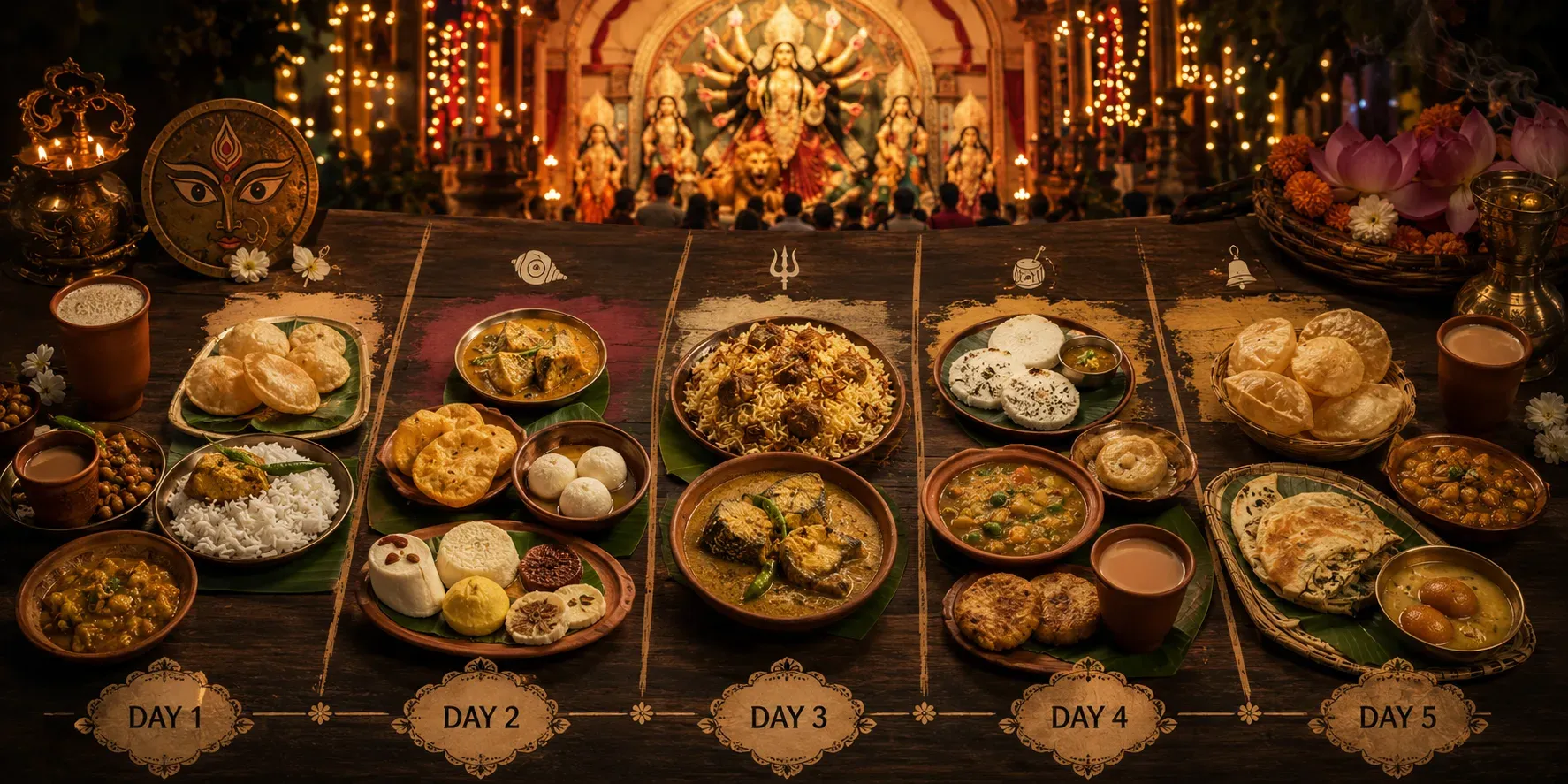
Explore 21 traditional Durga Puja 2026 bhog items, including khichdi, luchi, chholar dal, payesh, sandesh and rasgulla offered during the festival.
Durga Puja is one of the most significant Hindu festivals, celebrated with devotion, vibrant cultural programmes, beautifully decorated pandals and traditional food offerings. Across West Bengal, Assam, Odisha, Bihar and Tripura, devotees welcome Maa Durga with prayers and rituals that reflect their regional customs. An important part of these celebrations is bhog, the food offered to the Goddess as a mark of gratitude and devotion.
Durga Puja 2026 Bhog preparations feature a variety of vegetarian dishes, including rice, lentils, seasonal vegetables, fried snacks and traditional Bengali sweets. While the exact menu varies from one household and community pandal to another, several dishes have become closely associated with festive worship. From comforting khichdi and flavourful chholar dal to sweet payesh, sandesh and rasgulla, these offerings bring together religious traditions and eastern India’s rich culinary heritage.
Durga Puja 2026 Bhog: 21 Traditional Dishes to Know About
Bhog menus differ according to local customs, temple traditions and family practices. Here are 21 vegetarian dishes that feature in Bengali cuisine and festive food traditions associated with Durga Puja.
1. Khichdi
Khichdi is one of the familiar dishes served during community Durga Puja celebrations. Prepared with rice, lentils, spices and sometimes ghee, it is often accompanied by mixed vegetables, chutney or other vegetarian preparations. In many pandals, khichdi forms the centrepiece of the traditional bhog meal.
2. Vegetables in Mustard Gravy
Vegetables cooked in mustard-based gravy offer a distinctive Bengali flavour. Seasonal ingredients are combined with mustard paste and spices to create a dish that can be served with rice. The recipe varies according to household preferences and regional cooking styles.
3. Lentil Cakes
Lentil cakes are prepared using ground lentils and can be added to spiced gravies for a hearty vegetarian dish. Their ingredients and cooking methods differ across regional cuisines, making them a versatile accompaniment to rice-based meals.
4. Chholar Dal
Chholar dal is a popular Bengali preparation made from Bengal gram. It is generally cooked with aromatic spices and may include coconut pieces for additional texture and flavour. Its mildly sweet and savoury taste makes it a favourite at festive meals, particularly when served with luchi.
5. Luchi or Poori
Luchi is a deep-fried Bengali bread made from refined flour, while poori is its widely enjoyed counterpart across India. These fluffy breads are commonly paired with potato curry, chholar dal or other vegetarian dishes. They can add a celebratory touch to a traditional bhog menu.
6. Begun Bhaja
Begun bhaja consists of aubergine or brinjal slices seasoned with spices and fried until golden. Crispy on the outside and soft inside, this Bengali favourite is often served alongside rice and dal. It is also enjoyed as part of festive vegetarian meals.
7. Aloo Posto
Aloo posto combines potatoes with a paste made from poppy seeds. The result is a creamy, nutty preparation that is a staple of Bengali home cooking. Depending on the recipe, it may be served with steamed rice and other vegetarian accompaniments.
8. Labra
Labra is a mixed vegetable dish prepared using seasonal produce and traditional spices. It is particularly associated with Bengali festive meals and is often served alongside khichdi during community celebrations. The vegetables used can vary depending on availability and local traditions.
9. Potoler Dolna
Potoler dolna is a traditional Bengali curry made with pointed gourds cooked in a flavourful gravy. Some versions use stuffed gourds, while others focus on the vegetable itself. Its distinctive preparation makes it a noteworthy addition to regional festive menus.
10. Kolar Bora
Kolar bora refers to banana fritters prepared by mixing mashed banana with other ingredients before frying. These sweet bites are enjoyed in Bengali households and can complement a festive meal. Recipes differ, with some versions incorporating flour, sugar or other flavourings.
11. Chhanar Dalna
Chhanar dalna is a Bengali curry featuring fresh chhana, a type of cottage cheese, cooked in a spiced gravy. It is often served with rice or luchi and is valued for its rich flavour and satisfying texture. Preparation methods vary from household to household.
12. Payesh or Payokh
Payesh is a traditional rice pudding made with milk, rice and sugar or jaggery. Cardamom and other aromatic ingredients may be added for flavour. Known by related names in different regional traditions, this dessert is commonly prepared for religious occasions, celebrations and family gatherings.
13. Narkel Naru
Narkel naru is a traditional coconut sweet made with grated coconut and sugar or jaggery. The mixture is shaped into small, round balls and served during festivals and special occasions. Its simple ingredients and sweet flavour make it a familiar part of Bengali festive food culture.
14. Sandesh
Sandesh is one of Bengal’s best-known sweets, traditionally prepared using fresh chhana and a sweetening ingredient. It can be moulded into different shapes and flavoured with cardamom or other ingredients. Its delicate texture makes it a popular choice for celebrations and festive dessert platters.
15. Rasgulla
Rasgulla consists of soft chhana balls cooked in light sugar syrup. Known for their spongy texture and sweetness, these treats are closely associated with eastern Indian food traditions. They are often served at celebrations and may feature among the sweets offered during festive occasions.
16. Mishti Doi
Mishti doi is a traditional Bengali sweet yoghurt prepared by fermenting sweetened milk. Its creamy consistency and characteristic caramel-like flavour make it a popular dessert. It is enjoyed during festivals, family gatherings and other special occasions.
17. Makha Sandesh
Makha sandesh is a soft, crumbly variation of the traditional Bengali sweet. It is made by combining fresh chhana with sweetening ingredients, with some recipes incorporating ghee or cardamom. Unlike moulded sandesh, this preparation often has a softer, less structured texture.
18. Kheer Kadam
Kheer kadam is a layered Bengali sweet generally featuring a soft sweet centre covered with a chhana-based outer layer. Its contrasting textures and rich taste make it a distinctive option for festive dessert selections. Ingredients and preparation can vary among sweet makers.
19. Malpua
Malpua is a sweet pancake prepared from a flour-based batter, fried and often dipped in sugar syrup. Depending on the recipe, milk, fennel seeds or cardamom may be included. This traditional dessert is enjoyed in different parts of India, including during festivals and religious celebrations.
also read:- Cancer Drugs May Become Up To 70% Cheaper: Centre Caps…
20. Kala Jamun
Kala jamun is a dark-brown, syrup-soaked sweet similar to gulab jamun. Its deep colour and rich flavour distinguish it from lighter varieties of milk-based sweets. It can be served as part of a festive dessert selection, although its presence in bhog depends on local customs.
21. Nimki
Nimki is a crisp, savoury snack made from flour, salt and spices. The dough is shaped into small pieces and fried until crunchy. Unlike the many sweet preparations associated with festive menus, nimki offers a savoury alternative and is enjoyed in Bengali households on various occasions.
Fruits, Paan and Other Sacred Offerings
Apart from cooked dishes, worship during Durga Puja may include fresh fruits, betel leaves and other ritual offerings. These items are selected according to the customs followed by individual families, temples and community pandals.
Paan, sometimes prepared with ingredients such as cloves and cardamom, is associated with traditional rituals in some households. Charnamrit and panchamrit may also be used during worship. Panchamrit is commonly prepared with milk, curd, honey, sugar and ghee, although its preparation and use can vary according to religious traditions.
Fresh fruits may include bananas, apples, coconuts and seasonal varieties. Their selection depends on availability and the specific practices followed during the puja.
Durga Puja 2026: Why Is Bhog Important?
Bhog holds an important place in Durga Puja rituals. Food is offered to Maa Durga as an expression of devotion and gratitude, and the blessed offering may subsequently be distributed among devotees as prasad, according to the customs of the temple or community.
The tradition also brings people together through shared meals and community participation. In many places, devotees gather at pandals to receive bhog, making the experience an important part of the celebrations.
The dishes prepared for Durga Puja 2026 Bhog reflect the diversity of regional food traditions. While khichdi, labra and chholar dal are familiar choices at many Bengali community celebrations, sweets such as payesh and sandesh represent the region’s distinctive culinary heritage.
However, not every dish on this list is offered at every pandal or temple. Ingredients, preparation methods and ritual practices can differ across regions and households. Devotees can follow the traditions of their families or local places of worship when preparing offerings.
As Durga Puja 2026 approaches, these traditional dishes provide a glimpse into the festival’s rich food culture, where devotion, regional identity and the joy of sharing a meal come together.
For More Hindi News: http://newz24india.com