
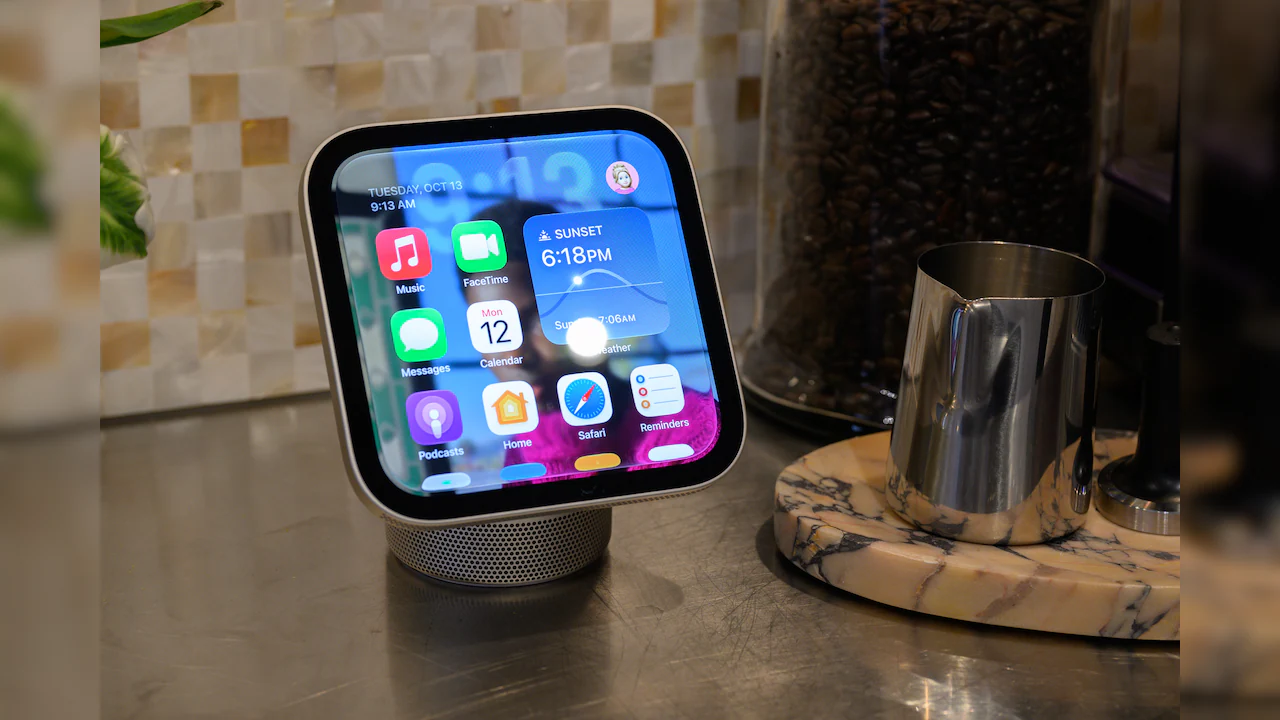
Apple HomeView could challenge Google and Amazon with iPhone integration, Siri AI, personalised apps and a privacy-focused smart-home experience.
Apple HomeView: Apple is preparing to take another shot at the smart-home market with HomeView, a new home device designed around simplicity, personalisation and the iPhone ecosystem. Rather than introducing complicated features or trying to turn the home into a futuristic technology showcase, the company appears to be focusing on something familiar: bringing the iPhone experience into a shared household space.
The approach may sound less exciting than the latest artificial intelligence gadgets, but that could be its biggest advantage. Apple HomeView aims to make everyday tasks easier by combining a touchscreen, Siri AI, personalised applications and Apple’s existing services in one compact device.
What Is Apple HomeView?
Apple HomeView is a smart-home device featuring a 7-inch-square screen that can sit on an aluminium base or be mounted on a wall. The device is designed to provide access to household information, entertainment and smart-home functions through a simple interface.
According to the supplied report, HomeView is expected to launch in November with a price tag of $299. Its main interaction method will be Siri AI, while the touchscreen will provide another way to navigate its features.
The device also uses a camera and voice recognition to identify the person interacting with it. This allows the experience to change according to individual household members rather than presenting the same generic interface to everyone.
For Apple, Apple HomeView represents another opportunity to connect its hardware, software and services in a way that competing smart-home products may find difficult to replicate.
Why Apple Is Betting on Simplicity
The smart-home market already includes products from Amazon and Google, but voice assistants have not completely delivered on their original promise. Many users rely on basic functions such as playing music, setting timers and controlling lights instead of exploring more advanced capabilities.
Apple appears to be taking a different route. Instead of asking consumers to learn a complicated new system, HomeView is designed to feel familiar to people who already use an iPhone, Apple Watch or Apple CarPlay.
Built-in services such as FaceTime, Apple Music and Podcasts are expected to form part of the experience. This familiarity could make the device easier to use from the beginning.
The strategy also reflects a broader challenge facing AI companies: consumers want useful features, but they do not necessarily want complicated interfaces, technical jargon or uncertainty about how their personal information is handled.
How HomeView Could Make Siri More Useful
Siri has long been an important part of Apple’s ecosystem, but its limitations have also affected the company’s ambitions in voice-controlled technology. A home device that depends heavily on Siri will therefore need to deliver reliable and useful responses.
With Apple HomeView, the company has an opportunity to make its digital assistant part of everyday household routines. Users could potentially ask Siri to send messages, retrieve information, manage appointments or help with other routine tasks without reaching for their phones.
Personalisation is another important element. When the device recognises a household member, it can display a personalised home screen featuring relevant applications, widgets and calendar appointments.
The supplied report also says HomeView will rely on a nearby iPhone for personal context rather than storing that information directly on the home device. This approach could help Apple connect AI-powered assistance with the personal information already available through its ecosystem.
However, the success of this strategy will depend on how accurately Siri understands requests and how consistently it performs everyday tasks.
The iPhone Connection Could Be Apple’s Biggest Advantage
One of HomeView’s most distinctive features is its relationship with the iPhone. Instead of requiring every third-party application to be installed directly on the device, compatible apps can provide a HomeView interface through a nearby iPhone.
This means the availability of third-party services will depend partly on whether their developers choose to support the platform. Compatible services, including music-streaming applications, could offer a more personalised experience based on the person using the device.
For example, different family members could access their own preferences instead of sharing a single, generic entertainment profile.
Apple’s existing communication services could also strengthen HomeView’s appeal. FaceTime calls and iMessage integration are valuable features for households already invested in Apple products.
This ecosystem advantage may prove more important than adding unusual hardware features. Consumers who already own an iPhone could find HomeView easier to adopt than a completely unfamiliar smart-home system.
also read:- CMF Speaker M And Speaker S Launched: Customisable…
Can Apple HomeView Beat Amazon and Google?
Amazon and Google have spent years developing their smart-home platforms, giving them an established presence in the market. Apple, meanwhile, has struggled to gain comparable traction with products such as the HomePod.
The new device enters a more competitive environment, where artificial intelligence is becoming a major part of the consumer technology business.
Apple HomeView could differentiate itself through its integration with existing Apple devices, personalised user experiences and emphasis on simplicity. Rather than competing only on the number of features, Apple is betting that familiarity and convenience will encourage people to choose its product.
There is also a potential advantage in the company’s established customer base. Users who already trust Apple’s devices and services may be more comfortable bringing another connected product into their homes.
Still, Amazon and Google have their own ecosystems, voice assistants and smart-home integrations. Apple will need to demonstrate that HomeView offers practical benefits beyond what consumers can already achieve with competing products.
Is the $299 Price Tag Too High?
The reported $299 price could be one of the biggest obstacles to HomeView’s success. Smart displays from Amazon and Google are available in different price ranges, and some competing devices cost considerably less.
Apple, however, has traditionally positioned many of its products in the premium segment. The company may expect customers to pay more for an experience that works closely with their existing devices and services.
The price will ultimately need to be justified by everyday usefulness. Personalised profiles, communication features, convenient access to applications and dependable AI assistance could help make the device worthwhile for some households.
If these features fail to offer a meaningful improvement over cheaper alternatives, the premium price may limit adoption.
Privacy Could Become a Major Selling Point
Privacy is another factor that could influence consumer decisions. Smart-home devices can handle personal conversations, schedules, preferences and other sensitive information, making data management an important consideration.
Apple’s approach of relying on a nearby iPhone for personal context could appeal to users who prefer to keep their information connected to devices they already use and trust.
However, the exact privacy protections, data-processing methods and limitations will need to be evaluated against Apple’s official technical details and privacy disclosures.
The broader opportunity is clear: a smart-home device does not necessarily need to introduce a completely new digital environment. It can build on a familiar ecosystem while making everyday interactions more convenient.
The Final Verdict
Apple’s HomeView concept may appear less ambitious than some futuristic AI devices, but its simplicity could work in its favour. By connecting a home screen with the iPhone, Siri, communication tools and compatible third-party services, Apple is attempting to make smart-home technology feel like a natural extension of products people already own.
Whether it can outperform Amazon and Google will depend on Siri’s reliability, third-party developer support, privacy protections and the value consumers see at the reported $299 price.
If Apple delivers on those expectations, Apple HomeView could show that winning the smart-home market is not always about offering the most features. Sometimes, the stronger strategy is to make technology familiar, useful and easy to trust.
For More Hindi News: http://newz24india.com