
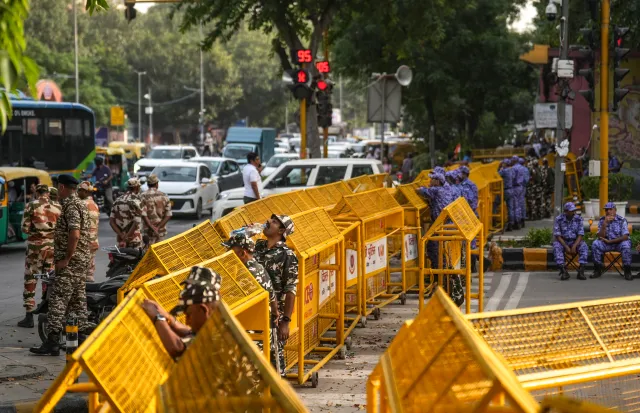
Centre and Delhi Police defend internet and transport curbs during the October 10 CJP protest as the Supreme Court examines contempt allegations.
The Central government and the Delhi Police have defended the restrictions imposed in parts of Delhi during the October 10 protest called by the Cockroach Janta Party (CJP), telling the Supreme Court that the measures were necessary to maintain public order. In separate affidavits, Union Home Secretary Govind Mohan and Delhi Police Commissioner Anurag Kumar denied deliberately violating the court’s directions and sought relief from contempt proceedings linked to the protest.
The Centre also tendered an unconditional apology to the Supreme Court while defending its decision to suspend mobile internet services in parts of central Delhi. The submissions came after the court sought explanations from senior officials over allegations that restrictions imposed during the protest violated its earlier directions concerning public transport.
Centre Defends Mobile Internet Suspension in Delhi
In its affidavit filed on Wednesday, the Centre maintained that the temporary suspension of mobile internet services was intended to prevent a potential breakdown of public order. It argued that the measure was proportionate to the security concerns surrounding the proposed CJP demonstration.
According to the Centre, the suspension followed a request from the Delhi Police, which had anticipated possible law-and-order problems during the protest. Internet services were suspended from 10 pm on October 9 until 10 pm on October 10 within a radius of approximately four kilometres around Raisina Hill.
The government denied that the decision amounted to a deliberate violation of the Supreme Court’s instructions. It also asked the court to grant relief from the contempt proceedings initiated against Home Secretary Govind Mohan over the restrictions.
The Centre’s response forms a key part of the ongoing CJP protest Supreme Court case, which concerns the legality of the restrictions introduced around the October 10 demonstration.
How the Supreme Court Entered the Matter
On October 9, the Supreme Court intervened after concerns were raised over restrictions affecting public transport ahead of the proposed protest. The court directed the authorities not to impose a complete ban on the movement of Delhi Metro trains or other trains entering the national capital.
The order allowed authorities to regulate transport services where necessary to preserve public order, but stopped short of permitting a blanket prohibition on movement.
A subsequent contempt petition alleged that the authorities had failed to comply with the court’s directions. During a special hearing on October 11, the Supreme Court issued notices to the Centre, Delhi Police Commissioner Anurag Kumar and Delhi Metro Rail Corporation (DMRC) chairperson D. Thara, seeking their responses.
The affidavits submitted by the Centre and the Delhi Police are responses to those allegations. The dispute now centres on whether the restrictions were justified security measures or amounted to non-compliance with the court’s order.
Delhi Police Cites July 20 Protest to Justify Restrictions
In a separate affidavit submitted late Wednesday, Delhi Police Commissioner Anurag Kumar defended the decision to deny permission for the October 10 CJP protest. He cited alleged violations of conditions and incidents of violence during an earlier demonstration on July 20.
The police claimed that organisers had indicated that around 1,000 people would participate in the July protest, but the gathering allegedly exceeded 30,000 people. According to the affidavit, the situation subsequently escalated into a serious law-and-order challenge.
The police further alleged that protesters attempted to march towards Parliament despite the prescribed conditions. The affidavit also stated that police personnel were attacked during the demonstration and that approximately 240 men and women deployed on duty sustained injuries.
Citing these events, the police argued that they could not permit another gathering if there were credible concerns about violence, property damage or injuries.
The commissioner described the measures taken during the October 10 demonstration as necessary and proportionate steps to prevent a similar situation.
also read:- Atishi Calls Detention Of Ashutosh Ranka And Saurav Das…
Police Refer to Protests Held Between October 6 and 8
The Delhi Police affidavit also referred to protests held on October 6, 7 and 8, claiming that these events created law-and-order and traffic management challenges.
According to the police, buses used to transport detained protesters were vandalised, with damage reported to their tyres. The affidavit presented these incidents as part of the background against which authorities assessed the risks associated with the October 10 demonstration.
The police maintained that preventive detention of protesters was necessary to avoid further disruption. They argued that the action was intended to prevent potential disorder rather than to deliberately disregard the Supreme Court’s directions.
These claims represent the Delhi Police’s position in its affidavit and form part of the arguments that the court may consider while examining the contempt allegations.
CJP Had Not Filed a Formal Permission Application, Police Claim
The Delhi Police also addressed the procedure followed by CJP ahead of the October 10 protest. According to its affidavit, the organisation had informed the authorities about a proposed demonstration at Jantar Mantar but had not submitted a formal application seeking permission.
The police used this distinction to defend their decision not to authorise the gathering. They maintained that the absence of a formal application, together with concerns arising from earlier protests, supported their decision to impose restrictions.
The affidavit also defended the curbs on metro operations as a precautionary security measure. Delhi has 303 metro stations, and the police stated that restrictions affected approximately 15 per cent of the network rather than the entire system.
The police argued that the measures were limited in scope and intended to prevent a potential security incident while allowing transport services to continue elsewhere.
Delhi Police Seeks Dismissal of Contempt Proceedings
Both the Centre and the Delhi Police have denied deliberately disobeying the Supreme Court’s directions. The government has defended the temporary internet suspension as a proportionate response to anticipated unrest, while the police have relied on previous protest-related incidents to justify restrictions and preventive action.
The Delhi Police Commissioner has requested that the Supreme Court dismiss the contempt notice, maintaining that the steps taken were lawful and necessary to preserve public order.
The CJP protest Supreme Court case raises important questions about the balance between the right to protest, public safety and compliance with judicial orders. The court will have to consider the authorities’ explanations alongside the allegations raised in the contempt petition.
The affidavits set out the Centre’s and the Delhi Police’s positions; they do not, by themselves, establish a final judicial finding on whether the Supreme Court’s directions were violated. The next developments will depend on the court’s consideration of the responses and the arguments presented by the parties.
For More Hindi News: http://newz24india.com