
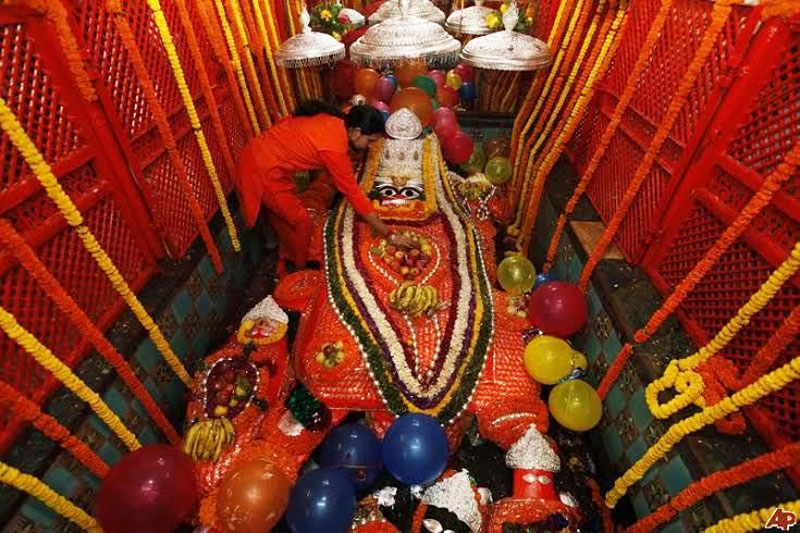
Prayagraj’s Bade Hanuman Temple celebrates a five-day Janmotsav before Diwali. Check the complete schedule of havan, Sundarkand, Chhappan Bhog and Maha Aarti.
The famous Shri Bade Hanuman Temple in Prayagraj, Uttar Pradesh, is celebrating a five-day Shri Hanumat Janmotsav ahead of Diwali. The religious celebrations have begun with traditional Vedic rituals and a special Maha Ganpati Havan. Located near the sacred Triveni Sangam, the temple is witnessing enthusiastic participation from devotees who have gathered to seek the blessings of Lord Hanuman.
The five-day festival includes special prayers, havan ceremonies, Akhand Ramayan Paath, musical Sundarkand recitation, special sindoor offerings and a grand Maha Aarti featuring 1,001 lamps. The concluding celebrations will also feature Maha Abhishek and Chhappan Bhog, offering devotees an opportunity to participate in several religious traditions.
The celebrations are being organised under the guidance of Mahant Balbir Giri, the head priest of the temple and Peethadhishwar of Baghambari Gaddi. The Bade Hanuman Temple Janmotsav is particularly significant because the temple follows a centuries-old tradition of celebrating Lord Hanuman’s birth anniversary on Chhoti Diwali.
Why Is Hanuman Janmotsav Celebrated Before Diwali in Prayagraj?
Hanuman Jayanti is generally celebrated on Chaitra Purnima in several parts of India. However, Shri Bade Hanuman Temple in Prayagraj follows a different religious tradition. Here, Lord Hanuman’s birth anniversary is observed on Kartik Krishna Chaturdashi, which coincides with Narak Chaturdashi, popularly known as Chhoti Diwali.
also read:- Dhanteras 2026: 8 Budget-Friendly Things To Buy If Gold…
According to religious beliefs, there are two important mythological accounts associated with this tradition.
As per the belief associated with the Valmiki Ramayana, Lord Hanuman, who is considered the son of Vayu Dev, appeared on Kartik Krishna Chaturdashi under Swati Nakshatra. This is why the temple celebrates his birth anniversary on Chhoti Diwali with special prayers and religious ceremonies.
Another popular belief connects the occasion with Lord Hanuman’s victory over Ravana in Lanka and Ahiravana in the netherworld. After completing these battles, Hanuman is believed to have reached the banks of the Triveni Sangam to rest after becoming exhausted.
According to this religious account, Goddess Sita blessed Hanuman with good health and immortality and applied sindoor from her forehead to his body.
This belief is also associated with the unique reclining idol of Lord Hanuman at the temple.
Why Is Bade Hanuman Temple Famous in Prayagraj?
A unique religious attraction near Triveni Sangam
Shri Bade Hanuman Temple is one of the most prominent religious destinations in Prayagraj. It is situated close to the Triveni Sangam, where the Ganga, Yamuna and mythical Saraswati rivers are believed to meet.
The temple is especially famous for its rare idol of Lord Hanuman in a reclining posture. Devotees worship the deity as ‘Lete Hanuman’. He is also revered as the Kotwal, or guardian, of Prayagraj.
The temple attracts devotees throughout the year, particularly during Hanuman Jayanti, Diwali and other important religious occasions.
The Bade Hanuman Temple Janmotsav holds special importance because it brings together traditional worship, mythological beliefs and centuries-old customs associated with the temple.
Five-Day Hanuman Janmotsav Schedule at Bade Hanuman Temple
The five-day celebrations include a series of religious programmes dedicated to Lord Hanuman. Devotees can participate in different rituals throughout the festival.
Here is the complete day-wise schedule:
Day 1 – Beginning of the Celebrations
The festival began at 8 AM with traditional religious rituals. The main ceremonies included:
– Sapt Shuddhi
– Atharvashirsha Maha Ganpati Paath
– Ashtadravya Havan
A special Maha Ganpati Havan marked the beginning of the five-day celebrations.
Day 2 and Day 3 – Ram Tarak Mantra Havan and Akhand Ramayan
The second and third days will feature Ram Tarak Mantra Havan along with continuous Akhand Ramayan Paath.
Devotees will participate in prayers and religious recitations dedicated to Lord Ram and Lord Hanuman.
Day 4 – Special Sundarkand Recitation
The fourth day will feature a musical Sundarkand recital scheduled for 5 PM.
Following the recital, a special sindoor chola will be offered to Lord Hanuman. Sindoor holds special religious significance in Hanuman worship.
Day 5 – Grand Celebration and Maha Aarti
The fifth and concluding day will feature the main religious ceremonies of the festival.
The major highlights include:
– Maha Abhishek of Lord Hanuman
– Special Chhappan Bhog offering featuring 56 food items
– Grand Maha Aarti with 1,001 lamps
– Night-long devotional vigil
The grand Aarti with 1,001 lamps is expected to be one of the major attractions of the concluding celebrations.
Security Arrangements and Darshan Facilities for Devotees
Considering the expected large turnout during the five-day festival, special arrangements have been made to manage the movement of devotees.
Additional police personnel have been deployed around the temple premises and along the Triveni Sangam area. Barricading arrangements have also been put in place to help control the crowd.
Separate entry and exit gates have been arranged to ensure smoother movement and reduce congestion inside the temple premises.
Devotees visiting Prayagraj for the Bade Hanuman Temple Janmotsav are expected to participate in the religious ceremonies and seek blessings from Lord Hanuman.
A Special Religious Celebration Ahead of Diwali
The five-day Hanumat Janmotsav at Prayagraj’s Bade Hanuman Temple is an important occasion for devotees because of its unique connection with Chhoti Diwali and the temple’s traditional worship practices.
From Vedic rituals and Akhand Ramayan Paath to Chhappan Bhog and the spectacular Maha Aarti with 1,001 lamps, the celebrations offer a combination of devotion and religious traditions.
The Bade Hanuman Temple Janmotsav also highlights Prayagraj’s rich spiritual heritage, attracting devotees who wish to experience the centuries-old customs associated with Lord Hanuman ahead of Diwali.
For More Hindi News: http://newz24india.com