
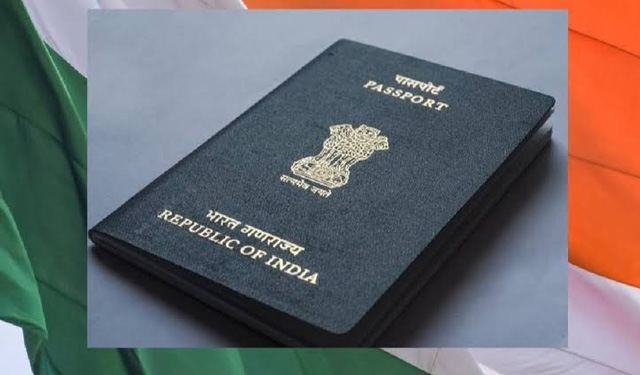
India eases passport and visa rules for 2026, offering relief to certain Pakistani nationals, minority refugees, Sri Lankan Tamils and Tibetans.
Passport And Visa Rules: India has announced significant changes to its passport and visa requirements, offering relief to selected categories of foreign nationals living in the country. The revised rules cover certain Pakistani citizens, religious minorities from Pakistan, Bangladesh and Afghanistan, registered Sri Lankan Tamil refugees, Tibetans and people of Indian origin who acquired Malaysian or Singaporean citizenship.
The Union Ministry of Home Affairs (MHA) issued the changes through the (Passport And Visa Rules) Immigration and Foreigners (Exemption) (Amendment) Order, 2026, published in the Gazette on Thursday. The government has also simplified travel and identification requirements for Indian, Nepalese and Bhutanese citizens travelling directly between the three neighbouring countries.
The India passport and visa rules 2026 amendments introduce category-specific exemptions based on nationality, date of entry, travel history and other eligibility conditions. However, the relaxations do not automatically grant foreign nationals permission to stay in India indefinitely.
Which Foreign Nationals Will Get Relief Under the New Rules? Passport And Visa Rules
The amended order provides passport-related exemptions to several categories of foreign nationals who meet specific conditions. These include:
– Certain Pakistani nationals: Individuals who entered India on or before December 31, 2009, intending to settle permanently and are unable to renew their Pakistani travel documents because they do not possess a Computerised National Identity Card (CNIC).
– Religious minorities: Hindus, Sikhs, Buddhists, Jains, Parsis and Christians from Afghanistan, Bangladesh and Pakistan who entered India on or before December 31, 2024, after facing religious persecution or fearing persecution.
– Sri Lankan Tamils: Registered Sri Lankan Tamil nationals who took refuge in India on or before January 9, 2015.
– Tibetan nationals: Certain Tibetans who entered India with permits issued by the Indian Embassy in Kathmandu between 1959 and May 30, 2003, or through special entry permits at designated immigration checkpoints along the India-Nepal border.
– People of Indian origin: Certain individuals who acquired Malaysian or Singaporean citizenship and returned to India on or before December 31, 2009, using passports that have since expired and cannot be renewed.
Pakistani Nationals Must Fulfil Specific Conditions
The government has introduced special provisions for certain Pakistani nationals who have been living in India for several years. However, the exemption is not available to everyone and comes with strict eligibility requirements.
Applicants must have entered India on or before December 31, 2009, with the intention of settling permanently. They must also demonstrate that they cannot renew their Pakistani travel documents because they do not possess a CNIC issued by Pakistan.
Other conditions include
– They must not have married while living in Pakistan.
– They must not have purchased immovable property in Pakistan.
– Their family members left behind in Pakistan must be Indian citizens.
– They must have no adverse reports from police or security agencies.
– They must give an undertaking that they will not return to Pakistan.
These conditions are intended to identify eligible individuals who have been unable to complete passport renewal formalities because of specific documentation-related difficulties.
also read:- Big Cabinet Decision! Fast Track Special Courts Scheme…
Religious Minorities From Pakistan, Bangladesh and Afghanistan Get Relief
One of the significant provisions of the India passport and visa rules 2026 is the exemption extended to six religious minority communities from three neighbouring countries.
The order covers Hindus, Sikhs, Buddhists, Jains, Parsis and Christians who were compelled to seek shelter in India because of religious persecution or fear of persecution.
To qualify, individuals must have entered India on or before December 31, 2024. The exemption also covers people who entered without valid passports or other travel documents, as well as those whose documents have expired.
However, this relaxation does not mean that beneficiaries can continue living in India without fulfilling immigration requirements. They must obtain the appropriate category of visa to extend their stay in the country, wherever required.
What Changes for Indian, Nepalese and Bhutanese Travellers?
The Centre has also eased documentation requirements for citizens of India, Nepal and Bhutan travelling directly between these neighbouring countries.
Under the revised provisions, citizens of all three countries can use specific identity documents mentioned in the government’s official Visa Manual instead of standard passports when travelling directly by road or air.
The changes are expected to make cross-border journeys more convenient by reducing documentation-related formalities.
However, the exemption is limited to direct travel between these countries. Different rules will apply if passengers travel through certain third countries.
When Will Passports and Visas Still Be Mandatory?
(Passport And Visa Rules) Despite the relaxation, the government has retained standard passport and visa requirements in several situations.
The following conditions will continue to apply:
– Indian citizens travelling to or returning from countries other than Nepal and Bhutan through the India-Nepal or India-Bhutan borders must carry valid passports.
– Such Indian travellers must use designated immigration checkpoints for entry and exit.
– Nepalese and Bhutanese citizens travelling to India through China, Macau, Hong Kong or Pakistan must possess valid passports and visas.
– Regular travel documentation requirements will remain applicable when journeys involve third countries.
Therefore, the new India passport and visa rules 2026 do not provide a blanket exemption from travel documents. The applicable requirements will depend on the route and nationality of the traveller.
Indian Armed Forces Personnel Also Get Exemption
The amended notification includes additional exemptions for certain categories of military personnel.
Indian Army, Navy and Air Force personnel travelling on official duty will not be required to follow the usual passport and visa requirements covered by the exemption. Their family members accompanying them on government-provided transport will also receive the benefit.
The order further provides relief to crew members of foreign military vessels visiting India for repair work.
Such personnel can be exempt from passport requirements if they possess Military Ship Repair Permits issued by immigration authorities and carry valid military identification documents.
The notification defines foreign military vessels as warships and other government-operated ships used by the armed forces of another country for non-commercial purposes.
Do Foreign Nationals Still Need a Visa to Stay in India?
The new exemptions should not be interpreted as automatic permission for permanent residence in India. Although certain categories of foreign nationals have received relief from passport and travel-document requirements, they must still comply with applicable immigration regulations.
Wherever required, eligible individuals must obtain the appropriate visa to continue their stay in India.
The India passport and visa rules 2026 establish separate eligibility criteria for different groups, taking into account their nationality, date of arrival, travel history and personal circumstances.
Overall, the Centre’s decision is aimed at addressing documentation difficulties faced by specific foreign nationals and refugees while making direct travel between India, Nepal and Bhutan easier. The actual benefits will depend on whether individuals meet the conditions mentioned in the amended notification.
For More Hindi News: http://newz24india.com