
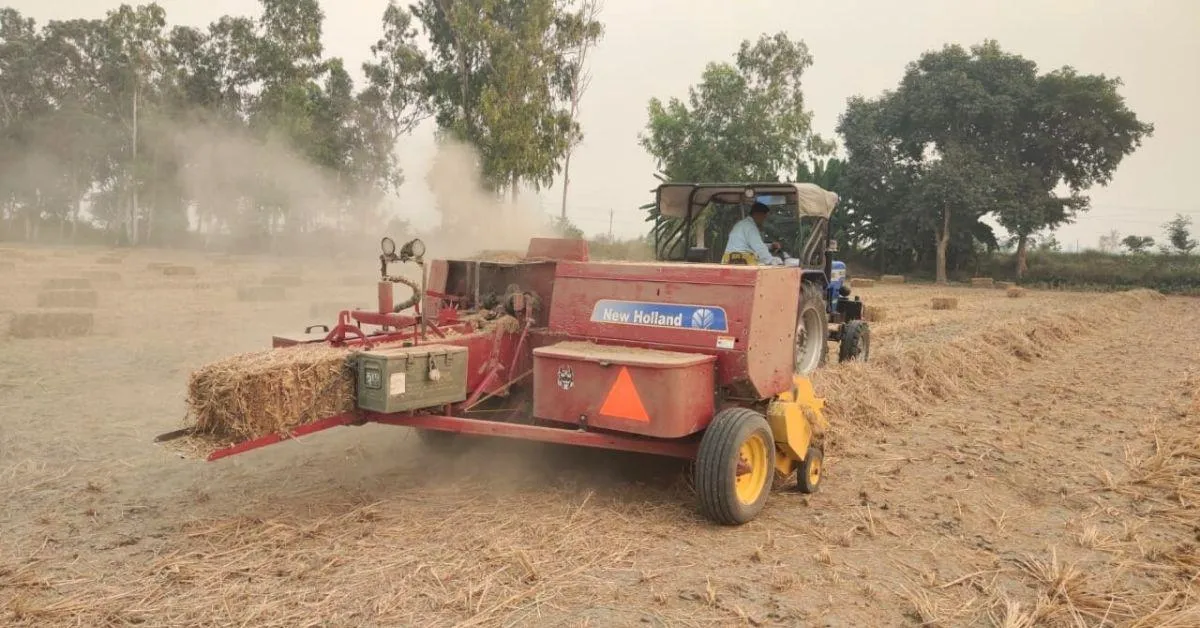
Haryana distributes 13,200 modern agricultural machines, offers up to 50% subsidy and Rs 1,200 per acre incentive to promote scientific stubble management.
Modern Agricultural Machines: Haryana is strengthening its efforts to control stubble burning and promote sustainable farming practices by providing modern agricultural equipment and financial incentives to farmers. Under its crop residue management initiatives, the state has distributed 13,200 modern agricultural machines to help farmers manage crop waste without burning it.
Farmers purchasing eligible agricultural machinery are receiving subsidies of up to 50 per cent. Additionally, those adopting scientific methods for managing paddy straw and other crop residues are being offered an incentive of Rs 1,200 per acre.
The initiative aims to reduce air pollution, improve agricultural practices and encourage farmers to adopt environmentally friendly alternatives to stubble burning.
Farmers Receive 13,200 Modern Agricultural Machines
The Haryana government has taken several steps to make modern agricultural technology more accessible to farmers. As part of these efforts, 13,200 advanced agricultural machines have been distributed to support effective crop residue management.
These machines help farmers handle leftover crop material after harvesting and prepare their fields for the next agricultural cycle without resorting to burning.
Under the Haryana Crop Residue Management Scheme, eligible farmers can receive financial assistance of up to 50 per cent on the purchase of approved agricultural machinery. This subsidy is intended to reduce the financial burden on farmers and encourage wider adoption of modern farming equipment.
ALSO READ:- CM Nayab Singh Saini Pays Tribute To Sant Bhagat Sain Ji…
Rs 1,200 Per Acre Incentive for Scientific Stubble Management
Along with machinery subsidies, the state government is providing direct financial encouragement to farmers who choose scientific methods of crop residue disposal.
Farmers adopting approved alternatives to stubble burning are being offered an incentive of Rs 1,200 per acre.
The financial support is designed to motivate farmers to manage agricultural waste responsibly while protecting soil quality and reducing pollution.
Through the Haryana Crop Residue Management Scheme, the government is encouraging farmers to view crop residue as a resource that can be managed productively rather than burned in fields.
79 Sensors and 36 Drones Used to Monitor Hotspot Villages
The Haryana government is also using technology to identify and monitor incidents of stubble burning, particularly in villages considered vulnerable to such activities.
According to the information shared, 79 sensors and 36 drones have been deployed for surveillance in hotspot villages.
These monitoring systems help authorities keep track of agricultural fields and identify potential incidents of crop residue burning. The administration is also taking prompt action whenever such incidents are detected.
The use of sensors and drones is intended to strengthen ground-level monitoring and improve the response of officials during the crop harvesting season.
Haryana Focuses on Pollution Control and Sustainable Agriculture
Stubble burning has remained a major environmental concern, particularly during the paddy harvesting period, when smoke from agricultural fields can contribute to deteriorating air quality across northern India.
To address this challenge, Haryana is combining financial incentives, modern machinery and technology-based surveillance.
The government is focusing on making alternative crop residue management methods more accessible so that farmers do not have to depend on burning leftover straw.
These measures are also expected to support better soil management and encourage sustainable agricultural practices over the long term.
Government Encourages Farmers to Adopt Modern Farming Methods
The distribution of agricultural machines and financial incentives reflects Haryana’s broader efforts to modernise farming and reduce the environmental impact of agricultural activities.
By offering subsidies on machinery purchases and incentives of Rs 1,200 per acre, the state is attempting to make scientific crop residue management economically attractive for farmers.
The deployment of 79 sensors and 36 drones further strengthens the monitoring mechanism in hotspot villages.
Overall, the Haryana Crop Residue Management Scheme combines financial assistance, modern agricultural equipment and technology-driven surveillance to tackle stubble burning. The distribution of 13,200 machines and incentives for scientific residue management are important steps towards cleaner air and more sustainable farming in the state.
For More Hindi News: http://newz24india.com