
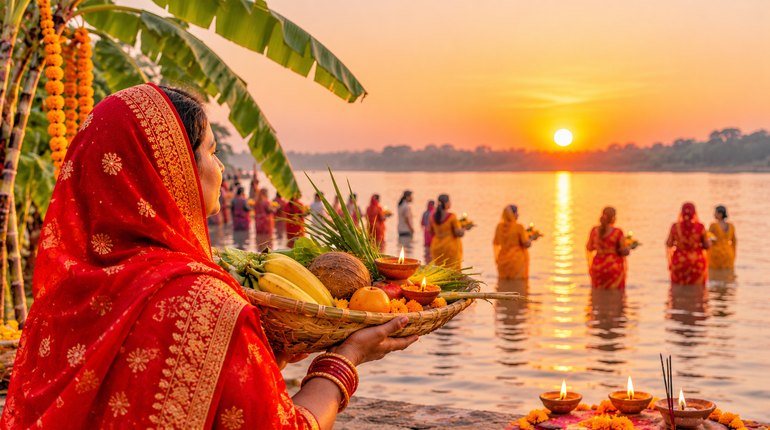
Chhath Puja 2026 Kharna falls on November 14. Explore its rituals, fasting rules, Rasiyaav prasad and religious significance.
Chhath Puja is one of the most significant Hindu festivals, celebrated with immense devotion, discipline and faith, particularly in Bihar, Jharkhand, Uttar Pradesh and parts of Nepal. The festival is dedicated to the worship of the Sun God (Surya Dev) and Chhathi Maiya. Among its four days of rituals, Kharna holds special importance as it marks the beginning of the most rigorous phase of the festival.
Chhath Puja 2026 Kharna will be observed on Saturday, November 14, 2026. Also known as Lohanda in several regions, Kharna is the second day of the festival. Devotees observe a day-long fast without food and water before preparing and offering traditional prasad, including jaggery-based kheer, popularly known as Rasiyaav, and ghee-coated rotis.
The completion of the Kharna rituals marks the beginning of the approximately 36-hour nirjala vrat, during which devotees abstain from both food and water until the final morning offerings to the rising Sun.
Chhath Puja 2026 Kharna: Date and Significance
Kharna is observed on the second day of the four-day Chhath festival, following Nahay Khay. The day is dedicated to purification, self-discipline and devotion. Devotees believe that observing the rituals with sincerity brings happiness, prosperity, good health and blessings for their families.
The word Kharna is associated with the tradition of consuming a special prasad after observing a strict fast throughout the day. It is considered an important preparation for the challenging nirjala vrat that follows.
For devotees, Chhath Puja 2026 Kharna is not just a religious ritual but also an expression of gratitude towards the Sun God, who is regarded as the source of life and energy.
Morning Rituals: Devotees Observe a Day-Long Fast
The Kharna rituals begin early in the morning, often around Brahma Muhurta. Devotees wake up before sunrise, take a bath and wear clean clothes. They then offer prayers to Surya Dev and Chhathi Maiya before taking a religious vow to observe the fast.
From sunrise until sunset, devotees refrain from consuming food and water. This strict fast is followed as an act of devotion, mental discipline and spiritual purification.
The day is generally spent preparing for the evening puja and arranging the ingredients required for the traditional Kharna prasad.
also read:- Kedarnath Dham Closing 2026: Temple Doors Shut For Six…
Rasiyaav and Roti: The Special Kharna Prasad
One of the most important traditions of Chhath Puja 2026 Kharna is preparing the special prasad in the evening after sunset.
The traditional preparation is made with great care, maintaining cleanliness and purity throughout the process. In many households, devotees prepare the offerings on a new clay stove using mango wood instead of a regular gas stove.
The main Kharna offerings include:
Rasiyaav: A traditional sweet rice pudding prepared using jaggery or sugarcane juice.
Roti: Homemade wheat rotis, often prepared without adding salt and served with pure ghee.
Seasonal fruits: Fresh fruits are included as part of the religious offering.
The preparation of the prasad is considered a sacred activity. Family members often participate in arranging ingredients and maintaining cleanliness around the cooking area.
Why Is Silence Maintained While Eating Kharna Prasad?
After sunset, devotees perform the evening rituals and offer the prepared food to Chhathi Maiya and the Sun God. Once the offering is completed, the fasting devotee consumes the prasad.
An important tradition associated with Kharna is maintaining complete silence while eating the sacred food. Devotees consume the prasad peacefully and avoid unnecessary conversations or disturbances.
This practice reflects the importance of concentration, devotion and discipline during Chhath Puja. After the vrat holder has consumed the prasad, it is distributed among family members, relatives and neighbours.
The Beginning of the 36-Hour Nirjala Vrat
The conclusion of the Kharna rituals marks the beginning of one of the most challenging phases of Chhath Puja. After consuming the prasad, devotees undertake an approximately 36-hour nirjala fast.
During this period, they do not consume food or water. The fast continues through the evening Arghya offered to the setting Sun on November 15 and concludes after the morning Arghya to the rising Sun on November 16, 2026.
The third day is known as Sandhya Arghya, when devotees gather at rivers, ponds and other water bodies to offer prayers to the setting Sun.
On the fourth and final day, known as Usha Arghya, devotees offer water and prayers to the rising Sun. After completing the morning rituals, they break their fast, marking the conclusion of Chhath Puja.
Kharna Prasad Distribution: A Tradition of Sharing and Devotion
Sharing prasad is another meaningful part of Kharna. Once the devotee has completed the ritual of consuming the offering, the remaining Rasiyaav, roti and fruits are distributed among family members, relatives, friends and neighbours.
The prasad is considered sacred, and people accept it with devotion and respect. This tradition also reflects the spirit of togetherness, generosity and community participation that makes Chhath Puja special.
Why Is Kharna Important in Chhath Puja?
Kharna represents the transition from the initial purification rituals to the most demanding fasting period of Chhath Puja. It teaches the values of patience, self-control, dedication and gratitude.
The preparation of Rasiyaav, the evening prayers and the beginning of the nirjala vrat make this day particularly significant for devotees.
Chhath Puja 2026 Kharna brings families and communities together through shared traditions, sacred offerings and prayers to the Sun God and Chhathi Maiya. The observance highlights the deep cultural and spiritual significance of Chhath, a festival that celebrates nature, faith and the importance of gratitude.
For More Hindi News: http://newz24india.com