
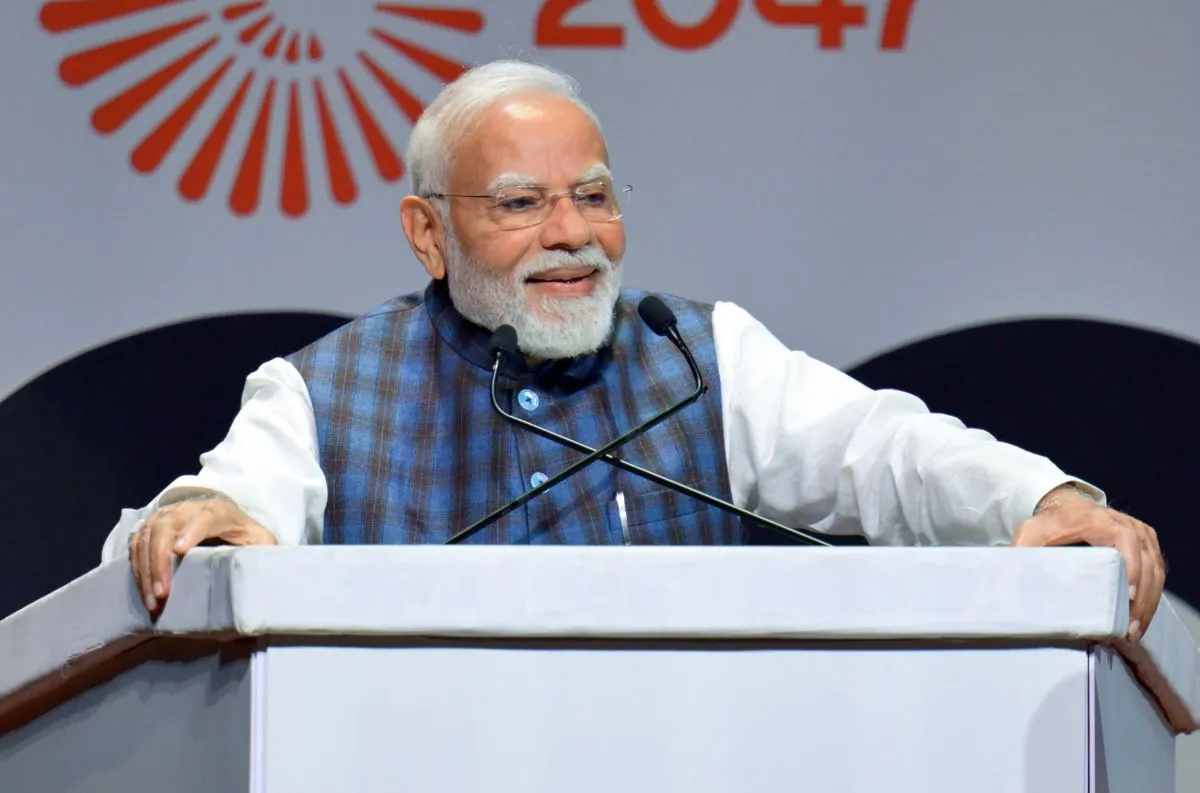
PM Modi urges India Inc to boost investment, create jobs, strengthen domestic manufacturing and make Indian businesses more competitive in global markets.
Prime Minister Narendra Modi has urged India’s corporate sector to play a bigger role in the country’s economic transformation by increasing investment, encouraging innovation and creating more employment opportunities. Addressing business leaders at the centenary convention of the Federation of Indian Chambers of Commerce and Industry (FICCI), he called on India Inc to look beyond short-term profits and contribute to India’s long-term development.
The Prime Minister’s message came at a crucial time when India is expanding its economic presence in global markets and exploring new opportunities across manufacturing, agriculture, technology and exports. He challenged corporate leaders to think about what they could contribute to the country’s growth over the next 20 years.
The PM Modi India Inc Appeal highlighted the importance of private-sector participation in achieving national economic ambitions. He stressed that government policies and incentives alone cannot deliver sustainable growth unless businesses translate opportunities into investment, innovation, better products and jobs.
PM Modi Asks Corporate India to Look Beyond Government Support
Speaking at FICCI’s 100th anniversary convention, Prime Minister Modi reminded business leaders that India’s economic journey has passed through several important phases.
Founded in 1927, FICCI has witnessed the pre-Independence period, decades of controlled economic activity, economic liberalisation and India’s growing integration with the global economy.
Using the centenary occasion to discuss the country’s future, Modi asked India Inc to consider its contribution to the next two decades.
He shifted the focus from what the government could do for businesses to what businesses could do for India. According to the Prime Minister, the country has created new opportunities through policy reforms, but the private sector must take greater responsibility for turning these opportunities into economic progress.
PM Modi Highlights Tax Reforms and Employment Generation
The Prime Minister referred to several government measures introduced to improve the business environment and encourage economic activity.
These include reducing the corporate tax rate for domestic companies opting for the concessional tax regime from 30% to 22%, simplifying tax administration, speeding up refunds and providing income-tax relief under the new tax regime.
The new income-tax regime also provides relief that effectively makes annual income up to ₹12 lakh tax-free, subject to applicable conditions.
He also highlighted Goods and Services Tax (GST) reforms aimed at reducing the tax burden and supporting consumption.
However, Modi raised an important question before corporate leaders: Have these policy measures resulted in more employment opportunities and higher salaries for employees?
He emphasised that the benefits of economic reforms should not remain limited to company profits. They should also reach workers, consumers and the wider economy through better wages, job creation and increased investment.
India Must Reduce Dependence on Imported Pharmaceutical Ingredients
Another major issue highlighted during the address was India’s dependence on imported industrial inputs.
The Prime Minister referred to the pharmaceutical industry, where India has earned global recognition as the ‘Pharmacy of the World’ through its production and export of medicines.
However, the country continues to import significant quantities of active pharmaceutical ingredients (APIs), bulk drugs and intermediates.
Modi called for stronger domestic manufacturing capabilities in these areas. He emphasised the need for greater investment in research and development, technology and large-scale production.
Developing domestic capabilities could help India strengthen its pharmaceutical supply chains, reduce dependence on international suppliers and create new opportunities for Indian manufacturers.
The same approach, he suggested, should be followed in sectors such as steel and aluminium. India exports iron ore but still imports certain specialised grades of finished steel.
The focus should therefore be on moving towards higher-value manufacturing and developing products that currently depend on overseas suppliers.
PM Modi Encourages Private Investment in Agriculture
Agriculture was another important focus of the Prime Minister’s address. He questioned why corporate India had not invested more significantly in the agricultural sector despite India’s large production capacity.
India accounts for only around 2% to 2.5% of global agricultural exports, indicating considerable room for expansion.
Modi pointed out that increasing agricultural production alone would not be enough to strengthen India’s position in international markets. The country also needs better procurement systems, food processing facilities, storage infrastructure, grading, logistics and access to global buyers.
He highlighted the growth in processed food exports, noting that the share of processed food in India’s agri-food exports had increased from 13% to more than 20% over the past 12 years.
The Prime Minister encouraged businesses to invest in food processing and build stronger connections between farmers and international markets.
Such investments could help reduce post-harvest losses, improve farmers’ access to markets, create employment in rural areas and increase the value of agricultural products.
India has an opportunity to move beyond exporting raw agricultural produce and become a stronger global supplier of processed, branded and value-added food products.
Indian Consumers Deserve Export-Quality Products
The PM Modi India Inc Appeal also focused on product quality and the expectations of Indian consumers.
The Prime Minister questioned the practice of some manufacturers offering better-quality products in international markets while treating domestic consumers differently.
He said Indian customers should not have to specifically demand ‘export quality’ products. They deserve the same standards of quality, design, reliability and value that companies provide to customers overseas.
also read:- Amit Shah Inaugurates 6th Anti-Terror Conference In…
His message was that Indian manufacturers must improve product standards across all markets rather than create different quality expectations for domestic and international buyers.
This approach could also strengthen the reputation of Indian brands and make locally manufactured products more competitive globally.
Free Trade Agreements Offer New Opportunities for Indian Businesses
India’s expanding network of free trade agreements is opening access to several international markets. However, the Prime Minister stressed that signing trade agreements alone would not guarantee success for Indian companies.
Businesses must understand the preferences of international consumers, meet global quality standards, establish distribution networks and develop products that can compete with international brands.
Modi encouraged companies to conduct market-mapping exercises and study the specific requirements of different regions before entering new markets.
He also highlighted opportunities in engineering goods, machinery, packaging equipment and irrigation systems, particularly in developing economies and countries across the Global South.
Indian companies can help smaller manufacturers in these markets access better technology, improve product quality and become
part of international supply chains.
PM Modi Calls for a Long-Term Vision for India’s Economic Growth
The Prime Minister’s address carried a broader message about the responsibility of corporate India in shaping the country’s economic future.
The government can introduce reforms, improve infrastructure and create a favourable business environment, but private companies must take the lead in investment, research, manufacturing, employment and exports.
The PM Modi India Inc Appeal was therefore not limited to increasing corporate investment. It also highlighted the need to strengthen domestic production, improve product quality, support farmers and build globally competitive businesses.
With opportunities emerging across manufacturing, pharmaceuticals, agriculture, engineering and international trade, India Inc has an important role in determining the country’s economic direction over the next 20 years.
The Prime Minister’s message was clear: India’s growth ambitions require businesses to move beyond immediate commercial returns and contribute to building a stronger, more self-reliant and globally competitive economy.
For More Hindi News: http://newz24india.com