
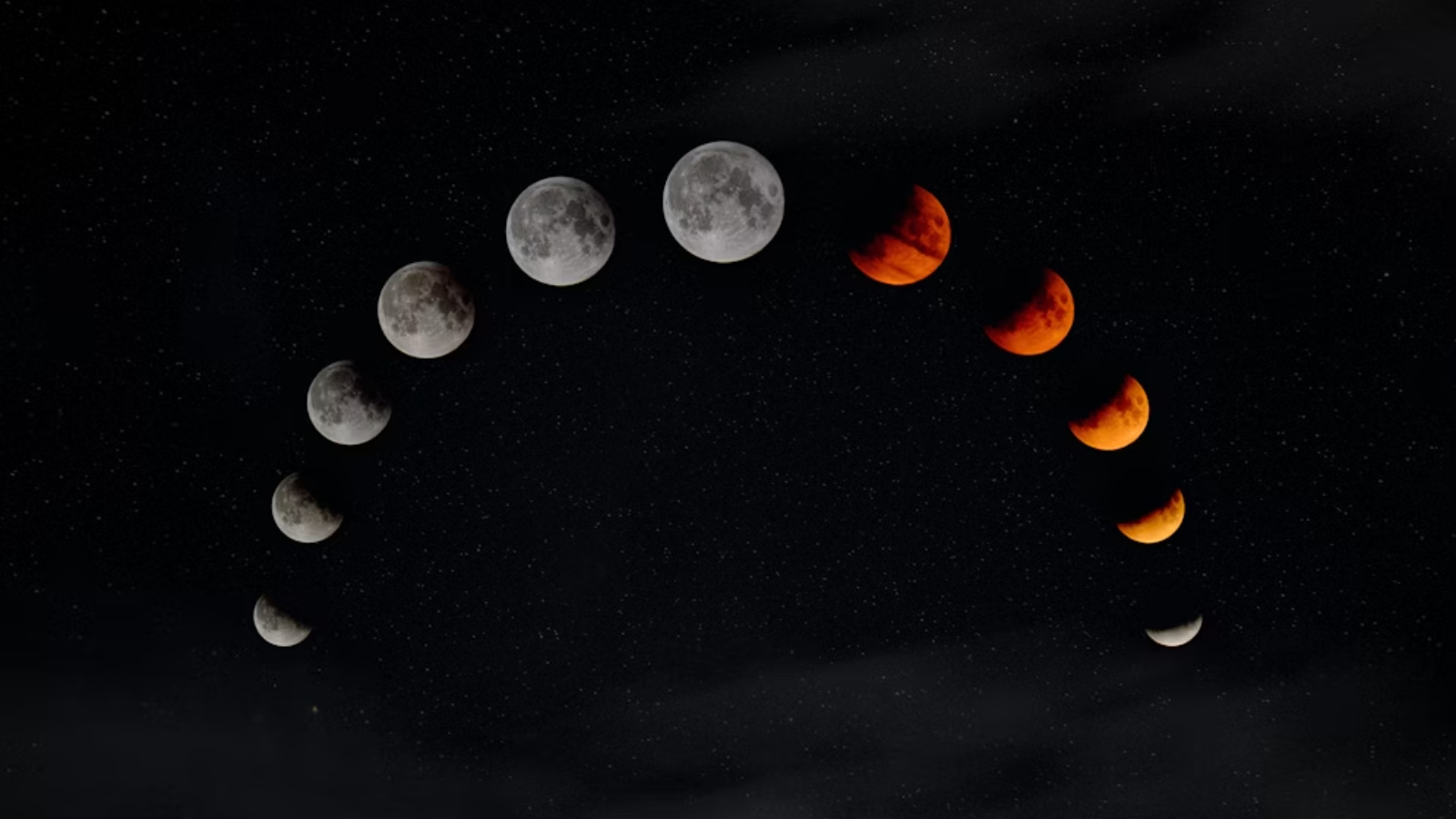
Chandra Grahan 2026 will occur on August 27-28 depending on time zone. Check India timing, visibility, eclipse phases and safe viewing details.
Chandra Grahan 2026: The year’s upcoming partial lunar eclipse will take place across August 27 and 28, depending on the time zone. For viewers in India, however, the celestial event will occur during the daytime on August 28, which means it will not be visible from the country.
The lunar eclipse is expected to last for around five and a half hours from beginning to end. The more prominent partial phase will continue for a little over three hours. Here is everything you need to know about the date, timing, visibility and viewing conditions.
Chandra Grahan 2026: August 27 or August 28?
The difference in the date is mainly because the eclipse will unfold across different time zones. In some parts of the world, the event will begin on August 27, while in India, the corresponding phases will fall on August 28.
According to the timings given for India, the eclipse will begin at 6:55 am IST and conclude at 12:30 pm. Since the Moon will remain below the horizon over India during the relevant stages, skywatchers here will not be able to observe it.
Chandra Grahan 2026 Timing in India
The eclipse will pass through several stages. The complete sequence, according to the listed IST timings, is:
Penumbral eclipse begins: 6:55 am
Partial eclipse begins: 8:04 am
Maximum eclipse: 9:43 am
Partial eclipse ends: 11:21 am
Penumbral eclipse ends: 12:30 pm
The entire event will last approximately 5 hours and 35 minutes, while the partial phase will continue for roughly 3 hours and 16 minutes.
What Is a Partial Lunar Eclipse?
A partial lunar eclipse occurs when Earth comes between the Sun and the Moon and the three bodies are not aligned perfectly. As a result, only part of the Moon enters Earth’s darkest shadow, known as the umbra.
During the event, a portion of the lunar surface becomes noticeably darker as it passes through the umbra. Unlike a total lunar eclipse, Earth’s central shadow does not completely cover the Moon.
Where Will the Lunar Eclipse Be Visible?
Chandra Grahan 2026 will be visible from large parts of North and South America. Observers in some regions of Europe, Africa and western Asia may also get an opportunity to see portions of the eclipse.
Visibility will depend on whether the Moon is above the horizon when each stage occurs. The event will be particularly favorable for observers in several parts of the Americas.
On the other hand, the eclipse will not be visible from India, Australia, Antarctica and much of the Pacific Rim because of the Moon’s position and local daylight conditions.
Why Won’t Chandra Grahan 2026 Be Visible in India?
For Indian observers, the key issue is not that the eclipse is absent, but that its important stages occur when the Moon is below the horizon.
The eclipse timings in India fall between 6:55 am and 12:30 pm IST. These hours coincide with daytime, and the Moon will not be positioned above the horizon for Indian viewers during the relevant phases. Therefore, the celestial event cannot be watched from India.
also read:- Raksha Bandhan 2026: Is Rakhi On August 27 Or 28? Check Correct Date, Shubh Muhurat And City-Wise Timings
Chandra Grahan 2026 and Raksha Bandhan
The eclipse coincides with Raksha Bandhan on August 28, making its date and timing particularly relevant for people in India.
Since the lunar eclipse will not be visible from India, people planning Raksha Bandhan celebrations will not be able to watch the astronomical event from the country. Those following religious traditions should refer to their local Panchang for festival-related timings and customs.
How Can You Watch the Eclipse Online?
People who cannot view the eclipse from their location may be able to follow online coverage. Space agencies and astronomy platforms may provide livestreams or updates around the event through their official digital channels.
NASA and the European Space Agency (ESA) are among the organizations that may offer online information or coverage through their official websites and YouTube channels.
Is It Safe to Watch a Lunar Eclipse?
Unlike a solar eclipse, a lunar eclipse does not pose a risk to the eyes when viewed directly. Chandra Grahan 2026 can therefore be observed safely with the naked eye from locations where the Moon is visible.
Those who want a closer look can also use binoculars or a small telescope. No special eye protection is required for viewing a lunar eclipse.
Key Takeaway
The lunar eclipse will span August 27-28 depending on the time zone, but Indian timings place the event on August 28. The eclipse will begin at 6:55 am IST, reach its maximum at 9:43 am and end at 12:30 pm.
For India, Chandra Grahan 2026 will remain an unobservable daytime event because the Moon will be below the horizon during the relevant phases. Skywatchers in parts of the Americas and other regions with favorable nighttime conditions will have a better chance of witnessing the partial lunar eclipse.
For More Hindi News: http://newz24india.com