
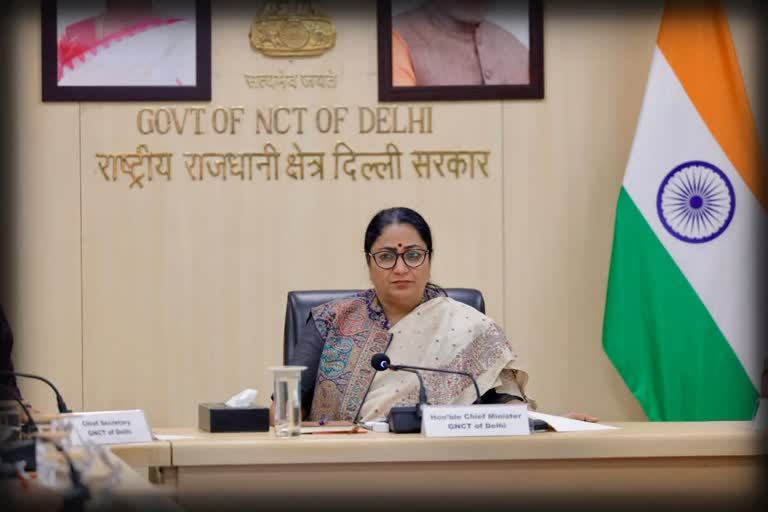
Delhi government to hand over flats to 6,476 underprivileged families in Sawda Ghevra next year; repairs worth ₹27.50 crore underway.
In a major initiative for affordable housing, the Delhi government is set to hand over flats to 6,476 underprivileged families in Sawda Ghevra in the coming year. Repairs for vacant flats have been approved at a cost of ₹27.50 crore.
Chief Minister Rekha Gupta highlighted that the Delhi Urban Shelter Improvement Board (DUSIB) is focusing on developing community amenities in existing EWS (Economically Weaker Section) colonies. The government aims not just to provide housing but also to ensure that residents have access to education, healthcare, sanitation, water, green spaces, and employment opportunities. Developing basic and social infrastructure in large colonies like Sawda Ghevra is a top priority for the Delhi administration.
Flats Ready for Distribution Next Year
Construction of the EWS housing units in Sawda Ghevra began in 2012 under the Jawaharlal Nehru National Urban Renewal Mission (JNNURM) and was completed by 2020. Out of 7,620 units, 6,476 remain vacant. The Chief Minister has sanctioned ₹27.50 crore for the repair of 2,500 empty flats to make them habitable. The allocation of fully-equipped flats is expected to start next year, with remaining units scheduled for subsequent repair phases. The Delhi government is simultaneously developing schools, health centers, community halls, markets, and transportation facilities across all EWS colonies in a phased manner.
Sawda Ghevra: One of Delhi’s Largest EWS Colonies
Spread over 37.81 acres, Sawda Ghevra is among the largest EWS colonies in Delhi. However, previous administrations did not prioritize settling underprivileged families here, leaving most flats in need of repair. The colony now boasts a 100% sewage network, highlighting significant urban infrastructure development. The government is accelerating the provision of essential services to ensure residents have access to education, healthcare, sanitation, water supply, green spaces, and livelihood opportunities.
Focus on Parks, Water Management, and Other Facilities
The administration has developed 39 residential parks covering over 22,000 square meters and installed underground water tanks, booster stations, and overhead water tanks to ensure a reliable water supply. Four solid waste management slopes, including garbage segregation facilities, have also been implemented.
also read:- Delhi Traders Receive ₹915 Crore GST Refund in 4 Months;…
The Chief Minister emphasized that cleanliness, greenery, and water management are the lifeline of any colony, and Sawda Ghevra will not face any shortcomings in these areas. Ongoing projects include two primary schools, a proposed dispensary or hospital, and local business hubs with milk booths, three-wheeler and taxi stands. These developments aim to reduce the need for residents to travel far for daily necessities.
Nearby Amenities to Support Residents
Within a 1.5 km radius, Sawda Ghevra residents have access to bus stops, community halls, post offices, health centers, schools, anganwadi centers, and basti development centers. A metro station, police outpost, police station, and additional educational and health institutions are available within 3 km. Efforts are underway to better integrate these facilities into the colony’s internal layout to maximize benefits for residents.
Commitment to Inclusive Urban Development
Rekha Gupta reiterated that all incomplete community facilities in DUSIB’s EWS colonies will be prioritized for completion. The government is developing schools, health centers, community halls, and markets in a phased manner to ensure that underprivileged families receive the same civic amenities as other city residents. She added that this initiative is not merely about housing; it is a campaign for social justice and inclusive urban development. The Delhi government is committed to ensuring that no underprivileged or slum-dwelling family is left without dignified housing.
The Chief Minister also noted that many flats had remained vacant for years, resulting in a waste of public resources and depriving eligible families of their rightful housing. The administration is now working to change this situation by prioritizing the completion of essential community facilities across EWS colonies.
For More Hindi News: http://newz24india.com