
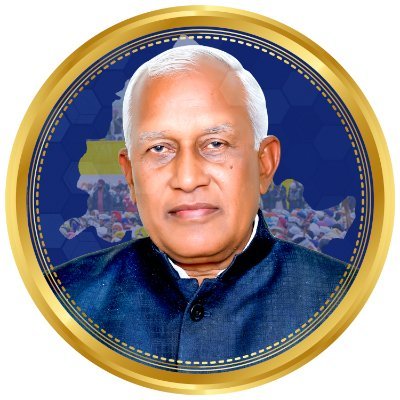
Punjab Water Resources Minister Barinder Goyal today presented a resolution in the Punjab Vidhan Sabha opposing the Union Government’s proposal to deploy CISF personnel at Bhakra Beas Management Board (BBMB) installations within the state.
While introducing the resolution, Minister Barinder Goyal explained that in recent years, the Union Ministry of Power had forwarded a list of BBMB sites not yet under CISF protection and had strongly recommended placing them under CISF security. However, Punjab has revisited the matter and has raised formal objections through letters sent to BBMB on May 27 and July 4, 2025. Despite this, the central government is pushing ahead with the plan, even as Punjab reiterated its opposition during the BBMB meeting on July 4.
Minister Barinder Goyal emphasized that Punjab Police has been effectively securing BBMB installations for nearly 70 years, including during sensitive times, without any major incidents. He highlighted that the state police are not only familiar with the local terrain and operations but are also well-trained in modern security technologies. Additionally, their experience managing law and order in border areas makes them highly capable.
He warned that deploying CISF would impose a significant and unnecessary financial burden on Punjab and other partner states. Since Punjab contributes the majority of funding to BBMB, it would bear the brunt of the additional cost. Minister Barinder Goyal added that security of these installations legally falls under the responsibility of the state governments, as they are within the territorial boundaries of Punjab and Himachal Pradesh.
Citing figures, he said the hybrid CISF deployment model would result in an added expense of ₹49.32 crore annually—an amount deemed unjustifiable when the state police already manage the security efficiently. He also pointed out that Punjab Police handles the security of other critical installations like the Ranjit Sagar and Shahpurkandi Dams, which are closer to the international border and more vulnerable, yet have not required central forces.
Minister Barinder Goyal made it clear that if BBMB moves forward with CISF deployment, Punjab will not take on the financial liability. He also revealed that during the previous Congress-led government, a letter dated December 6, 2021, had granted consent for CISF deployment—a decision now being challenged.
He accused the Union Government of using CISF as a pretext to take control of Punjab’s dams, following its recent failed attempt, in collaboration with the Haryana Government, to undermine Punjab’s water rights. He reminded the House that the AAP-led Punjab Government, under CM Bhagwant Mann, had actively protested and defended the state’s claim over its waters.
Minister Barinder Goyal also pointed to past injustices, such as Punjab being allotted only 4 out of 17 MAF of Ravi-Beas waters in 1981 and the Centre’s failure to implement most clauses of the 1985 Rajiv-Longowal Accord—except the provision related to taking Punjab’s water. He noted that Punjab requires 30 MAF but currently has no access to additional water, and the BBMB Chairman is functioning under pressure from the Centre and the former Haryana CM.
Given all these concerns, the Vidhan Sabha unanimously rejected the BBMB’s CISF deployment proposal. The House affirmed that Punjab Police, having long managed the installations effectively, remains the most suitable security force. It also recommended that the Punjab Government take up the issue with the relevant Union ministries and formally communicate to both the Centre and BBMB that CISF should not be deployed at Bhakra Dam and other BBMB hydroelectric projects.