
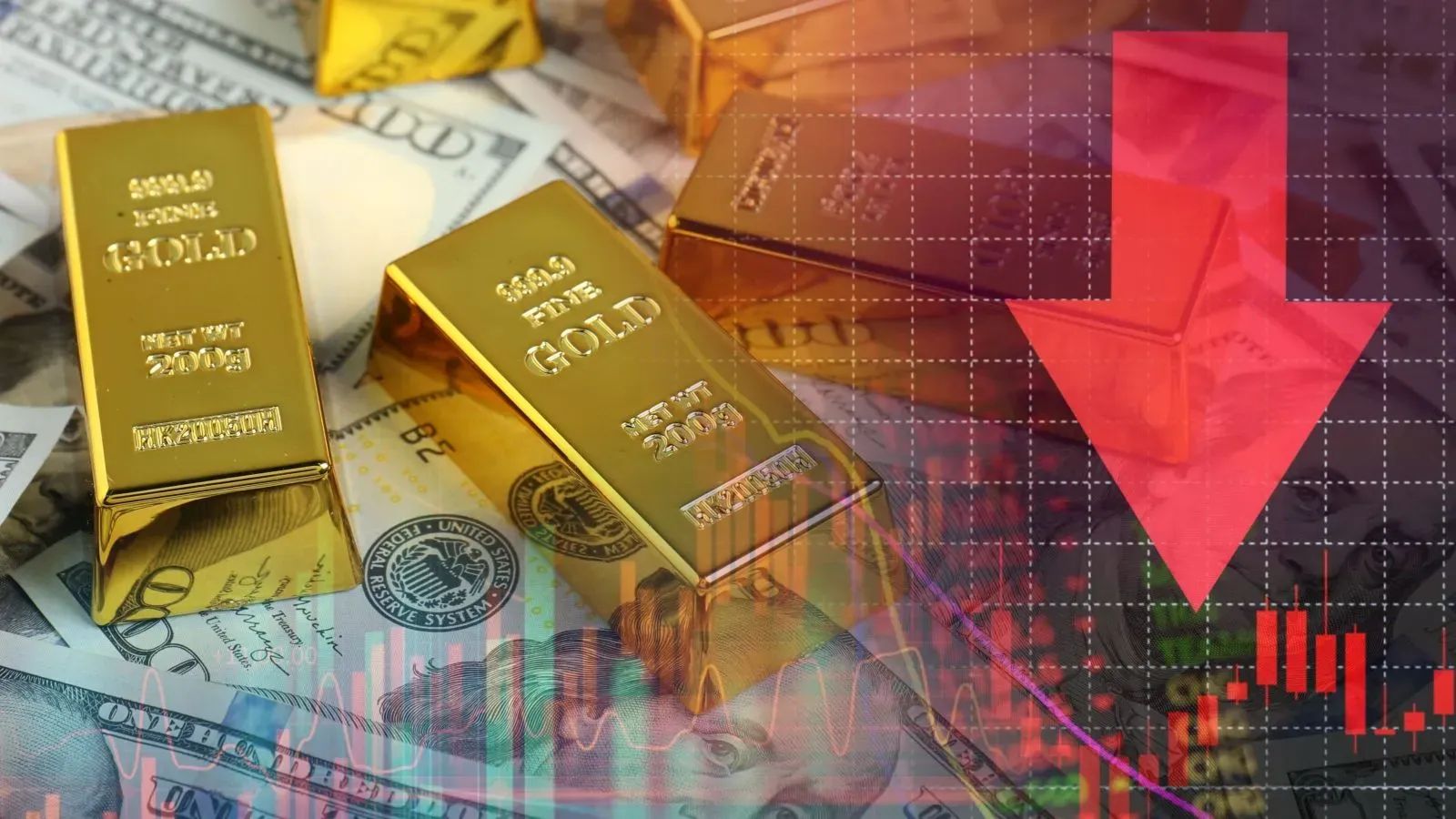
Should You Sell Gold Now as prices hit a one-year low? Understand why gold rates are falling, key market factors and what investors should consider before selling.
Gold prices have witnessed a sharp decline in international markets, leaving investors concerned about their investments. With prices falling to their lowest levels in more than a year, many people are wondering: Should You Sell Gold Now, or wait for prices to recover? The recent weakness in gold has been linked to inflation concerns in the United States, expectations of higher interest rates and selling pressure in financial markets. However, selling gold simply because prices are falling may not always be the right decision. Investors should consider their financial needs, investment goals and risk tolerance before making a move.
Should You Sell Gold Now or Wait for Prices to Recover?
If you purchased gold as a long-term investment and do not need the money immediately, selling it in panic may not be a sensible decision.
Gold prices can fluctuate significantly over short periods. A temporary decline does not necessarily mean that prices will continue falling. Similarly, there is no guarantee that the market will recover immediately.
However, if you need money for an important expense or have invested too much of your savings in gold, selling a portion of your holdings could be worth considering.
Before deciding should you sell gold now, evaluate why you purchased the metal in the first place. If your objective was long-term wealth protection, short-term market movements should not be the only factor influencing your decision.
How Much Have Gold Prices Fallen in One Year?
International gold prices have experienced considerable weakness recently.
On November 26, spot gold declined 0.1% to $3,577.28 per ounce. During trading, prices had fallen below the $3,500 mark, reaching levels not seen since August 2025.
Gold futures in the United States also witnessed pressure, declining 0.73% to close at $3,535.80 per ounce.
The decline reflects changing investor expectations about inflation, interest rates and the broader financial market.
These international prices provide an indication of global market trends. Actual gold prices in India may differ because of currency movements, import duties, taxes and local market conditions.
Why Are Gold Prices Falling?
Several economic factors are contributing to the recent weakness in gold prices. Here are some of the major reasons investors should understand.
1. Rising Inflation Concerns in the US
Inflation in the United States remains an important concern for financial markets. The Personal Consumption Expenditures (PCE) Price Index, an important inflation indicator monitored by the Federal Reserve, increased by 0.3% in October, according to the figures cited in the market report.
Persistent inflation can influence the Federal Reserve’s decisions regarding monetary policy. If inflation remains high, interest rates may stay elevated for longer.
2. Expectations of Higher Interest Rates
Gold does not provide regular interest income like fixed deposits or government bonds. Therefore, when interest rates remain high, some investors prefer interest-bearing assets over gold.
Expectations of higher US interest rates can also strengthen the dollar, putting additional pressure on international gold prices.
3. Selling Pressure in Financial Markets
Changes in global investment strategies and selling activity across financial markets can also affect gold prices.
When investors adjust their portfolios, they may sell gold to raise cash or reduce exposure to certain assets. Such activity can increase short-term volatility.
Should You Sell Your Gold Investment? Important Things to Consider
Before making a decision, consider these important factors:
Your financial requirements: If you need money for an emergency or an essential expense, selling some gold may be reasonable.
Investment duration: Gold purchased for long-term wealth protection should be evaluated differently from gold bought for short-term trading.
Portfolio allocation: If gold represents a very large share of your investments, reducing some exposure may help maintain balance.
Current market conditions: Avoid making decisions based entirely on daily price movements or market panic.
Selling costs: Jewellery may involve deductions for making charges, purity differences and other applicable costs when sold.
Investors should also remember that jewellery and investment gold are not exactly the same. Making charges paid when purchasing jewellery may not be recovered when selling it.
What Should Gold Investors Do Next?
The recent correction in gold prices has created uncertainty, but investors should avoid making emotional decisions.
Those who do not have immediate financial requirements may consider reviewing their existing investment strategy rather than selling everything at once. People who need cash or want to rebalance an excessively concentrated portfolio can evaluate partial selling.
Ultimately, should you sell gold now depends on your personal financial situation, investment horizon and need for liquidity.
Gold prices can move in either direction, and no one can predict the exact timing of a recovery. Therefore, investors should assess their financial goals carefully and consult a qualified financial adviser before making significant investment decisions.
For More Hindi News: http://newz24india.com