
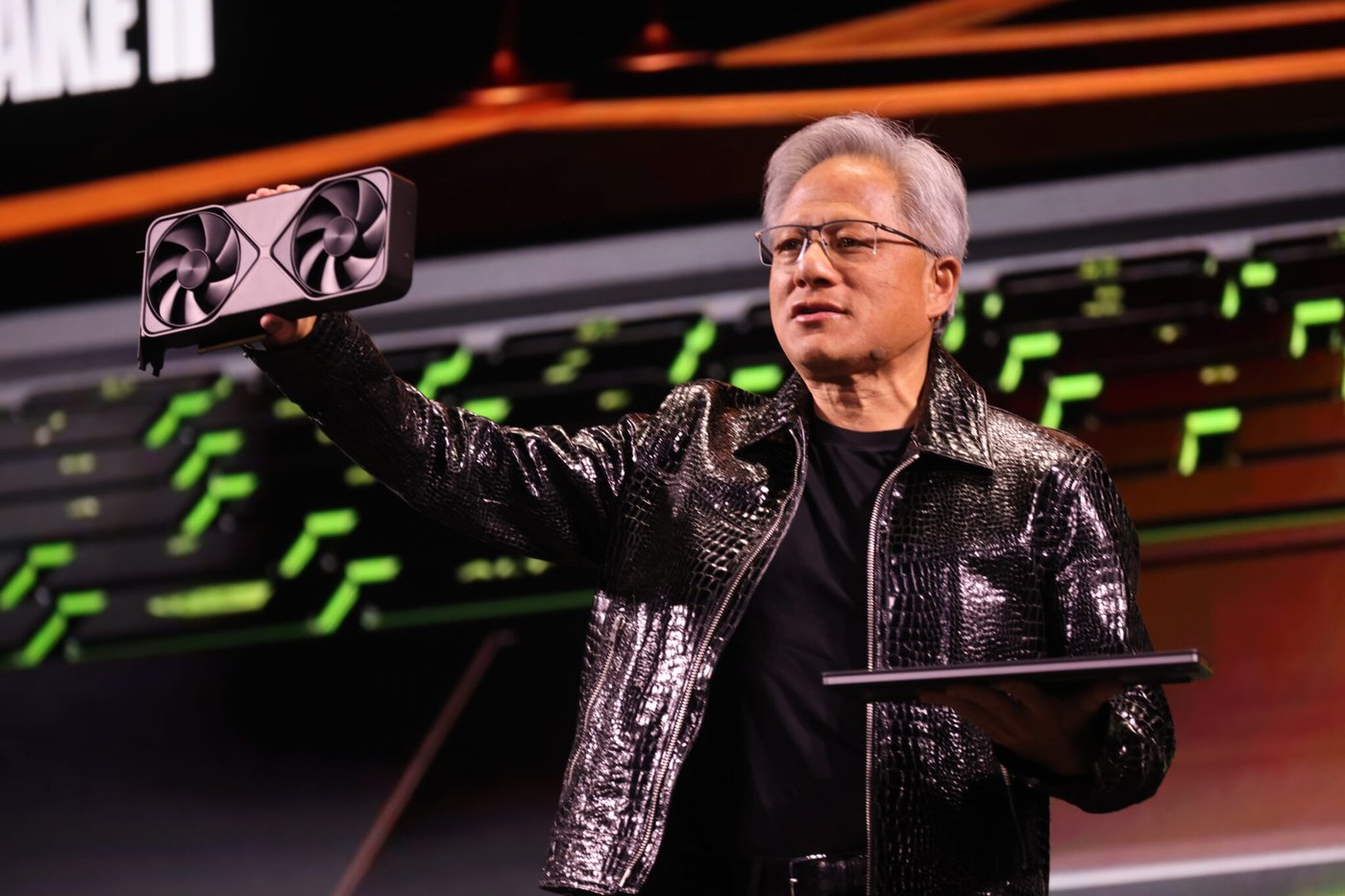
Nvidia stock outlook improves as Jensen Huang highlights AI factories, Vera Rubin chips, rising revenue opportunities and growing AI inference demand.
Nvidia (NASDAQ: NVDA) is expanding its ambitions in the artificial intelligence industry, and CEO Jensen Huang’s latest comments have given investors another reason to watch the company’s growth prospects. At the GTC conference in Berlin, held from October 20 to October 22, Jensen Huang discussed the next phase of AI infrastructure and explained how Nvidia’s new technologies could reshape data centers.
The company is increasingly focused on transforming traditional data centers into what it calls “AI factories”—facilities designed to process information, run AI applications and generate results at scale. This strategic shift could create new opportunities for Nvidia as businesses and technology providers invest in advanced computing infrastructure. The latest developments have strengthened the discussion around the Nvidia stock outlook, particularly as demand for AI inference continues to grow.
Nvidia Is Expanding Beyond Traditional GPU Sales
Nvidia has established a leading position in AI computing through its graphics processing units (GPUs), which are widely used to train advanced AI models. However, the company’s latest strategy indicates that it wants to provide a more comprehensive set of technologies for AI data centers.
During the Berlin event, Jensen Huang highlighted Nvidia’s integrated server rack systems, which combine GPUs, central processing units (CPUs) and other hardware into a unified computing platform. According to the information presented, the next-generation configuration will combine 72 Vera Rubin GPUs with 256 custom language processing unit chips.
The systems also incorporate CPUs from Nvidia’s Vera family. By bringing these components together, the company aims to help operators build AI infrastructure that can handle increasingly complex workloads.
This broader product strategy could become an important factor in the Nvidia stock outlook, as the company seeks to generate more revenue from each new AI data center rather than relying solely on individual chip sales.
Vera Rubin Could Increase Nvidia’s Revenue Opportunity
One of the most significant figures discussed by Nvidia management concerns the potential revenue associated with each gigawatt of computing capacity.
According to the company’s recent quarterly commentary, its estimated sales opportunity per gigawatt has increased across successive computing platforms.
Hopper: Approximately $18 billion in sales opportunity per gigawatt.
Blackwell: Approximately $25 billion per gigawatt.
Vera Rubin: Approximately $40 billion per gigawatt.
These figures represent Nvidia’s estimated sales opportunity associated with the different computing platforms, rather than guaranteed revenue or profit.
The increase reflects the growing scope of Nvidia’s AI infrastructure offerings, including CPUs and other integrated technologies. If customers adopt these comprehensive systems at scale, the company could capture a larger share of spending on AI computing infrastructure.
For investors evaluating the Nvidia stock outlook, the potential to increase revenue per unit of computing capacity is an important development. However, actual results will depend on customer demand, infrastructure spending, product availability and competition.
Why AI Inference Could Become a Major Growth Driver
AI development involves more than training models. Once a model has been trained, it must process user requests and generate responses. This stage is known as inference.
GPUs remain essential for many demanding AI workloads, including model training and inference. However, CPUs can also play an important role in running certain tasks efficiently, depending on the workload and system design.
Nvidia’s strategy of combining GPUs, CPUs and other specialized processors is designed to address the changing requirements of AI infrastructure. As businesses deploy AI assistants, enterprise applications and other AI-powered services, demand for inference computing could increase.
This creates an opportunity for Nvidia to expand its presence across multiple stages of AI computing. Rather than selling only the hardware needed to train models, the company is positioning itself to supply more of the infrastructure required to operate AI services.
For shareholders, this development adds another dimension to the Nvidia stock outlook, although the financial benefits will depend on how quickly inference demand translates into actual purchases.
Jensen Huang Estimates a $50 Billion Cost for a 1-Gigawatt AI Factory
Jensen Huang also highlighted the enormous financial stakes involved in building large-scale AI infrastructure.
At the Berlin GTC event, he estimated that establishing a one-gigawatt AI factory could cost operators around $50 billion. He also suggested that such a facility could generate approximately $40 billion in annual revenue.
Jensen Huang further indicated that delaying the launch of a facility by three months could mean missing out on as much as $10 billion in potential sales.
These figures illustrate the scale of investment and the economic incentives driving the expansion of AI infrastructure. Companies developing AI services may face considerable pressure to secure computing capacity quickly as demand increases.
also read:- GTA 6 Release Time In India: Release Date, Price,…
However, the estimated revenue figures should not be interpreted as guaranteed returns or profits. The economics of individual facilities will depend on operating costs, customer demand, utilization rates, electricity prices and other factors.
The scale of these investments could benefit infrastructure suppliers such as Nvidia, provided customers continue committing substantial capital to AI computing.
AI Investment Risks Remain Important for Investors
Despite the opportunities, Nvidia shareholders should also consider the risks associated with the AI industry.
Concerns about elevated valuations and the possibility of an AI investment bubble have contributed to volatility across technology stocks. Building large data centers requires substantial capital, and some projects may take longer than expected to generate sufficient returns.
Competition, changes in customer spending, supply constraints and the emergence of alternative computing technologies could also affect Nvidia’s future performance.
Furthermore, management projections about potential revenue opportunities do not guarantee that customers will purchase systems at the expected scale. Investors should assess the company’s financial results, valuation, growth expectations and competitive position before making investment decisions.
Is Nvidia Stock Worth Watching Right Now?
Jensen Huang’s latest announcements highlight Nvidia’s effort to expand from a leading AI chip supplier into a provider of integrated computing infrastructure. Its Vera Rubin platform, broader CPU integration and focus on AI inference could create additional opportunities as businesses invest in AI factories.
The potential increase in sales opportunity per gigawatt is particularly notable because it suggests that Nvidia could capture more spending from each large-scale computing deployment.
Still, technology leadership alone does not determine whether a stock is attractively priced. Investors need to weigh Nvidia’s growth potential against valuation, execution risks and the possibility of slower AI infrastructure spending.
Overall, the latest developments provide a constructive perspective on the company’s long-term business opportunities. The Nvidia stock outlook will ultimately depend on whether rising demand for AI computing translates into sustained revenue growth, healthy margins and returns that justify the stock’s market valuation.
For More English News: http://newz24india.com