
Look under almost any Indian kitchen sink and you will find a floor cleaner, another liquid for the toilet, one for the dishes and a powder for the clothes. For decades, few households questioned what went into them. If it smelled strong and foamed well, it was doing its job.
That habit is quietly changing. Parents of toddlers who crawl across freshly mopped floors, pet owners whose dogs lick the tiles, and families with elders who find strong fumes hard to bear are starting to ask a simple question: what exactly are we cleaning with?
A shift that starts at home
No single trend is driving this. Young parents are reading ingredient labels on food and skincare, so the cleaning shelf was always going to be next. Apartment living means smaller, less ventilated spaces, where the smell of a cleaner lingers long after the floor has dried. And a growing number of households now count a cat or a dog as family, which brings the floor, and everything on it, into sharper focus.
There is a cultural thread too. Many Indian homes grew up using reetha, shikakai, lemon and ash to clean. What is new is the expectation that plant-based cleaning should also be convenient and consistent.
For entrepreneurs, that gap between tradition and convenience has become an opportunity.
Turning peels into a product
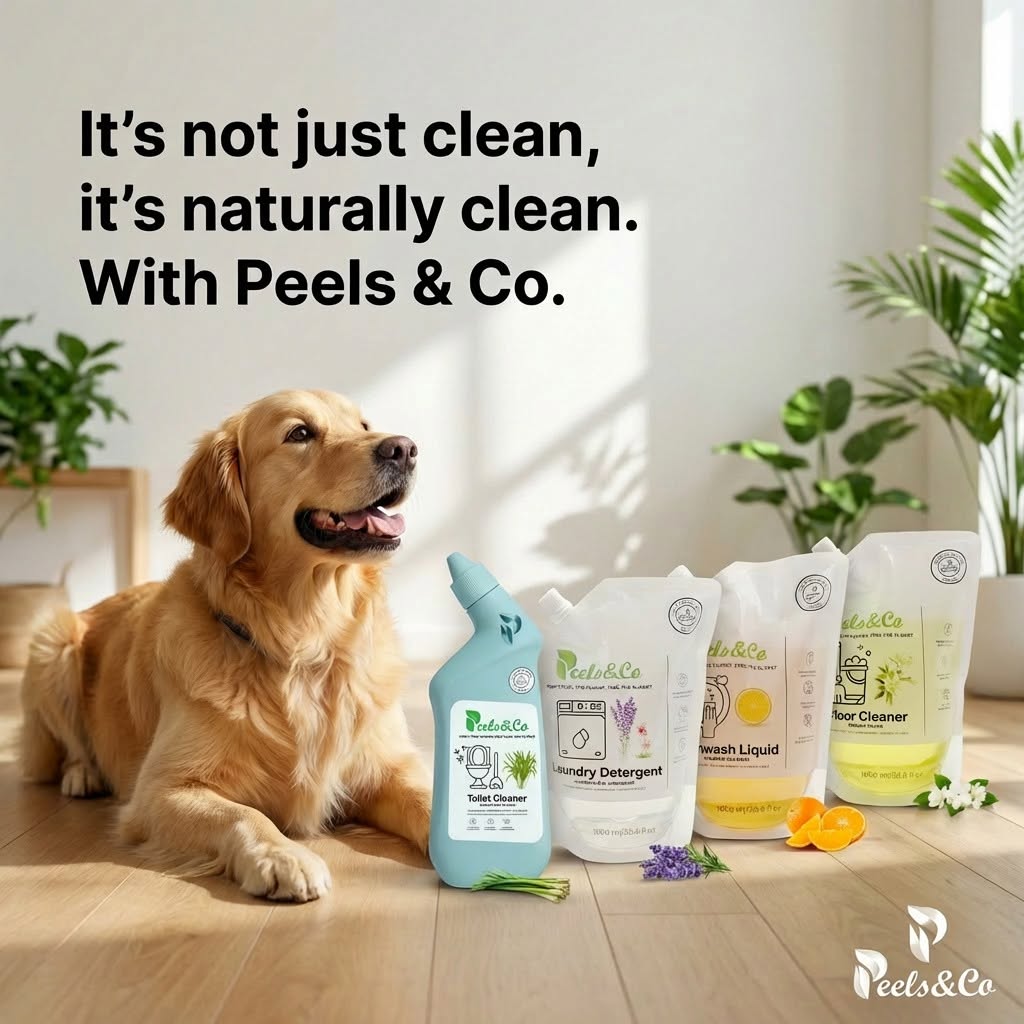
One of the companies working in this space is a Gurugram-based firm that sells its home cleaners under the name Peels & Co. The brand’s range is built around enzymes derived from fruit peels, combined with plant-based surfactants, the ingredients that help lift dirt and grease from a surface.
The company describes its products as plant-based, 100% biodegradable and free from harsh toxins, parabens and synthetic VOCs, and says they are independently lab tested. Its floor cleaner, for instance, uses a peel enzyme complex with a mogra fragrance, is pH-balanced for marble, tile, wood and ceramic, and is meant to be used without rinsing. The dishwashing liquid relies on citrus enzymes and coconut and palm-based surfactants, while the toilet cleaner uses lemongrass and a mild plant-derived lactic acid.
Gagan Tahiliani, who leads the company, sees the opportunity less as a niche and more as a correction in how families think about everyday chores.
Designing for the most vulnerable people in the house
A recurring theme in conversations about gentler cleaning is who spends the most time close to the floor. It is usually the smallest members of the family and the four-legged ones. That has shaped how brands like this one present their range. Peels & Co groups several of its products in a dedicated collection for homes with kids and pets, positioning them as safe for children and animals.
For families weighing a switch, a few practical questions tend to come up:
- Does it work on the surfaces in my home, such as marble, granite or wooden flooring?
- Does it need rinsing, or can it be left to dry?
- Is the fragrance mild enough for people who are sensitive to strong smells?
- What happens to the water after I pour it down the drain?
- Is the claim on the label something I can check, such as lab testing, or is it only marketing?
These are fair questions for any product on the shelf, plant-based or otherwise.
The road ahead for small brands
Building a home-care brand in India is not easy. The shelf is crowded, habits run deep, and many shoppers still equate a strong smell with a clean house. Smaller players must also explain what “plant-based” means without overstating it.
What works in their favour is that the conversation is already happening inside homes. When a parent pauses before mopping the room where a baby plays, or a pet owner checks a label before cleaning the balcony, the decision is no longer only about price and shine.
For Prasanna Kumar and the team at Peels & Co, the bet is that those small pauses will add up to a lasting change in what Indian households keep under the sink.
Whether that bet pays off will depend on the same thing every household product is judged by: does it clean well, day after day, in a real Indian home? For a growing number of families, gentler is now part of that definition.