
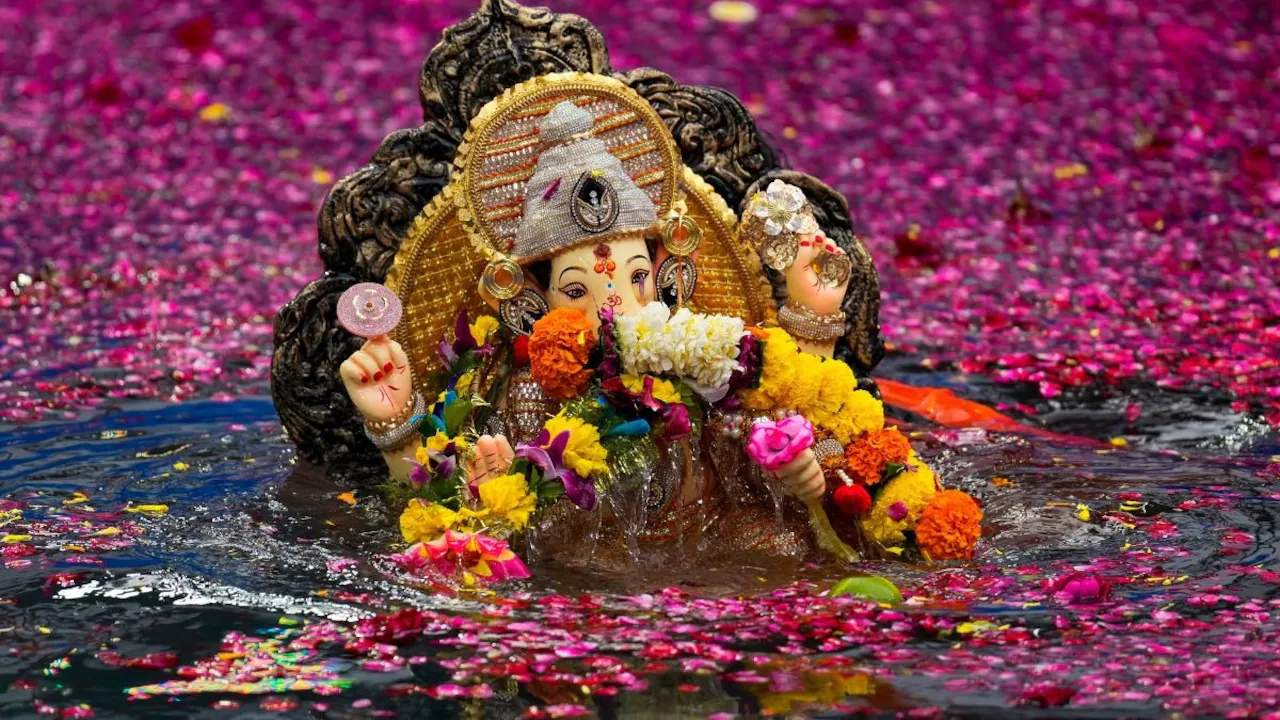
Why is Ganesh Visarjan performed after Ganesh Chaturthi? Know the mythological story, religious significance and tradition behind Bappa’s farewell.
Ganesh Chaturthi is celebrated with great devotion as Lord Ganesha is welcomed into homes and public pandals. However, the festival is considered complete only after devotees bid farewell to Bappa through Ganesh Visarjan. The immersion marks the conclusion of the celebrations and carries deep religious and spiritual symbolism.
In 2026, Ganesh Chaturthi will be observed on September 14, while the main immersion will take place on September 25, Anant Chaturdashi. The festival begins on Bhadrapada Shukla Chaturthi, while the traditional 10-day celebration concludes on Bhadrapada Shukla Chaturdashi.
Why Is Lord Ganesha’s Idol Immersed?
The immersion of Lord Ganesha’s idol is traditionally viewed as a symbolic farewell. After worshipping Bappa for several days, devotees carry the idol in a procession to a water body while chanting devotional slogans such as “Ganpati Bappa Morya.”
The ritual represents the temporary nature of the physical form. The idol, which is worshipped after Pran Pratishtha, is eventually returned to the natural elements through immersion. It reminds devotees that everything in the material world is temporary, while faith and devotion continue beyond the physical form.
For devotees, Ganesh Visarjan does not mean that Lord Ganesha leaves their lives permanently. Instead, it signifies the end of the festival and a prayer for Bappa to return again the following year.
The Mythological Story Behind the Tradition
According to a popular mythological belief, Maharishi Ved Vyas narrated the Mahabharata to Lord Ganesha, who wrote down the epic continuously for ten days.
It is believed that because of the intense and uninterrupted writing, Ganesha’s body temperature increased significantly. After the Mahabharata was completed, Ved Vyas is said to have taken Ganesha to a lake and bathed him to cool his body.
The day associated with this episode is believed to be Anant Chaturdashi. This story is traditionally connected with the practice of concluding the 10-day Ganesh festival with immersion.
Spiritual Meaning of Ganesh Visarjan
The ritual has a deeper spiritual message. In Hindu philosophy, the human body and material forms are considered temporary, while the divine essence is eternal.
During Ganesh Visarjan, the idol returns to the elements from which it was created. Devotees believe that this represents the cycle of creation, existence and dissolution.
There is also a traditional belief that Bappa takes away devotees’ obstacles, worries and negative energies when he departs. The immersion is therefore seen not simply as a farewell, but as an expression of surrender, faith and hope for a fresh beginning.
also read:- Ganeshotsav 2026: Know The Start Date, Ganpati Sthapana…
When Did Public Ganeshotsav Become Popular?
Ganesh Chaturthi has ancient religious roots, but its transformation into a major public celebration is strongly associated with Maharashtra in the late 19th century.
Lokmanya Bal Gangadhar Tilak played an important role in popularising public Ganeshotsav. The public celebration provided people with an opportunity to gather, participate in cultural activities and strengthen social unity.
Over time, celebrations expanded from homes and temples to large public pandals featuring collective prayers, cultural programmes and processions.
How Did Ganesh Visarjan Become Part of Ganeshotsav?
Devotees may keep the idol for different periods depending on family and community traditions. Some perform immersion after one and a half days, while others observe three, five, seven or ten days of worship.
The largest public immersion traditionally takes place on Anant Chaturdashi. In 2026, Anant Chaturdashi falls on September 25, which will also mark the main day of Ganesh Visarjan.
Before taking the idol for immersion, devotees perform the concluding puja and aarti. The idol is then carried in a procession accompanied by devotional songs and chants before being immersed according to local traditions.
What Does ‘Ganpati Bappa Morya’ Mean?
“Ganpati Bappa Morya” is one of the most recognisable chants associated with Ganesh celebrations. Devotees often repeat it while carrying Bappa’s idol towards the immersion site.
The chant expresses devotion as well as the emotional nature of the farewell. Along with bidding goodbye to Lord Ganesha, devotees pray for his return the following year.
Thus, Ganesh Visarjan represents both an ending and a new beginning. The idol may return to the elements, but the devotion associated with Bappa remains in the hearts of devotees.
A Festival of Faith, Farewell and Renewal
The tradition of Ganesh Visarjan teaches devotees about acceptance, change and renewal. Welcoming Lord Ganesha symbolises the beginning of an auspicious period, while immersion signifies respectfully letting go of the physical form.
For millions of devotees, the final procession is therefore a deeply emotional moment—one that combines celebration, devotion and the hope that Bappa will return again next year.
For More Hindi News: http://newz24india.com