
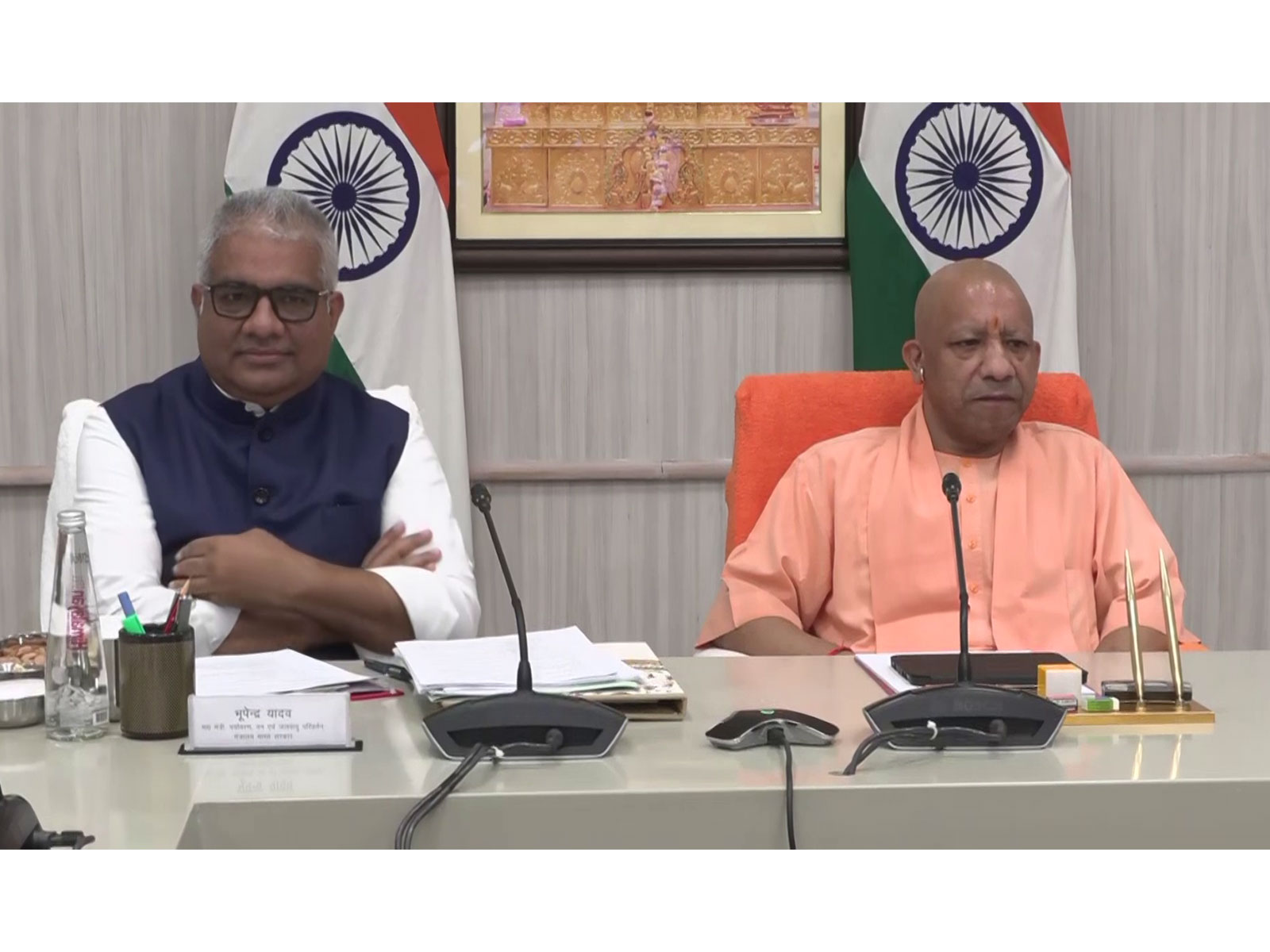
Bhupender Yadav meets UP CM Yogi Adityanath in Lucknow to review air quality measures, pollution control and NCR-specific action plans.
Union Environment, Forest and Climate Change Minister Bhupender Yadav met Uttar Pradesh Chief Minister Yogi Adityanath in Lucknow on September 18 to review measures aimed at improving air quality in the state’s National Capital Region (NCR) districts. The meeting focused on pollution sources, implementation of action plans and coordination between central and state authorities.
The review meeting covered major aspects of UP Air Quality Management, including vehicular emissions, industrial pollution, construction and road dust, waste management and preparedness for the upcoming winter pollution season.
Focus on Eight NCR Districts
The discussions covered eight NCR districts in Uttar Pradesh, including Noida, Hapur, Ghaziabad, Meerut and Bulandshahr. Officials reviewed steps being taken to control pollution from different sources and strengthen monitoring mechanisms across the region.
The meeting also examined measures under the National Clean Air Programme (NCAP). Bhupender Yadav highlighted Uttar Pradesh’s performance in improving air quality and referred to the progress recorded by cities such as Lucknow and Agra.
Tree plantation efforts under the Prime Minister’s ‘Ek Ped Maa Ke Naam’ campaign were also discussed, with Yadav appreciating Uttar Pradesh’s reported progress in plantation activities.
Vehicle Pollution and EV Policy Discussed
Vehicular emissions were among the key subjects discussed during the meeting. Officials examined measures to address pollution caused by older vehicles and discussed the state’s electric bus policy.
The meeting also considered issues related to certification and aggregator vehicles, along with the need for more effective measures to reduce emissions from the transport sector. These steps form an important part of UP Air Quality Management efforts in the NCR region.
Industrial Pollution Control Under Review
Industrial emissions were another major focus. According to the information shared after the meeting, around 80% of industries have installed air pollution control equipment, while the remaining units are being reviewed.
Authorities also discussed strengthening compliance and monitoring mechanisms to ensure that industrial pollution-control measures are implemented effectively.
For dust pollution, an action plan involving mechanised and deep cleaning of roads was discussed. Construction and demolition activities were also included in the broader pollution-control strategy.
Waste Management and Road Dust Measures
The implementation of Solid Waste Management Rules and Construction and Demolition Waste Management Rules was also reviewed. Stakeholder participation, including housing societies, was discussed as part of the implementation process.
The administration is also working on city-specific plans for NCR municipalities. These plans are intended to identify local pollution sources and establish targeted measures for individual cities.
These initiatives are expected to strengthen UP Air Quality Management by shifting greater attention toward city-level implementation and monitoring.
Stubble Burning Ahead of Harvest Season
The upcoming harvest season was another important issue discussed during the review. Bhupender Yadav said the Centre is coordinating with Union Agriculture Minister Shivraj Singh Chouhan and agriculture departments of concerned states to address stubble burning.
The issue is particularly relevant to the wider NCR air-quality strategy, as authorities prepare measures ahead of the period when agricultural residue burning can contribute to regional pollution levels.
also read:- Yogi Adityanath On PM Modi: UP CM Highlights India’s…
More Than 30 Meetings Held on City-Specific Plans
According to Yadav, more than 30 meetings have been held since December to strengthen coordination on NCR air-quality measures. Officials have now moved toward preparing detailed, city-specific action plans for the region.
Local representatives, including panchayat bodies, zila parishads, nagar palikas and municipal corporations from 63 smaller NCR cities, have also been involved in discussions.
Nodal officers have been assigned responsibility for monitoring implementation at the local level. The approach is aimed at ensuring that UP Air Quality Management measures translate into action on the ground.
Coordination With Other NCR States
Yadav said similar review meetings had been held with the governments of Haryana and Delhi. He indicated that discussions would also be held with the governments of Punjab and Rajasthan to strengthen coordination on regional air pollution.
The Centre and state governments are focusing on coordinated action because pollution in the NCR can be influenced by multiple sources and locations across state boundaries.
The Lucknow meeting therefore brought together measures related to vehicles, industries, dust, waste, crop residue and local infrastructure as part of a wider UP Air Quality Management framework.
The authorities said continued public participation, stronger inter-departmental coordination and timely implementation of city-specific plans would remain important for improving air quality across the NCR region.
For More Hindi News: http://newz24india.com