
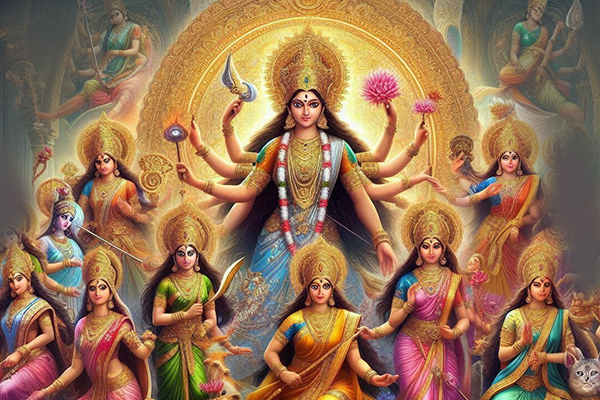
Discover the significance of Shardiya Navratri 2026, the nine forms of Navadurga, medicinal plant traditions, fasting rituals and the power of Goddess Shakti.
Shardiya Navratri is one of India’s most significant Hindu festivals, dedicated to the worship of Goddess Durga and her nine divine manifestations. Celebrated over nine nights and ten days, the festival represents the triumph of good over evil and highlights the spiritual power of Goddess Shakti. Beyond rituals, fasting and devotional celebrations, Shardiya Navratri 2026 also offers an opportunity to explore ancient beliefs, regional traditions and the deeper philosophy of the Devi Bhagavata Purana.
One fascinating belief associated with Navratri connects the nine forms of Navadurga with nine medicinal plants. This tradition reflects the relationship between spirituality, nature and the importance of plants in Indian religious culture. However, the specific identification of these nine plants can vary across traditions and should not be treated as a universally established scriptural fact.
What Is Navadurga and Why Are Nine Forms Worshipped?
The word Navadurga refers to the nine forms of Goddess Durga worshipped during Navratri. Each manifestation represents a distinct quality of divine energy, ranging from courage and devotion to wisdom, compassion and spiritual strength.
The nine forms are Shailputri, Brahmacharini, Chandraghanta, Kushmanda, Skandamata, Katyayani, Kalaratri, Mahagauri and Siddhidatri. Devotees worship these forms on successive days, seeking blessings for peace, prosperity, knowledge and protection.
The term Durga is traditionally associated with the Goddess’s power to protect devotees and overcome difficulties. The celebration also recalls the victory of Goddess Durga over the buffalo demon Mahishasura, symbolising the destruction of evil and the restoration of righteousness.
During Shardiya Navratri 2026, devotees across India observe prayers, visit temples, perform rituals and participate in cultural celebrations that express their devotion to the Goddess.
The Belief Connecting Navadurga With Nine Medicinal Plants
An intriguing aspect of Navratri traditions is the belief that the nine forms of the Goddess are associated with nine medicinal plants. In some regional traditions, these plants are worshipped as symbolic representations of divine energy and the healing gifts of nature.
Plants have occupied an important place in Indian religious practices, Ayurveda and traditional household rituals for centuries. Their association with sacred observances reflects the belief that nature sustains life and deserves respect.
However, the plants linked to Navadurga may differ according to regional customs and particular religious traditions. There is no single universally accepted list that establishes the same nine medicinal plants as the residences of the nine Goddess forms in every tradition.
The broader message is that spirituality and nature are closely connected. The worship of plants during religious festivals can also encourage people to value biodiversity, protect vegetation and recognise the importance of natural resources.
Navratri Celebrations Across India
Although the central theme of Navratri remains the worship of Goddess Shakti, the festival takes different forms across the country.
Gujarat: The Vibrant Tradition of Garba and Dandiya
“Gujarat Navratri traditional Garba dancers colourful traditional clothing festival night”
In Gujarat, Navratri is widely celebrated through Garba and Dandiya Raas. Devotees gather in colourful traditional attire to dance in circles, sing devotional songs and honour the Goddess. These performances combine religious devotion with the region’s rich cultural heritage.
West Bengal: The Grandeur of Durga Puja
“Kolkata Durga Puja beautifully decorated pandal Goddess Durga idol festival”
In West Bengal, Durga Puja is the centrepiece of the autumn festive season. Elaborately decorated pandals, artistic idols, community gatherings and traditional rituals mark the celebration. The festival commemorates the Goddess’s victory over Mahishasura and her symbolic return to her maternal home.
Mysuru: The Royal Heritage of Dussehra
“Mysore Palace illuminated during Dasara Dussehra festival Karnataka India”
Mysuru in Karnataka is famous for its grand Dasara celebrations. Goddess Chamundeshwari, regarded as the slayer of Mahishasura in local tradition, holds a central place in the festivities. The illuminated Mysore Palace, ceremonial processions and traditional observances attract visitors from across India.
Navratri Fasting: Spiritual Discipline and Seasonal Traditions
Navratri fasting is an important practice for many devotees. Some people avoid grains, meat and certain other foods, while others follow a more flexible fasting routine according to family customs, regional traditions and personal health requirements.
Navratri occurs during seasonal transitions, particularly in spring and autumn. These changes have historically influenced food habits, daily routines and religious observances. Fasting is often understood as a way to practise self-discipline, devotion and mindful eating.
Some devotees believe that simple meals and moderation help them feel lighter during the festival. However, fasting does not automatically detoxify the body or remove undigested food in the way some popular claims suggest. The body’s liver, kidneys and digestive system perform its natural waste-processing functions.
People with diabetes, chronic illnesses, pregnancy or other specific nutritional needs should seek medical advice before undertaking prolonged or restrictive fasting. Staying hydrated and choosing balanced meals when eating are important considerations.
also read:- Navratri 2026 Dates: Check Saptami, Maha Ashtami, Navami…
What Does the Devi Bhagavata Purana Say About Mahashakti?
The Devi Bhagavata Purana presents Goddess Bhagwati as the supreme divine power underlying creation, preservation and destruction. Its philosophical teachings describe Shakti as the force through which the universe and its living beings function.
In this understanding, the Goddess is not limited to one form or appearance. She manifests through different divine identities and powers, representing the many ways the universe operates.
The text describes the relationship between the Goddess and the supreme reality as inseparable. The distinction between masculine and feminine divine principles is presented as a distinction that emerges through perception, while the underlying reality remains unified.
This philosophy forms an important part of Shakta traditions, in which the Goddess is worshipped as the supreme source of existence.
Shakti: The Power Behind Creation and Preservation
According to the theological ideas presented in the Devi Bhagavata Purana, even the principal deities perform their cosmic responsibilities through Shakti.
Brahma is associated with creation, Vishnu with preservation and Shiva with destruction and transformation. Shakti represents the divine energy that enables these functions to take place.
The same principle can be understood symbolically through natural phenomena. Water has its cooling quality, fire produces heat, and the Sun provides light. These qualities illustrate the idea that the universe functions through its inherent powers.
For devotees, this teaching offers a deeper interpretation of Goddess worship: Shakti is not merely a deity invoked during a festival but the underlying energy that sustains life and existence.
Navadurga, Mahavidyas and the Many Forms of the Goddess
Hindu religious traditions describe Mahashakti through numerous manifestations. Alongside the nine forms of Navadurga, Shakta traditions also worship the ten Mahavidyas, each associated with distinctive spiritual symbolism and divine attributes.
The Goddess is also revered through forms such as Annapurna, Katyayani, Lalita, Kali, Tara and Bhuvaneshwari. Each form expresses a particular aspect of divine power, knowledge, protection or transformation.
Although these manifestations have different names and iconography, Shakta philosophy frequently emphasises their underlying unity. The many forms are understood as expressions of the same supreme feminine principle.
This perspective explains why Navratri is celebrated not only as a festival of individual Goddess forms but also as an occasion to reflect on the universal significance of Shakti.
The Deeper Message of Shardiya Navratri
The teachings associated with Navratri extend beyond rituals and celebrations. The festival encourages devotion, self-control, courage, compassion and the pursuit of wisdom.
Its regional traditions demonstrate India’s cultural diversity, while its religious philosophy places divine energy at the centre of existence. The association of sacred plants with Goddess worship also offers an opportunity to reflect on humanity’s relationship with nature.
Ultimately, Shardiya Navratri 2026 represents the enduring belief that positive qualities can overcome negativity and that spiritual strength can guide people through life’s challenges. Whether through fasting, prayer, community celebrations or the study of sacred texts, the festival invites devotees to seek balance, renewal and inner strength.
For More Hindi News: http://newz24india.com