
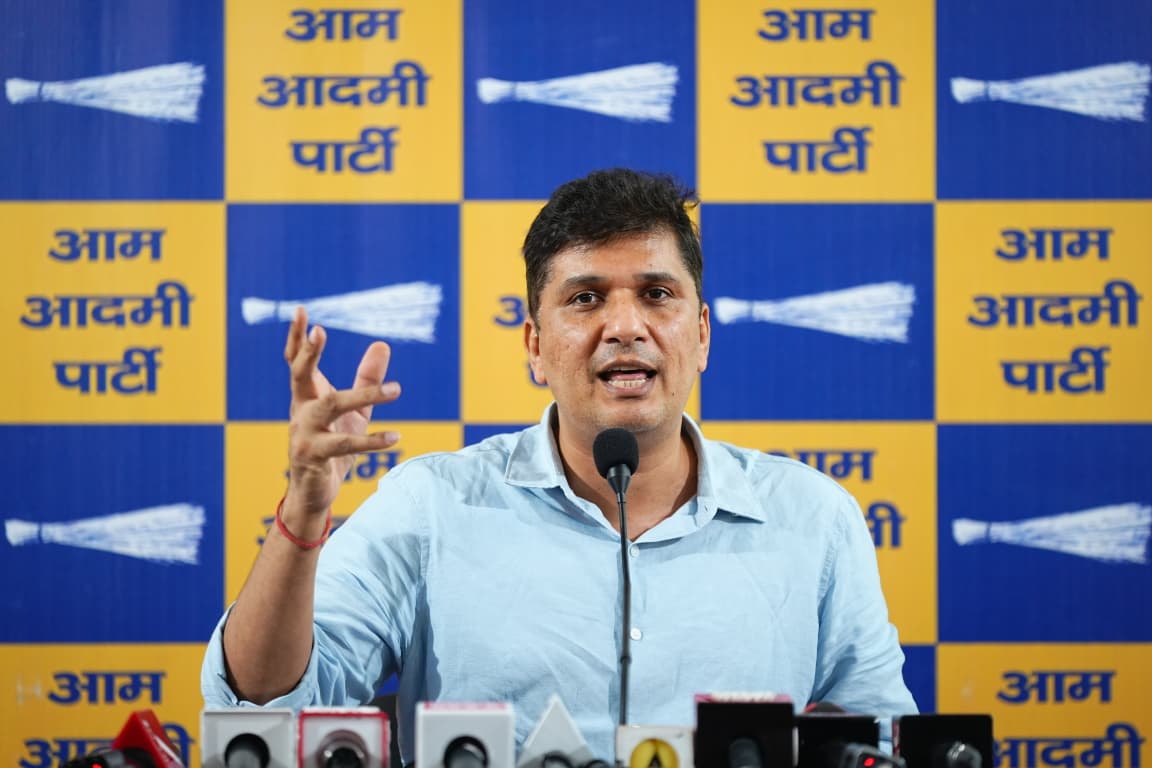
Saurabh Bharadwaj questions the BJP government over Delhi AQI monitoring stations, cloud seeding expenditure and alleged water spraying near pollution monitors.
The Aam Aadmi Party (AAP) has questioned the Delhi government’s decision to install air quality monitoring stations in green and sparsely populated areas of the capital. AAP Delhi president Saurabh Bharadwaj alleged that the move could make the city’s pollution levels appear lower without addressing the actual problem. He also raised questions about the expenditure on cloud seeding and the possible use of water tankers near monitoring stations.
Speaking about the issue, Bharadwaj questioned Environment Minister Manjinder Singh Sirsa over the locations selected for the new Delhi AQI monitoring stations. He argued that monitoring equipment should provide a representative picture of the city’s air quality rather than create a misleading impression of improved pollution levels.
AAP Questions the Location of New Monitoring Stations
Bharadwaj claimed that several proposed locations, including Jawaharlal Nehru University (JNU), Indira Gandhi National Open University (IGNOU), Commonwealth Games Village, Chhawla, Ghumanhera, Jharoda Kalan and Ghonda, have comparatively open and green surroundings.
According to him, these areas generally experience less traffic congestion and road dust than some of Delhi’s heavily populated locations. He questioned whether installing Delhi AQI monitoring stations in such places would accurately represent the pollution exposure experienced by residents across the capital.
The AAP leader demanded an explanation from the environment minister regarding the criteria used to select these sites. He alleged that the government was focusing on making pollution figures look better instead of taking effective steps to reduce emissions and improve air quality.
Bharadwaj Draws a Parallel With the Yamuna Pollution Issue
Bharadwaj compared the monitoring station controversy with his allegations concerning the Yamuna River. He claimed that, around Chhath Puja, the release of relatively clean water from Haryana diluted the river water temporarily, creating an impression that pollution had declined.
He alleged that a similar approach could be used to influence the perception of Delhi’s air quality by installing Delhi AQI monitoring stations in greener locations. However, these claims represent the AAP leader’s allegations and do not independently establish that the government intends to manipulate pollution data.
Bharadwaj also referred to Anand Vihar, where he alleged that water tankers had previously sprayed water near an air quality monitoring station. He questioned whether the government would deploy tankers near the new stations again.
The AAP leader maintained that the government should concentrate on reducing pollution at its source rather than relying on measures that, in his view, could affect public perception of air quality.
Questions Raised Over Cloud Seeding Expenditure
Bharadwaj also criticised the Delhi government’s cloud seeding initiative, which had been discussed as a possible measure to tackle air pollution. He questioned Environment Minister Manjinder Singh Sirsa about the money spent on the initiative and its outcome.
According to Bharadwaj, experts had already raised concerns about the practical feasibility of cloud seeding during Delhi’s winter conditions. He further claimed that the Centre had informed the Delhi government in writing that carrying out cloud seeding in winter would not be feasible.
also read:- Saurabh Bharadwaj Seeks FIR Over Cockroach Effigy At…
The AAP leader alleged that public money worth crores of rupees had been wasted on the initiative. He urged the government to explain the expenditure and clarify what measurable benefits, if any, the exercise had delivered. These statements reflect Bharadwaj’s position and would require independent verification of the relevant government communications and expenditure records.
Three Questions for Environment Minister Manjinder Singh Sirsa
Bharadwaj sought answers from the Delhi government on three key issues related to air pollution and monitoring:
Why are new AQI monitoring stations being installed in green and less polluted areas? He asked the government to explain the criteria used to select the locations and how they would represent pollution levels across Delhi.
Why was money spent on cloud seeding despite concerns about its feasibility? He demanded clarification on the initiative’s costs, scientific assessment and results.
Will water tankers again be deployed near AQI monitoring stations? He questioned whether the government would repeat the water-spraying practice he alleged had occurred near monitoring stations previously.
The controversy over Delhi AQI monitoring stations has brought renewed attention to the importance of transparent air quality monitoring. Monitoring locations need to be selected using scientific criteria, with data that reflects different neighbourhoods and pollution conditions across the city.
As Delhi continues to face air pollution challenges, the key issue remains whether government measures can deliver sustained improvements in air quality. The AAP has demanded answers from the BJP-led government, while the allegations about station placement, cloud seeding expenditure and water spraying require verification through official records and independent evidence.
For More Hindi News: http://newz24india.com