
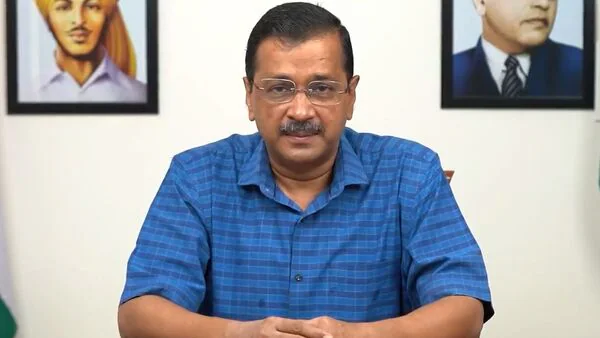
AAP national convenor Arvind Kejriwal has announced a march to Prime Minister Narendra Modi’s residence over the Centre’s E20 petrol policy, raising concerns about the impact of ethanol-blended fuel on consumers. Kejriwal alleged that the government had introduced E20 petrol without adequately addressing public concerns and claimed that the move affected vehicle owners.
The planned protest comes amid an ongoing debate over the nationwide rollout of E20 fuel, which contains 20 per cent ethanol blended with petrol. The Centre has promoted ethanol blending as part of its efforts to reduce dependence on imported crude oil and promote cleaner fuel alternatives.
Arvind Kejriwal raises concerns over E20 petrol
Speaking about the issue, Arvind Kejriwal questioned the implementation of E20 petrol and said consumers should have more clarity about the policy and its impact.
Kejriwal alleged that the government had ignored concerns raised by citizens regarding fuel efficiency, vehicle compatibility and financial impact. He also claimed that the Centre had introduced the policy without providing adequate options to consumers.
The AAP leader said he would lead a march to the Prime Minister’s residence to raise the issue. The protest is aimed at drawing attention to concerns surrounding E20 fuel and seeking answers from the government.
What is E20 petrol and why is it being introduced?
E20 petrol refers to fuel containing 20 per cent ethanol blended with 80 per cent petrol. The government has been increasing ethanol blending as part of its energy strategy.
The Centre has said that ethanol blending can help reduce India’s dependence on imported crude oil, lower carbon emissions and support farmers by creating additional demand for ethanol-producing crops.
The rollout of E20 petrol has taken place in phases, with fuel stations across the country gradually moving towards higher ethanol-blended petrol.
However, some consumers and experts have raised questions about fuel efficiency and vehicle compatibility, particularly for older vehicles that may not have been designed for higher ethanol blends.
Kejriwal alleges Centre yielded to pressure over E20 policy
During his remarks, Arvind Kejriwal alleged that the Centre’s decision on E20 petrol was influenced by external pressure. He referred to former US President Donald Trump while making his claims.
However, the allegation remains a political claim by Kejriwal, and the government has maintained that ethanol blending is part of India’s long-term energy policy.
The E20 programme has been linked to India’s broader goal of reducing crude oil imports and increasing the share of renewable fuel sources. The government has previously highlighted the economic and environmental benefits of ethanol blending.
AAP plans protest march over fuel concerns
The planned march by Arvind Kejriwal is part of the Aam Aadmi Party’s campaign against the E20 petrol rollout.
The party has raised concerns about issues including mileage reduction, vehicle suitability and consumer choice. AAP leaders have argued that consumers should have access to fuel options based on their vehicle requirements.
The Centre, however, has continued to promote ethanol blending as an important component of India’s energy transition strategy.
The E20 debate has brought together questions around fuel policy, environmental goals, consumer concerns and economic considerations. With Kejriwal announcing a protest march, the issue has now become a political point of discussion.