
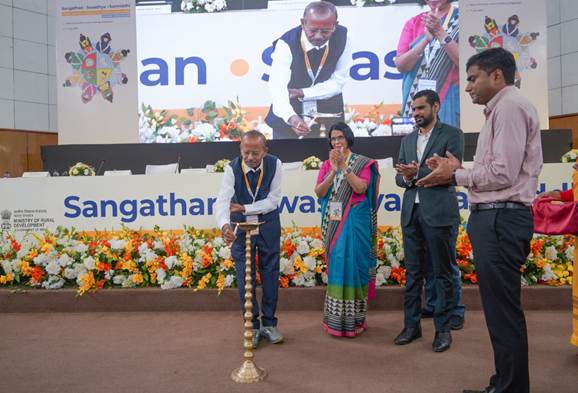
The Deendayal Antyodaya Yojana – National Rural Livelihoods Mission (DAY-NRLM), under the Ministry of Rural Development (MoRD), Government of India, in partnership with the State Rural Livelihoods Mission (SRLM), Meghalaya, organized a two-day regional workshop titled “Sangathan, Swasthya, Samriddhi: Women Collective’s Action on Food, Nutrition, Health & WASH (FNHW)” on June 30 and July 1, 2025, in Shillong.
The event focused on strengthening Self Help Group (SHG)-driven initiatives related to food, nutrition, health, and hygiene, fostering learning among states, and showcasing innovative community-led models from across the country. It aimed to mainstream FNHW into the DAY-NRLM strategy, build partnerships with line departments and civil society organizations, and draw field-level insights for inclusive and sustainable policy-making.
Key dignitaries present included Shri N.N. Sinha (Former Secretary, Government of India), Smt. Smriti Sharan (Joint Secretary, MoRD), Shri Sibhy C. Sadhu (Director, C&RD, Meghalaya), and Shri Ramakrishna Chitturi (CEO, SRLM Meghalaya). The workshop witnessed participation from senior MoRD officials, State Mission Directors, CEOs, COOs, and FNHW State In-Charges, along with Cluster Level Federation (CLF) leaders and Community Resource Persons (CRPs) representing 16 states including Andhra Pradesh, Assam, Goa, Karnataka, Kerala, Tamil Nadu, Tripura, West Bengal, and others.
On Day 1, field visits were organized in Laitkroh and Bholaganj blocks of East Khasi Hills district. Delegates engaged with SHGs, CLFs, and Community Gender & Health Activists (CGHAs), explored transit homes facilitating safe deliveries, interacted with “Lakhpati Didis” engaged in multiple livelihoods, and observed women-led Agri-Nutrition Gardens and baby shower sessions – experiencing grassroots innovations in action.
Day 2 featured a formal inauguration, the launch of CGHA uniforms symbolizing unity and dedication to health and gender equity, and a panel discussion featuring experience-sharing by SRLMs, CRPs, and sector experts. An exhibition displayed local FNHW practices, products, and IEC materials curated by CRPs and community leaders, facilitating peer learning among stakeholders.
In his address, Shri N.N. Sinha stressed the importance of prioritizing human development over infrastructure for building a Viksit Bharat, appreciating SHGs’ critical role in last-mile service delivery and behavioural transformation. Smt. Smriti Sharan applauded CGHAs as “warriors in purple capes” for their leadership in maternal and child health, and urged for better convergence and scalability across SRLMs.
Shri Ramakrishna Chitturi highlighted Meghalaya’s transformation through community-led models such as SHG-managed transit homes and VO-administered VRFs, attributing a 91% drop in SAM (Severe Acute Malnutrition) cases to convergence and local leadership. Shri Sibhy C. Sadhu underlined that despite Meghalaya’s matrilineal system, women’s voices in governance remain limited, stressing the importance of representation through platforms like FNHW.
Representatives from Assam shared their “Dasasutra”-based strategy combining SHG capacity building, SBCC, and convergence—featuring innovations like matka incinerators, tobacco-free village campaigns, and breastfeeding zones. They reported an 88% reduction in child marriages and a 33% fall in maternal deaths, with plans to scale their Sanjog Setu model.
Deputy Commissioner Rosetta Mary Kurbah highlighted East Khasi Hills’ decentralized approach to improving maternal and child health through initiatives like SHG-run crèches, breastfeeding huts, and Agri-Nutrition Gardens, leading to better institutional deliveries and lower mortality rates.
CRPs shared personal stories of empowering women through FNHW education, supporting VHSNCs, and leading Agri-Nutri garden campaigns. They also discussed waste management, school engagement models, and awareness drives that are fostering healthier and more resilient communities.
The SRLM panel emphasized the dual impact of combining health and livelihoods within SHG frameworks. Nagaland’s “Lakhpati” model, Tamil Nadu’s millet cafes and nutrition programs, and Tripura’s preventive care campaigns were highlighted as examples driving progress toward the Viksit Bharat@2047 vision.
A special session addressed the growing elderly population in rural India. HelpAge India presented a community-based model that included Elderly SHGs, mobile health services, and telemedicine to offer dignified and inclusive elderly care. Kerala’s Kudumbashree shared its efforts in the care economy through models like K4 Care and Saantwanam, supporting health workers and persons with intellectual disabilities via BUDS institutions and assistive tech through the STRIDE program.
An action plan, shaped through consultations from the National Conclave on FNHW 2024 and regional workshops, was also discussed. Deliberations emphasized embedding FNHW in institutional planning, capacity-building, and local platforms. Assam and Kerala presented successful integration models in food, health, and elderly care services.