
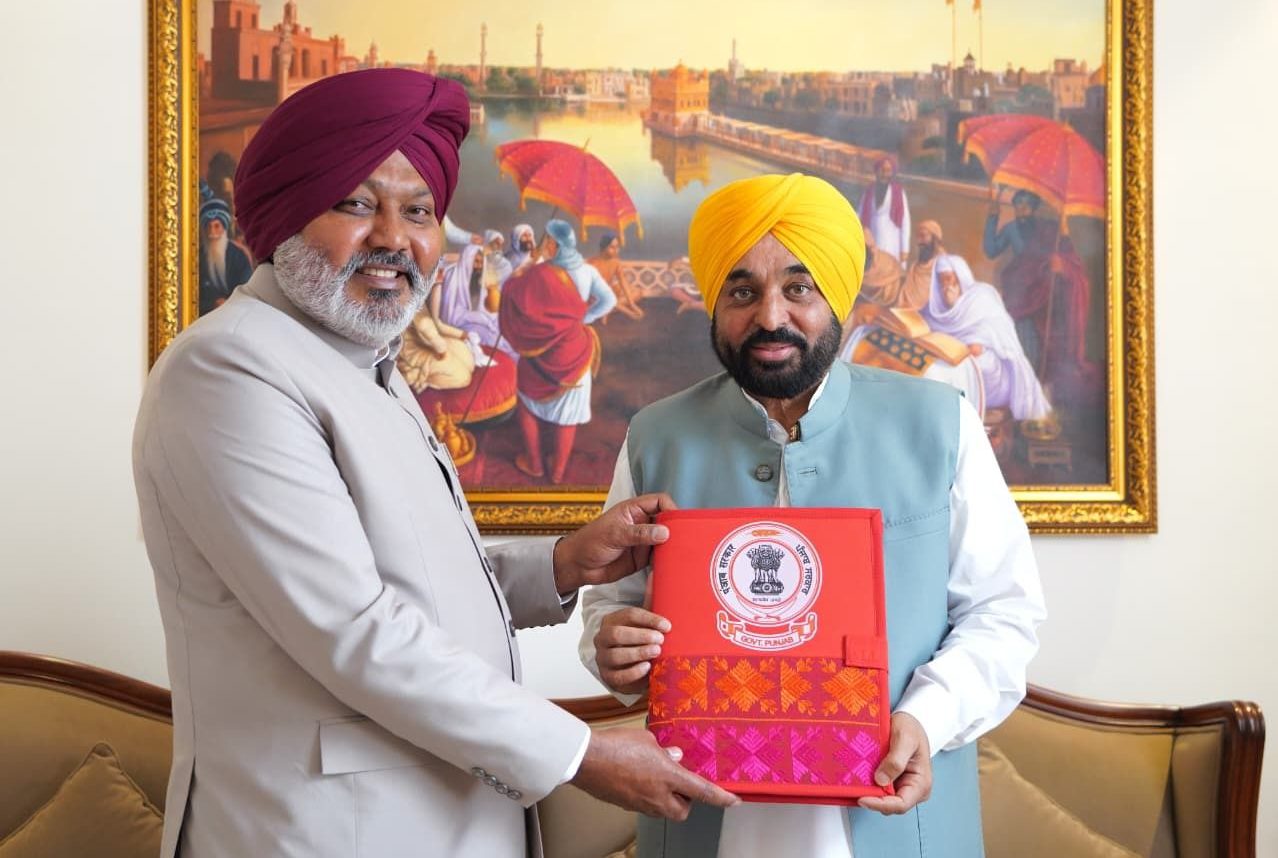
Punjab Budget 2026–27 presented by Finance Minister Harpal Singh Cheema announces ₹1,000 monthly support for women under Mukh Mantri Mawan Dhian Satikar Yojna and a total outlay of ₹2.60 lakh crore.
The Punjab Budget 2026–27 was presented in the state Assembly on Sunday by Finance Minister Harpal Singh Cheema, marking the fifth budget of the Aam Aadmi Party-led government in the state. The budget proposes a total outlay of ₹2,60,437 crore and projects the state’s Gross State Domestic Product (GSDP) at ₹9,80,635 crore, with an estimated 10 percent growth rate.
The budget, described by the government as the “Saari Guarantiyan Puri Karan Wala Budget,” focuses on fulfilling the major electoral promises made by Arvind Kejriwal and Punjab Chief Minister Bhagwant Mann.
₹1,000 Monthly Support for Women under Mukh Mantri Mawan Dhian Satikar Yojna
A major highlight of the Punjab Budget 2026–27 is the launch of the “Mukh Mantri Mawan Dhian Satikar Yojna,” a universal cash transfer scheme aimed at providing financial support to women across the state.
Under the scheme, adult women will receive ₹1,000 per month, while women from Scheduled Caste communities will receive ₹1,500 per month directly in their bank accounts.
The government has allocated ₹9,300 crore for the scheme, which is expected to benefit around 97 percent of adult women in Punjab, including those already receiving social security pensions.
Continued Support for Women Welfare
The Punjab Budget 2026–27 also includes significant allocations for women-centric initiatives. The government has earmarked ₹600 crore to continue the free bus travel scheme for women and ₹932 crore for the Integrated Child Development Services (ICDS) covering more than 27,000 Anganwadi centres.
Additionally, ₹65 crore has been allocated for the Navi Disha Scheme, which will provide free sanitary pads to underprivileged women and adolescent girls across the state.
Education Sector Gets ₹19,279 Crore Allocation
Education remains one of the key priorities in the Punjab Budget 2026–27, with the government allocating ₹19,279 crore to strengthen the sector.
Finance Minister Harpal Singh Cheema announced the launch of “Sikhiya Kranti 2.0,” a ₹3,500 crore initiative in collaboration with the World Bank aimed at transforming the education ecosystem in Punjab.
The budget also includes ₹395 crore for digital transformation in schools through computers and interactive panels, along with infrastructure upgrades such as boundary walls, toilets and security personnel. The government plans to expand the Schools of Eminence model and introduce a comprehensive career counselling framework for more than 7.35 lakh students.
Higher Education and Universities
For higher education, the Punjab Budget 2026–27 allocates ₹1,760 crore in grants for state universities and ₹569 crore for technical education.
The government has also granted in-principle approval for establishing a world-class university at Sri Anandpur Sahib in the name of Guru Tegh Bahadur.
Healthcare Budget Focuses on Universal Access
The Punjab Budget 2026–27 proposes ₹6,879 crore for the healthcare sector.
A major component is the Mukhya Mantri Sehat Yojana, which has been allocated ₹2,000 crore to provide cashless medical treatment up to ₹10 lakh per year for nearly 65 lakh families.
The state also plans to expand the Aam Aadmi Clinics network from 881 clinics to 1,432 clinics, with the addition of 143 new clinics and upgrades to 308 subsidiary health centres.
Agriculture and Farmer Support
Agriculture remains a central pillar in the Punjab Budget 2026–27, with ₹15,377 crore allocated for agriculture and allied sectors.
This includes ₹7,715 crore for free electricity to farmers, subsidies for Bt cotton seeds, incentives for Direct Seeded Rice (DSR) and kharif maize, and ₹600 crore for crop residue management machinery to address stubble burning.
A ₹1,300 crore horticulture project supported by the Japan International Cooperation Agency aims to expand horticulture acreage in Punjab by 300 percent by 2035.
Infrastructure and Rural Development
The Punjab Budget 2026–27 proposes ₹7,606 crore for rural roads to modernise nearly 19,876 kilometres of link roads. Another ₹7,257 crore has been allocated for urban development projects.
The government has also earmarked ₹1,500 crore for the Mahatma Gandhi National Rural Employment Guarantee Act (MGNREGA) and ₹1,170 crore for the Rangla Punjab Vikas Scheme to ensure balanced development across all constituencies.
Boost to Industry and Employment
To support industrial growth, the Punjab Budget 2026–27 allocates ₹2,805 crore for the industry sector, following ₹55,000 crore worth of investments recorded in 2025.
The government highlighted that 63,943 government jobs have been provided since 2022, and ₹287 crore has been earmarked for employment generation programmes.
Internal Security and Drug Control
For internal security, the Punjab Budget 2026–27 allocates ₹11,577 crore for Home Affairs, Justice and Jails.
The budget includes ₹535 crore for AI-based surveillance systems in jails and ₹100 crore for a comprehensive drug and socio-economic census as part of the campaign against drug abuse.
Major Investment in Sports and Youth Development
To engage youth in productive activities, the government has allocated ₹1,791 crore for sports infrastructure, including the construction of 6,000 village playgrounds and 5,000 indoor gyms across the state.
Fiscal Management and Economic Outlook
According to Finance Minister Harpal Singh Cheema, revenue receipts for the Punjab Budget 2026–27 are projected at ₹1,26,190 crore, while capital expenditure has been doubled to ₹18,381 crore.
The government also highlighted improvements in fiscal discipline, stating that the Debt-to-GSDP ratio has been reduced from 48.25 percent to 44.47 percent.
Government’s Vision for Punjab
Concluding the presentation, the Finance Minister said the Punjab Budget 2026–27 reflects the government’s commitment to economic growth, social welfare and infrastructure development.
The budget aims to strengthen public services, boost investment, create employment opportunities and ensure inclusive development across the state.
For More Hindi News: http://newz24india.com