
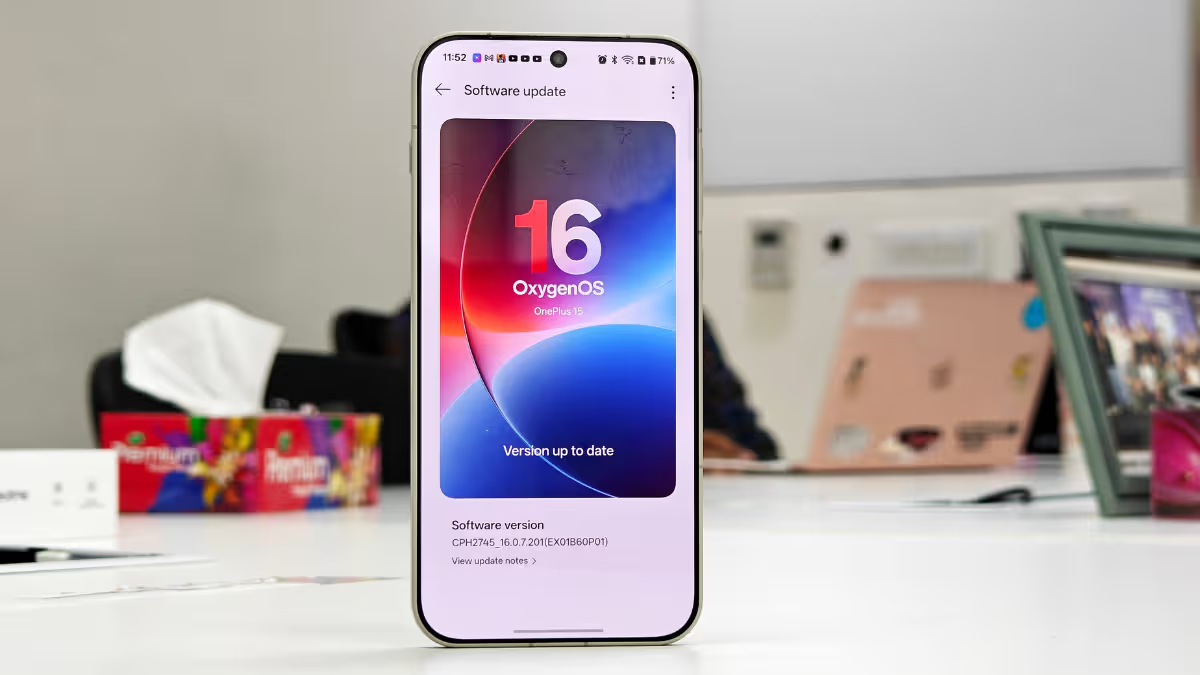
OnePlus confirms OxygenOS 16 will be its final release as future phones move to Oppo’s ColorOS, while existing Android update promises remain intact.
OnePlus is preparing to close an important chapter in its software history as OxygenOS approaches its final release. The company has confirmed that OxygenOS 16 will be the last version to carry the OxygenOS name, with future OnePlus smartphones expected to use Oppo’s ColorOS.
The transition is also expected to affect existing supported OnePlus devices through future software updates. Despite the software change, OnePlus has said that previously announced Android upgrades and security support commitments will continue to be honoured.
OxygenOS 16 Marks the End of an Era
For long-time OnePlus users, OxygenOS 16 represents more than just another software update. OxygenOS has been closely associated with the brand since its early years and became one of the key reasons many users preferred OnePlus smartphones.
The software was known for its relatively clean design, smooth performance and limited visual clutter. At a time when Android manufacturers were adding increasingly complex features to their interfaces, OxygenOS developed a reputation for keeping the overall experience comparatively simple.
With OxygenOS 16 set to be the final release, that distinctive identity is now entering a new phase.
Future OnePlus Phones to Use ColorOS
After the transition, newly launched OnePlus smartphones will move to Oppo’s ColorOS instead of OxygenOS. Existing supported phones are also expected to gradually transition through their regular software update cycles.
OnePlus has maintained that the move does not mean the complete merger of the two smartphone businesses. Its hardware operations will continue separately, even as software development becomes more closely aligned.
The transition is expected to begin around the Android 17 update cycle, making the change particularly significant for existing OnePlus users.
OnePlus Promises Continued Software Support
One concern for current OnePlus owners is whether the software transition will affect promised Android upgrades or security patches.
The company has indicated that existing software commitments will remain in place. Devices that have been promised future Android version upgrades and security updates should continue receiving those updates even as the software platform moves toward ColorOS.
This means the retirement of OxygenOS 16 should not automatically mean an end to software support for current OnePlus smartphones.
OxygenOS and ColorOS Already Share Common Foundations
The shift may be less dramatic from a technical perspective than the branding suggests. OxygenOS and ColorOS have been moving closer together for several years.
OnePlus and Oppo began sharing a deeper software foundation in 2022, gradually reducing the technical differences between the two interfaces. As a result, users may already notice similarities in features, design elements and system functionality.
However, OxygenOS traditionally maintained a more restrained visual approach. ColorOS, on the other hand, has increasingly focused on extensive customisation, animations and AI-powered features.
ALSO READ:- Vivo S2 5G Launched In India At Rs 39,999: Check Price,…
Why OnePlus Is Moving to a Single Platform
Unifying the software experience could offer practical advantages for the companies.
Maintaining separate interfaces requires additional development, testing, optimisation and quality-control resources. A common software platform could allow Oppo and OnePlus to simplify development, improve update efficiency and dedicate more resources to new features.
The change could also make it easier to address software bugs and roll out updates across a wider range of devices.
OnePlus and Oppo Growing Closer
The software transition is another indication of the increasingly close relationship between OnePlus and Oppo.
Earlier operational changes, including the integration of after-sales service networks in India, have already brought the two brands closer from a customer-support perspective. OnePlus users can access Oppo service centres for certain repair and warranty requirements.
Despite these developments, OnePlus continues to operate as a separate consumer brand, particularly in terms of its hardware business and market positioning.
What the End of OxygenOS Means for OnePlus Users
For consumers, the biggest change may be about brand identity rather than everyday functionality.
The final OxygenOS 16 release closes a chapter that helped establish OnePlus as a distinctive Android smartphone brand. While ColorOS and OxygenOS already share significant technical similarities, the move removes one of the most recognisable software differences between OnePlus and Oppo.
Existing users are unlikely to see their devices become unsupported simply because OxygenOS is being retired. However, future updates will gradually introduce the ColorOS experience, depending on device eligibility and the company’s rollout plans.
Ultimately, OxygenOS 16 will be remembered as the final version of a software platform that played a major role in shaping OnePlus’ identity. The move to ColorOS could make software development more efficient, but it also marks the end of a defining part of the OnePlus experience.
For More Hindi News: http://newz24india.com