
Discover the story of Karwa Mata, Karwa Chauth Vrat Katha, rituals, religious significance and Karwa Chauth 2026 fasting timings.
Karwa Chauth is one of the most significant Hindu festivals observed by married women across many parts of India. The festival is dedicated to prayers for the long life, good health and well-being of their husbands. Women traditionally observe a day-long fast, perform evening puja, listen to the sacred vrat katha and break their fast after sighting the Moon. Beyond its rituals, the festival carries deep religious, cultural and emotional significance.
The tradition is closely associated with the story of Karwa Mata, whose courage and devotion are celebrated through a popular legend. The festival is observed on Chaturthi Tithi during the Krishna Paksha of the Hindu month of Kartik. Here is everything to know about Karwa Chauth 2026, including its date, auspicious timings, traditional story and the reasons behind the vrat.
Karwa Chauth 2026 Date and Shubh Muhurat
Karwa Chauth will be celebrated on Thursday, October 29, 2026. Women observing the fast follow their family traditions and perform the evening puja during the prescribed auspicious period.
According to the Panchang timings for New Delhi, the important details are as follows:
Festival date: Thursday, October 29, 2026
Puja muhurat: 5:38 PM to 6:56 PM
Fasting period: 6:31 AM to 8:17 PM
Moonrise time: 8:17 PM
Chaturthi Tithi begins: 1:06 AM on October 29
Chaturthi Tithi ends: 10:09 PM on October 29
These timings are based on the New Delhi Panchang and may vary depending on the city. Devotees should check their local Panchang for the precise Moonrise time and puja schedule.
What Is the Story of Karwa Mata?
The traditional Karwa Chauth vrat katha tells the story of a devoted woman named Karwa, whose determination and courage saved her husband’s life. Her story is remembered as an example of faith, commitment and the strength of a wife’s prayers.
According to the legend, Karwa lived with her husband in a village near a river. One day, while her husband was bathing in the river, a crocodile caught hold of his leg. Unable to escape, he called out to his wife for help.
Hearing his cries, Karwa rushed to the river and acted courageously. She tied the crocodile with a thread and approached Yama, the Hindu god associated with death and justice. She requested that her husband’s life be protected and that the crocodile be punished for attacking him.
Impressed by Karwa’s determination and devotion, Yama granted her husband’s life protection and sent the crocodile to Yamaloka, according to the traditional account. The story became associated with the blessings sought by women who observe the fast with faith and dedication.
Karwa Mata is consequently remembered in the festival’s religious traditions as a symbol of courage, devotion and the power of sincere prayers.
Why Do Married Women Observe Karwa Chauth?
The main purpose of Karwa Chauth is traditionally to pray for a husband’s long life, good health and prosperity. Married women observe the fast as an expression of love, commitment and their wishes for the well-being of their families.
The vrat generally begins before sunrise and continues throughout the day until the Moon is sighted. Many women follow a nirjala vrat, which means abstaining from both food and water, although customs and individual practices can differ.
The day is also an occasion for women to come together, dress in traditional attire, apply mehendi and participate in religious ceremonies. In many families, the festival is associated with blessings for marital happiness and a harmonious married life.
Although the tradition primarily centres on married women praying for their husbands, the way families celebrate the festival may differ according to regional customs and personal beliefs.
What Is the Religious Significance of Karwa Chauth?
Karwa Chauth has an important place in the religious and cultural traditions of many Hindu communities. The word Karwa is associated with the earthen pot traditionally used during the rituals, while Chauth refers to the fourth day of the lunar fortnight.
The festival combines fasting, prayer and the recitation of a sacred story. The vrat katha reminds devotees of Karwa’s determination and reinforces the traditional values associated with devotion and family well-being.
For many women, the observance is also an opportunity to reconnect with family traditions passed down through generations. The evening puja, offerings and Moon-sighting ritual form the central parts of the celebration.
also read:- Karwa Chauth 2026: 5 Thoughtful Gift Ideas To Surprise…
How Is Karwa Chauth Celebrated?
Preparations for Karwa Chauth often begin well before the festival day. Women may purchase traditional clothes, jewellery, puja items and decorative materials. In some families, the day begins with sargi, a pre-dawn meal traditionally received from the mother-in-law.
The principal rituals generally include:
Sargi before sunrise: Women following this custom eat the pre-dawn meal before beginning their fast.
Day-long fasting: The fast is observed according to family customs and personal health considerations.
Evening puja: Women gather to worship and listen to or recite the Karwa Chauth vrat katha.
Moon-sighting ritual: After the Moon appears, devotees offer prayers and water according to their traditions.
Breaking the fast: Women traditionally conclude the fast after the Moon-related rituals, often with the help of their husbands or family members.
The precise sequence of rituals may vary between communities and households.
Why Is the Moon Important on Karwa Chauth?
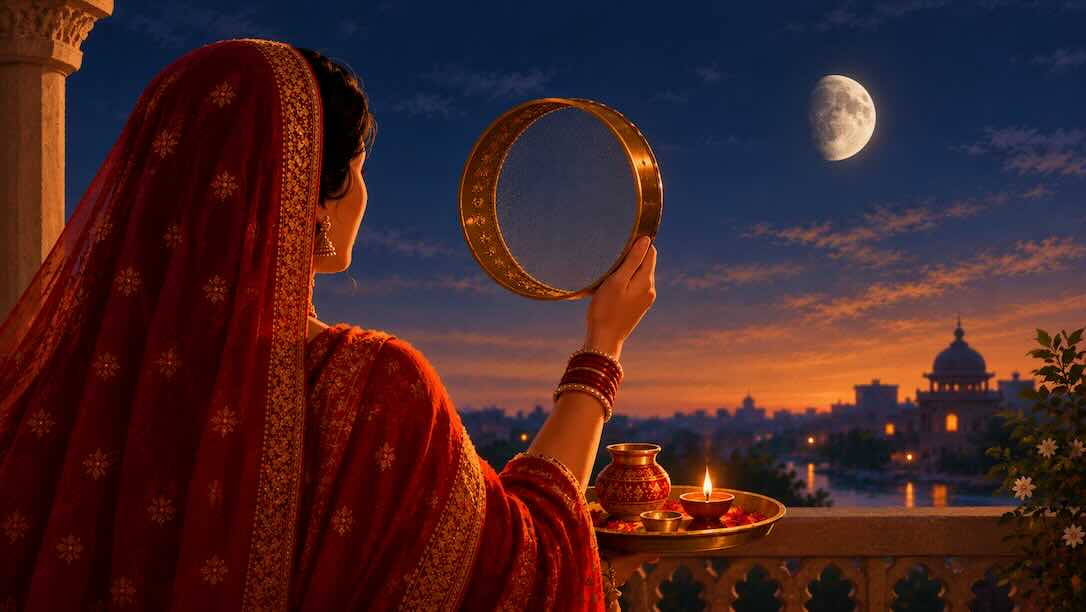
The Moon holds a central place in the festival because its sighting traditionally marks the conclusion of the fast. Women wait for the Moon to appear, offer prayers and perform the customary rituals before eating or drinking.
In many families, women view the Moon through a sieve and then look at their husbands before breaking the fast. However, the exact customs may differ across regions.
Since Moonrise varies from one city to another, checking the local timing is important when planning the evening observance.
Karwa Chauth 2026: A Festival of Faith and Tradition
Karwa Chauth continues to be observed with devotion by many married Hindu women. Its traditions combine fasting, worship, family gatherings and the story of Karwa Mata, whose courage forms an important part of the festival’s popular religious narrative.
In 2026, the festival falls on October 29. From the morning fast to the evening puja and Moon-sighting ritual, the day remains a meaningful occasion for devotees who follow these customs and pray for the health and longevity of their spouses.
For More Hindi News: http://newz24india.com