
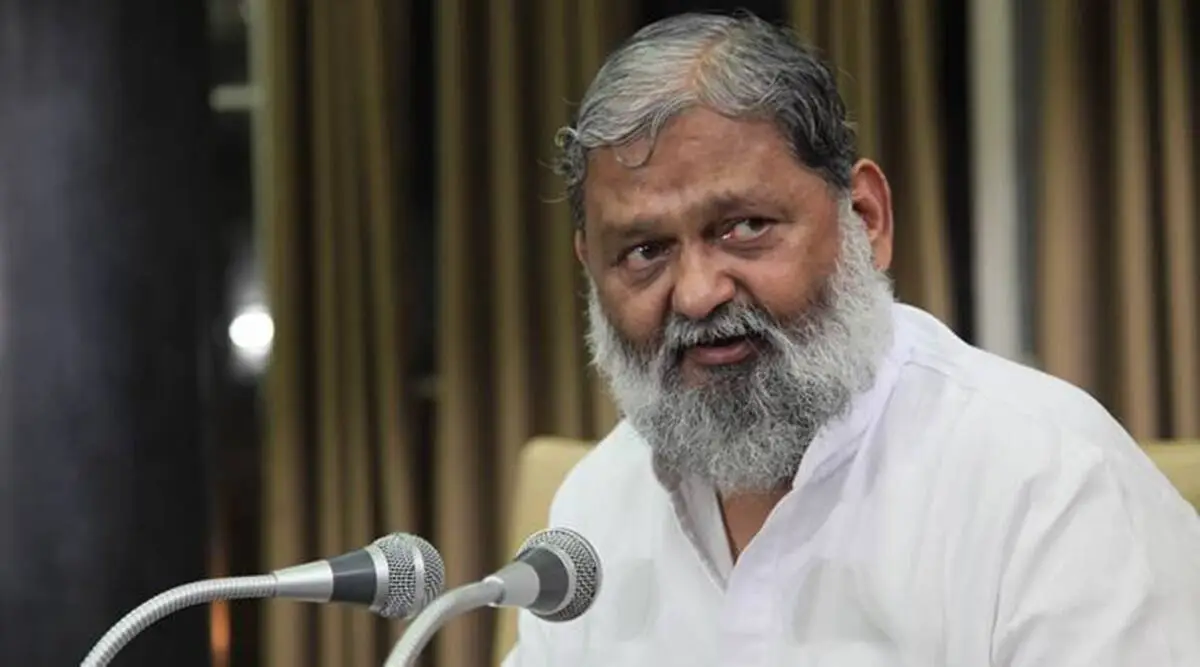
Haryana Minister Anil Vij reveals untold stories of the 1857 revolt as Amit Shah prepares to inaugurate the Martyrs’ Memorial in Ambala on November 5.
Haryana Energy, Transport and Labour Minister Anil Vij has highlighted several lesser-known historical accounts of the First War of Independence of 1857, bringing attention to the sacrifices of Indian soldiers and freedom fighters who fought against British rule. He said newly discovered government records reveal that 135 Indian soldiers of the 5th and 60th Native Infantry were killed by British forces within just 10 minutes at the Parade Ground in Ambala Cantonment in September 1857.
The minister Anil Vij shared these details while discussing the upcoming 1857 First War of Independence Memorial, being established in Ambala Cantonment to honour the revolutionaries and martyrs whose contributions, according to him, have not received adequate recognition in history.
Vij informed that Union Home Minister Amit Shah will inaugurate the ‘Azadi ki Pehli Ladai ka Shaheed Smarak–1857’ on November 5. A public meeting will also be organised at Gandhi Ground in Ambala Cantonment during Shah’s visit, with a large gathering expected.
135 Indian Soldiers Killed Within 10 Minutes in Ambala
Anil Vij said that research conducted for the memorial has brought several important historical documents to light. One document obtained from the National Archives reportedly describes an incident from September 1857 involving soldiers of the 5th and 60th Native Infantry.
According to the account shared by Anil Vij, the Indian soldiers had assembled at the Parade Ground in Ambala Cantonment when a soldier allegedly shouted the word “fly”, meaning to escape. Following this, European soldiers opened fire on them.
Vij claimed that 135 Indian soldiers were killed within 10 minutes, while 33 were taken prisoner and around 40 managed to escape. He said this incident represents an important chapter of the 1857 uprising that has not received sufficient public attention.
Ambala Uprising Began Nine Hours Before Meerut: Anil Vij
Explaining why Ambala was selected for the memorial, Vij referred to research by Dr K.C. Yadav, former head of the Department of History at Kurukshetra University. According to the research cited by the minister, the uprising in Ambala Cantonment began approximately nine hours before the events in Meerut.
He said that on May 10, 1857, soldiers belonging to the 5th and 60th Native Infantry came out of their barracks carrying weapons around nine hours before the uprising in Meerut. Vij said these historical accounts underline Ambala’s important role in the First War of Independence.
The minister also said that he had personally studied the subject and collected several documents to bring these historical details before the public.
British Disbanded 74 Military Companies After the Revolt
Anil Vij also highlighted the impact of the 1857 uprising on the Bengal Army. Referring to British records, he said that 54 of the 74 regular Native Infantry regiments of the Bengal Army were disbanded after the revolt. Another 15 regiments were disarmed, while only three were considered loyal to the British.
He further stated that all 10 regular Light Cavalry regiments were disbanded. The 5th and 60th Native Infantry and the 4th Cavalry, which were stationed in Ambala Cantonment, were also disbanded later.
According to Anil Vij, British documents described several of these military units as “mutinous”. He said these records, along with the 1923–24 government gazetteer, provide important evidence of the scale of resistance against British rule.
Nearly 700 Martyrs’ Names to Be Inscribed in Golden Letters
The Haryana minister Anil Vij said that one of the main objectives of the 1857 First War of Independence Memorial is to recognise freedom fighters and revolutionaries whose sacrifices remained overlooked for generations.
He said a committee comprising eminent historians from across the country was formed to conduct extensive research. As a result, the names of nearly 700 martyrs have been compiled and will be inscribed in golden letters at the memorial.
The records will include each revolutionary’s name, father’s name and village. Vij added that if further research or evidence from local communities brings additional names to light after the inauguration, those names will also be included.
He also referred to the contributions of Haryana’s Rao Tula Ram, Rani of Jhansi and Tatya Tope in the 1857 struggle. A special gallery has been developed to honour unsung heroes who were hanged, shot or otherwise killed while fighting British rule.
Asia’s Largest Martyrs’ Memorial Spread Across 22 Acres
Vij said the memorial has been developed across approximately 22 acres and is being presented as Asia’s largest martyrs’ memorial. It will feature 22 galleries showcasing different stages and locations of the 1857 uprising.
The galleries will cover events associated with Ambala Cantonment, Thanesar, Rohtak, Rewari, Meerut, Delhi, Jhansi and other parts of the country. Modern technology and visual presentations have been used to bring historical events and the sacrifices of revolutionaries closer to visitors.
A special gallery has also been created where visitors can pay tribute to the unsung martyrs. Around 40 people will be able to pay their respects together. According to Vij, a special technological arrangement will illuminate a flame as visitors offer their tributes, while their names will also be recorded.
He said the initiative would help future generations understand that their ancestors and families had also paid homage to the country’s freedom fighters.
Lotus and Chapati Played a Role as Messengers During 1857 Revolt
Explaining the historical significance of the memorial’s architecture, Vij spoke about the role of lotus flowers and chapatis during the uprising of 1857.
He said revolutionaries used lotus flowers and chapatis to communicate messages between military units. The arrival of these symbols was considered an indication of a unit’s willingness to participate in the revolt. The communication was reportedly carried out secretly to prevent British authorities from discovering the revolutionaries’ plans.
also read:- Haryana Launches Bal Sarathi Internship Programme For…
The memorial features a 63-metre-high lotus structure equipped with two high-speed lifts. Vij said plans also include a sky café, food court and shops related to software. A helipad has been constructed within the complex to facilitate visits by distinguished foreign guests and VVIPs.
Responding to questions about the lotus design, Vij said its inclusion was based on its historical association with the 1857 uprising and was not merely an architectural or political choice.
Students Across Haryana to Visit Memorial at Government Expense
The Haryana Government has decided to arrange visits to the memorial for students studying in educational institutions across the state. Vij said orders had already been issued in this regard.
Students from colleges, polytechnic institutes, engineering colleges, medical colleges and other educational institutions will be taken to the site at government expense. The government is also planning to arrange approximately 50 buses every day for these visits. Schoolchildren will also be encouraged to visit the memorial.
The 1857 First War of Independence Memorial is intended to provide students with an opportunity to learn about the uprising, its major events and the sacrifices made by Indian soldiers and revolutionaries.
Vij said the memorial would help correct historical oversights and ensure that freedom fighters who did not receive adequate recognition are remembered by future generations.
He paid tribute to everyone who contributed to the freedom struggle, saying that every individual who took even a single step towards independence deserved respect. He added that the sacrifices made during the 1857 uprising inspired subsequent generations and strengthened the country’s journey towards independence.
With its inauguration scheduled for November 5 by Union Home Minister Amit Shah, the 1857 First War of Independence Memorial is expected to become an important centre for remembering the contributions of India’s unsung freedom fighters.
For More Hindi News: http://newz24india.com