
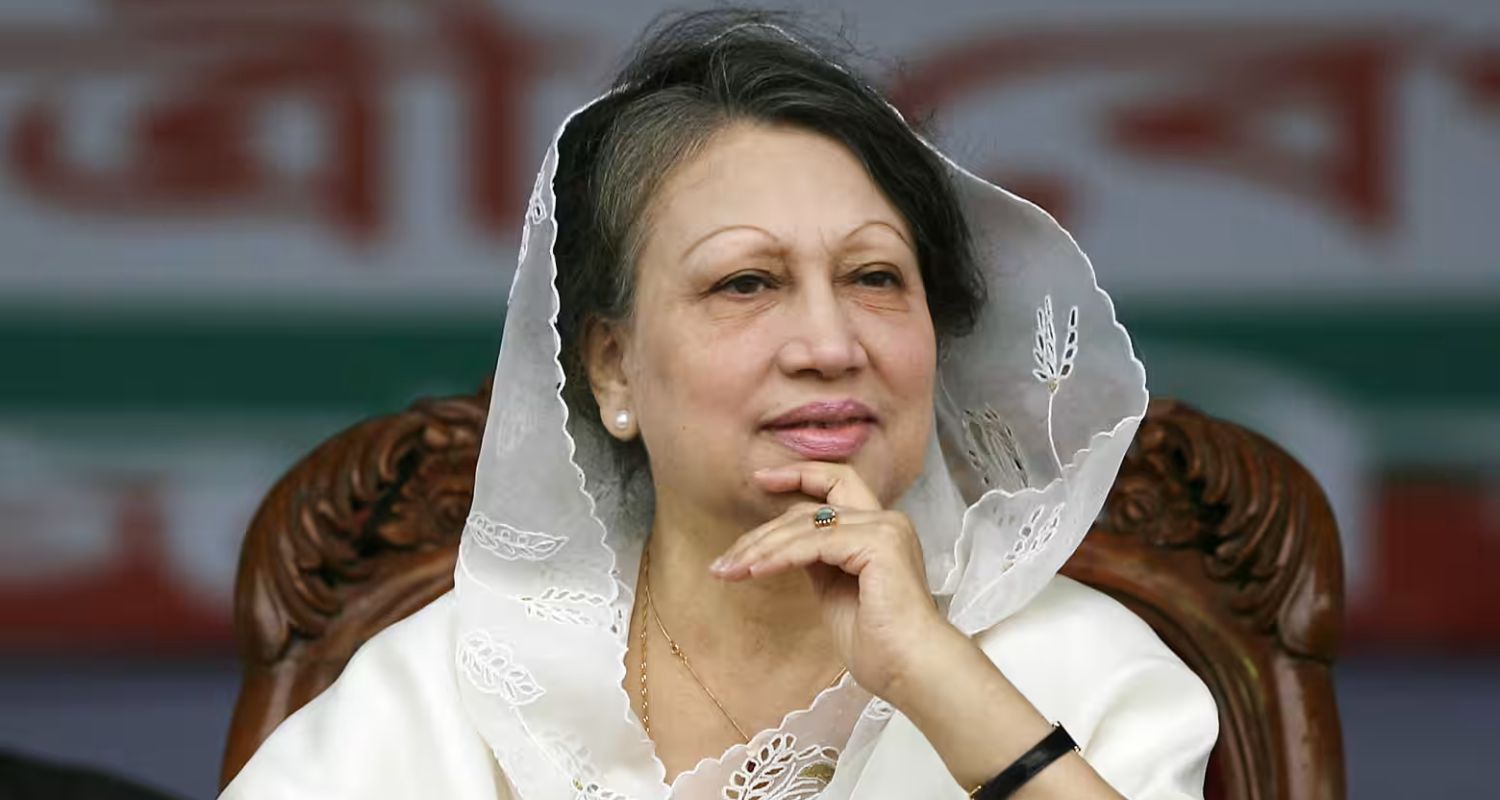
Khaleda Zia, Bangladesh’s first female prime minister, passes away at 80. She led the country twice and was a key political figure in BNP and national politics.
Khaleda Zia, the first woman to serve as Bangladesh’s prime minister and one of its most influential political leaders, passed away on Tuesday at the age of 80. She died around 6 a.m. local time, shortly after performing the Fajr prayers, according to a statement from her party, the Bangladesh Nationalist Party (BNP).
“We pray for the forgiveness of her soul and request everyone to offer prayers for her departed soul,” the BNP said on its official Facebook page.
From Tragedy to Leadership
Born in Jalpaiguri, then part of British India’s undivided Dinajpur district, Khaleda Zia entered politics under tragic circumstances. Her husband, Ziaur Rahman, former president of Bangladesh and founder of the BNP, was assassinated in a military coup in 1981. Following his death, Zia rose as a central figure in the movement against military rule and later played a key role in ousting dictator Hussain Muhammad Ershad in 1990.
In 1991, she made history by becoming Bangladesh’s first female prime minister, serving from 1991 to 1996. She returned to power for a second term from 2001 to 2006. Her political career was defined by her rivalry with Sheikh Hasina, leader of the Awami League, a dynamic that shaped decades of Bangladeshi politics, elections, and street-level political contests.
Family and Personal Life
Zia is survived by her elder son, Tarique Rahman, his wife Zubaida Rahman, and their daughter Zaima Rahman. Tarique returned to Bangladesh on December 25 after 17 years in exile and currently serves as BNP’s acting chairman. Her younger son, Arafat Rahman Koko, passed away in Malaysia several years ago.
also read:- 15-Year-Old Girl Kanishka Solanki Dies by Suicide in…
Health Struggles and Political Constraints
Zia had long battled multiple health issues, including advanced liver cirrhosis, arthritis, diabetes, and heart problems, often traveling abroad for treatment. Her declining health significantly affected her political career. In 2018, she was imprisoned following a corruption conviction, which she consistently described as politically motivated. She was placed under house arrest and barred from travel and politics until restrictions eased following the ouster of Sheikh Hasina’s government.
Earlier this year, the interim government allowed Zia to travel abroad for medical treatment, following repeated rejections of her requests under the previous administration.
Legal Battles and Acquittal
Even after stepping back from active politics, Khaleda Zia remained entangled in legal proceedings. In January 2025, the Supreme Court acquitted her in the final corruption case, paving the way for her to contest the February 2025 general elections.
Legacy
Khaleda Zia’s political journey—from widow of a slain president to Bangladesh’s first female prime minister—cemented her place as a historic and transformative figure in Bangladeshi politics. Her rivalry with Sheikh Hasina shaped generations of governance, political debates, and policy-making in the country.
Zia’s passing marks the end of an era for Bangladesh, with political leaders and citizens alike paying tribute to her decades-long contributions to the nation’s democratic landscape.
For More Hindi News:- http://newz24india.com