
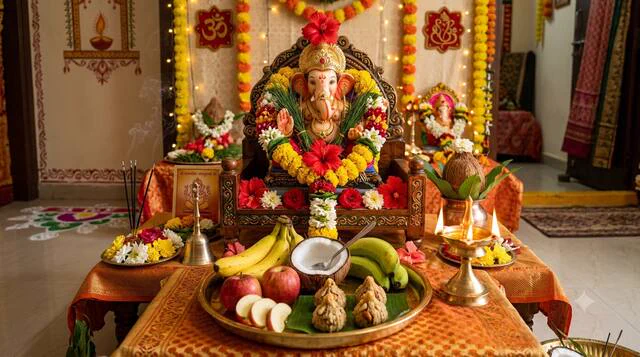
Parivartini Ekadashi 2026 falls during Ganesh Utsav. Know whether rice or wheat modaks can be offered to Lord Ganesha and fasting-friendly options.
Parivartini Ekadashi 2026 will be observed during Ganesh Utsav, creating a unique situation for devotees who have Lord Ganesha installed at home while also observing an Ekadashi fast. Since rice, wheat and other grains are generally avoided during Ekadashi fasting, many devotees may wonder whether traditional grain-based modaks can still be offered to Bappa.
The good news is that devotees do not need to stop worshipping Lord Ganesha or offering naivedya. However, if someone in the family is observing the Ekadashi fast, choosing fruits, dry fruits or grain-free modaks can be a convenient option.
When Is Parivartini Ekadashi 2026?
In 2026, Ganesh Chaturthi will be celebrated on September 14, while the main Ganesh immersion will take place on September 25 on Anant Chaturdashi. This means Lord Ganesha will remain present in many homes and public pandals when Ekadashi arrives.
According to the given calendar details, the Ekadashi tithi begins at around 8 PM on September 21 and continues until approximately 9:43 PM on September 22. Due to the Udaya Tithi rule, devotees will observe the fast on Tuesday, September 22. The fast will be broken during the Parana period on September 23. Exact timings can differ slightly depending on the local Panchang.
Can Rice or Wheat Modaks Be Offered to Lord Ganesha?
Modaks are prepared using different ingredients depending on regional and family traditions. Traditional Ukadiche Modaks are generally made with rice flour, while other varieties may contain wheat flour, refined flour, semolina or gram flour.
All these ingredients are considered grain-based, which is why devotees following a strict Ekadashi diet generally avoid eating them.
However, the fasting rules primarily apply to the person observing the vrat. Whether grain-based food can be offered as naivedya depends on the family’s religious tradition and the guidance followed at home.
Therefore, offering a regular modak to Lord Ganesha is not universally considered a mistake. In some Vaishnav traditions, however, devotees avoid cooking grains altogether on Ekadashi and prepare fruit-based offerings for the deities.
Because traditions differ, devotees should follow the practice prescribed by their family priest, guru or established household tradition.
What Can You Offer Bappa on Ekadashi?
During Parivartini Ekadashi 2026, devotees who want to keep the offering completely compatible with a grain-free fast can choose fruits, nuts and other fasting-friendly ingredients.
Some suitable options include:
- Bananas, apples and guavas
- Coconut
- Makhana
- Dry fruits and nuts
- Milk-based sweets, where permitted
- Coconut and dry-fruit modaks
- Mawa-based modaks
Modaks prepared with fasting flours such as sago, amaranth or water chestnut flour, if permitted by the family’s fasting tradition
Those buying fasting-friendly modaks from the market should check the ingredient list carefully. Some products marketed as fasting foods may contain refined flour, semolina, cornflour or regular salt.
What If Regular Modaks Are Offered?
If rice, wheat, semolina, gram flour or refined flour modaks are offered to Lord Ganesha, a person observing a strict Ekadashi fast should generally avoid consuming them on that day.
The prasad should not be disrespected or wasted. Family members who are not fasting can consume it. If everyone at home is fasting, perishable items such as milk- or mawa-based modaks should not simply be kept overnight without proper storage.
For this reason, preparing fruit- or dry-fruit-based modaks can be a practical option when the entire household is observing the vrat.
Being offered as prasad does not automatically change the dietary rules of an Ekadashi fast. Devotees should continue to follow the restrictions associated with their chosen vrat tradition.
also read:- Why Do Devotees Perform Ganesh Visarjan? Know The Story…
Should Ganesha or Vishnu Be Worshipped First?
According to the general worship sequence followed by many Hindu households, devotees begin their daily puja with Ganesh Vandana. After taking a bath, devotees can first offer prayers to Lord Ganesha along with durva grass, flowers and fruits.
After this, they can worship Lord Vishnu or his Vamana form while taking the vow of the Ekadashi fast.
Devotees may offer yellow flowers, basil leaves, fruits and Panchamrit to Lord Vishnu. Basil leaves for Ekadashi worship are traditionally plucked a day earlier rather than being plucked on the fasting day.
In the evening, devotees can perform aarti for Lord Ganesha followed by Lord Vishnu. However, if the family’s established tradition follows a different sequence, that practice can be followed.
Why Is Parivartini Ekadashi Considered Special?
Parivartini Ekadashi 2026 is also known by names such as Parshva Ekadashi, Padma Ekadashi and Vamana Ekadashi.
According to religious belief, Lord Vishnu remains in Yoga Nidra during Chaturmas and changes his sleeping position on this Ekadashi. This symbolic change of side is associated with the name Parivartini Ekadashi.
The day is also considered significant for worshipping Lord Vishnu in his Vamana avatar.
The Simple Way to Manage Ganesh Puja and Ekadashi Vrat
For households observing Parivartini Ekadashi 2026 while Lord Ganesha is present during Ganesh Utsav, there is no need to stop offering naivedya to Bappa.
The simplest approach is to offer fruits, coconut, nuts or grain-free modaks prepared from ingredients permitted during the fast.
If the family’s tradition requires regular grain-based modaks to be offered, the person observing Ekadashi should avoid eating those offerings on the fasting day. The prasad can be distributed among people who are not fasting or, where appropriate and safely stored, consumed after the Dwadashi Parana.
This allows devotees to continue their Ganesh worship while also respecting the dietary discipline and religious practices associated with the Ekadashi vrat.
For More Hindi News: http://newz24india.com