
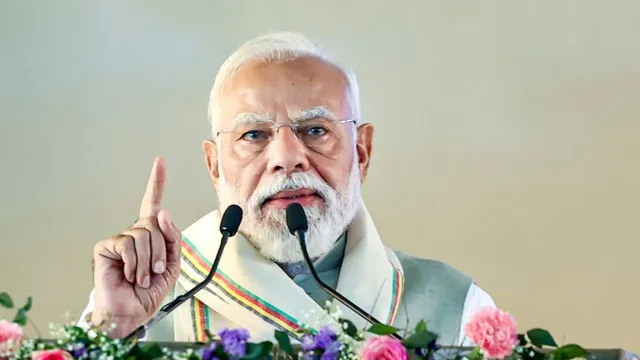
PM Modi aims to implement the Women’s Reservation Act by 2029. Learn about the special Parliament session and amendments for women-led governance in India.
In a landmark move toward gender parity in Indian politics, Prime Minister Narendra Modi has reaffirmed his government’s commitment to operationalizing the Women’s Reservation Act (Nari Shakti Vandan Adhiniyam) before the 2029 General Elections. Speaking on Tuesday, the Prime Minister emphasized that this legislation is not merely a legal provision but a cornerstone for “women-led governance” in a developing India.
Focus on Women-Led Governance
The Prime Minister’s remarks came as a response to an insightful article by Union Minister Annpurna Devi, which highlighted the necessity of inclusive governance. PM Modi noted that for India to reach its goal of becoming a Viksit Bharat (Developed India), representation must translate into “real influence.”
“Our government has consistently prioritized Nari Shakti (women power) in every sphere. With the Women’s Reservation Act laying the foundation, India is transitioning toward a future where women are at the helm of decision-making,” PM Modi stated.
ALSO READ:- Jan Vishwas 2026: Decriminalize Minor Offences
Special Parliament Session to Fast-Track Implementation
To ensure the Women’s Reservation Act is implemented by 2029, the government has announced a special three-day extension of the Parliament session from April 16 to April 18, 2026. This session aims to discuss and pass necessary constitutional amendments that could decouple the reservation from the lengthy census and delimitation processes.
Key highlights of the proposed roadmap include:
33% Reservation: Ensuring one-third of seats in the Lok Sabha and State Legislative Assemblies are reserved for women.
Constitutional Amendments: Overcoming technical hurdles related to the redrawing of constituency boundaries (delimitation).
Increased Seats: Reports suggest the government may consider increasing the total number of Lok Sabha seats to ensure no existing representation is diminished while accommodating the new quota.
A Call for Political Consensus
The Prime Minister has issued a heartfelt appeal to all political parties to rise above partisan calculations and support the early rollout of the Women’s Reservation Act. He described the move as a historic opportunity to win the trust of the nation’s “mothers and daughters.”
While some opposition leaders have raised questions regarding the timing and the legal framework, the Prime Minister urged a “consensus-based approach” to ensure that the benefits of the Women’s Reservation Act reach the grassroots level by the next major election cycle.
The Road to 2029
Originally passed in 2023, the Nari Shakti Vandan Adhiniyam was initially tied to the completion of the next census. However, the current government’s proactive stance suggests a strategic shift to bring the Women’s Reservation Act into force much earlier than anticipated.
By empowering women to not just occupy seats but to lead the legislative agenda, India is setting a global precedent for democratic inclusivity. As the special session nears, all eyes are on Parliament to see if a unanimous path forward can be forged for the Women’s Reservation Act.
For More Hindi News: http://newz24india.com