
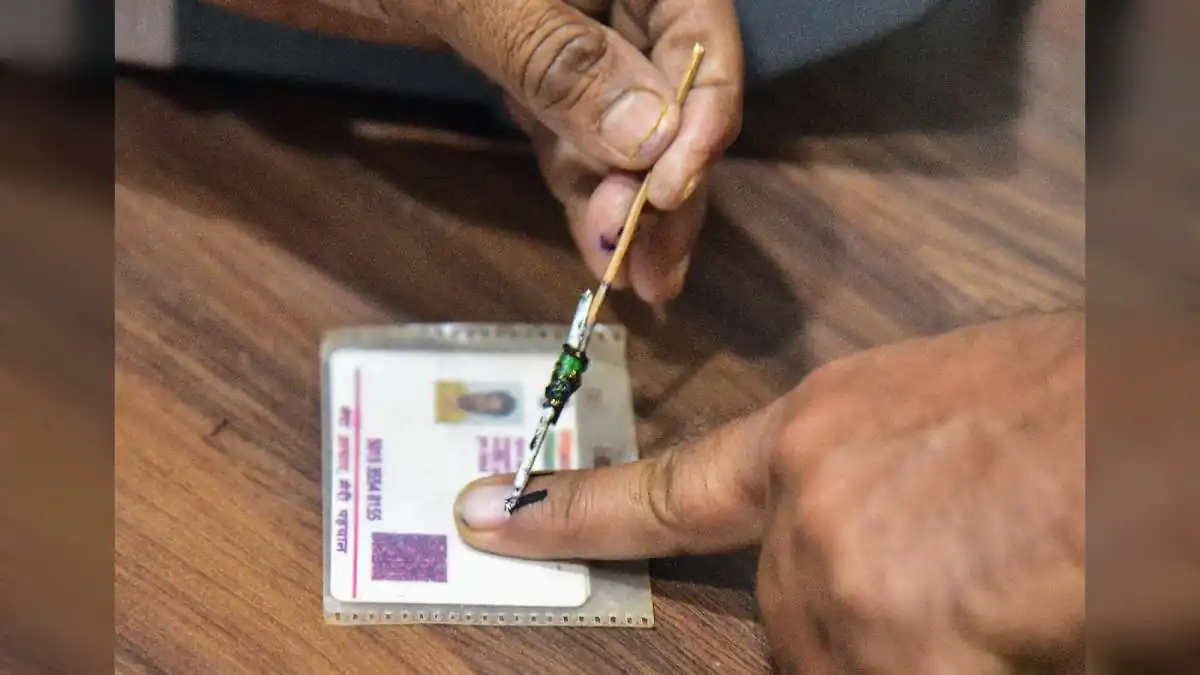
Rajasthan civic elections first phase records 76.41% voting across 162 urban bodies, with Arnod recording the highest turnout of 91.98%.
The first phase of the Rajasthan civic elections witnessed a strong voter turnout, with 76.41% of eligible voters casting their ballots across 162 urban local bodies in 39 districts on September 9. While several districts recorded an increase compared with the previous election, some areas saw a decline in participation.
According to the State Election Department, voting was conducted for councillor posts across 5,393 wards. Nearly 43.95 lakh voters exercised their franchise during the first phase, in which more than 20,000 candidates contested the elections.
The first phase covered four municipal corporations, 27 municipal councils and 131 municipalities. Voting for the remaining urban local bodies is scheduled for September 11, while counting of votes will take place on September 14.
Arnod Records Highest Turnout
The highest voter participation in the first phase of the Rajasthan civic elections was recorded in Arnod Municipality of Pratapgarh district. The area registered an impressive 91.98% turnout.
On the other hand, Bhilwara Municipality recorded the lowest turnout at around 63.68%, according to election officials. The varying turnout across districts has already triggered political interpretations, with BJP, Congress and independent candidates assessing whether increased voting indicates support for the ruling side or reflects a possible desire for change.
District-Wise Voting Trends
The voting figures showed mixed trends across Rajasthan.
Bhilwara: Turnout declined compared with the previous election. Voting fell from 67.13% to around 63.84%.
Bharatpur: Voting increased from 71.86% to 73.13%. In the 2019 election, Congress had formed the board with support from independent councillors.
Alwar: A marginal rise was recorded, with turnout increasing from 65.36% to 65.75%.
Bikaner: Voting climbed from 66.93% to 68.91%.
Jhalawar: Turnout rose significantly, increasing from around 75% to 79%.
Churu: Voting dropped from 74.30% to 72.81%.
Jhunjhunu: The district witnessed a decline, with turnout falling from 80.90% to 74.79%.
Dholpur: Voting remained almost unchanged, slipping slightly from 74.69% to 74.63%.
Nagaur: Turnout increased compared with the previous election.
Political Parties Assess Voter Turnout
The contrasting voting patterns have become a key talking point in the Rajasthan civic elections. Political parties are examining the rise and fall in turnout across different districts to gauge voter sentiment.
A higher turnout is often interpreted differently by competing political groups. While one side may view increased participation as a sign of public support, opponents may see it as an indication of an impending political shift. However, turnout figures alone cannot determine the final outcome, and the results will become clear only after counting.
With voting in the remaining urban local bodies scheduled for September 11, attention will now shift to the second phase. The counting of votes for the Rajasthan civic elections is scheduled for September 14, when the electoral verdict will reveal which parties and candidates managed to secure the support of voters.
The first phase has already highlighted significant differences in voter participation, from Arnod’s 91.98% turnout to the comparatively lower figures recorded in Bhilwara. These trends are expected to remain a major focus of political discussions until the final results are announced.
For More Hindi News: http://newz24india.com