
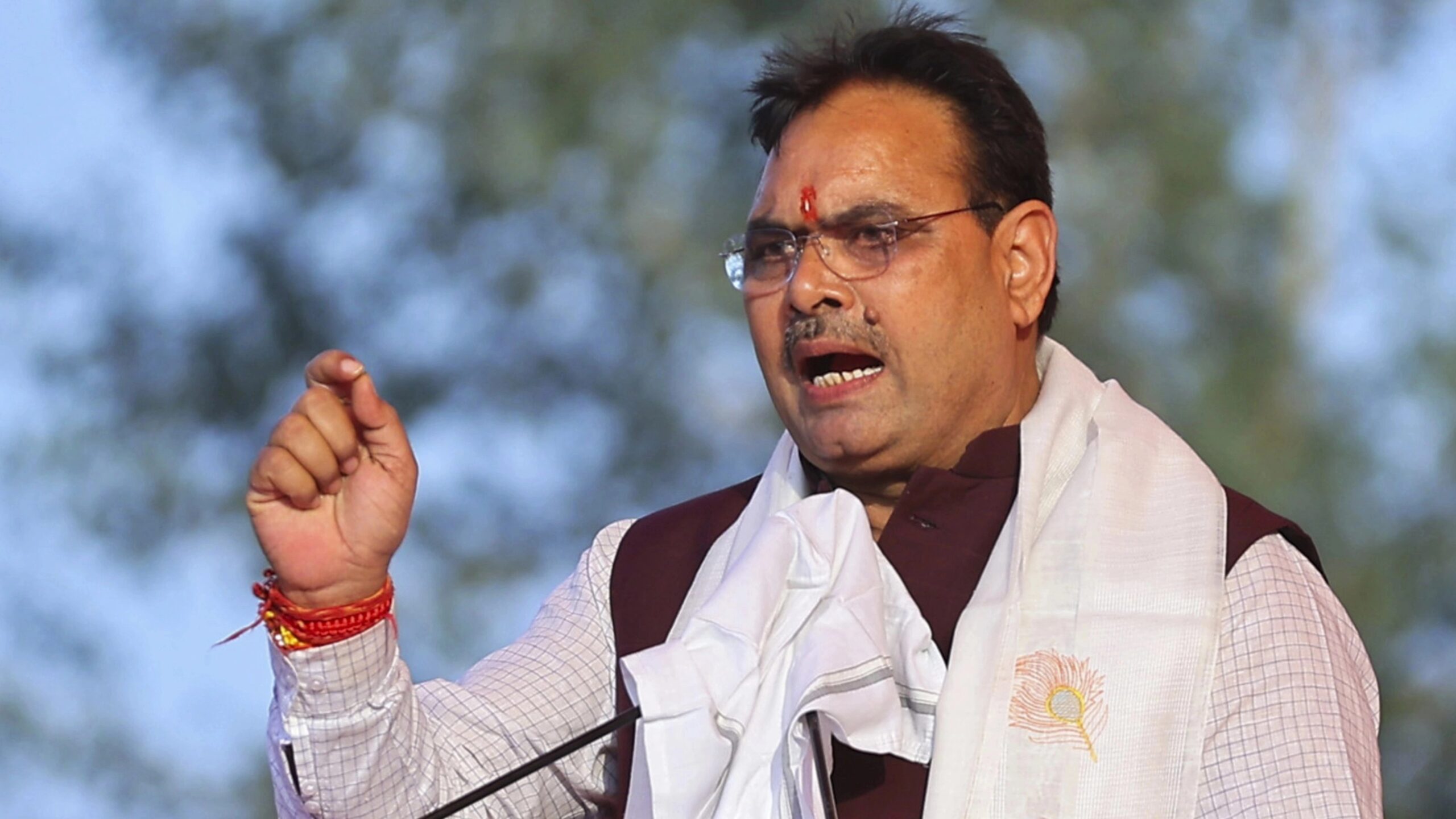
Bhajanlal Sharma criticises Congress over electoral defeats, urging the party to review its leadership, policies and public support instead of blaming EVMs.
Rajasthan Chief Minister Bhajanlal Sharma has criticised the Congress over its response to repeated electoral defeats, arguing that a party must examine its leadership, policies and public support rather than question the electoral process. He said that the outcome of elections reflects the public mandate and that democratic institutions must be respected regardless of whether voting takes place through ballot papers or Electronic Voting Machines (EVMs).
The remarks focus on the importance of accepting election results and conducting an honest assessment of political performance. According to the criticism, repeatedly questioning the voting system without addressing organisational weaknesses does little to rebuild public confidence.
Bhajanlal Sharma Questions Congress’s Response to Election Results
The central argument attributed to Bhajanlal Sharma is that electoral setbacks cannot automatically be blamed on the method of voting. Whether elections are conducted using ballot papers or EVMs, political parties must recognise the electorate’s decision and assess why voters may have moved away from them.
The criticism highlights what it describes as Congress’s reluctance to undertake meaningful introspection after successive electoral defeats. It argues that the party should focus on understanding public concerns, reviewing its political strategy and evaluating the effectiveness of its leadership.
The broader message is that Bhajanlal Sharma on Congress electoral defeats centres on accountability and the need for political parties to respond constructively to voters’ decisions.
Ballot Paper Elections Become Part of the Political Debate
The statement refers to elections for 28 Legislative Council seats across Uttar Pradesh, Maharashtra, Bihar and Karnataka, claiming that Congress secured zero seats in those contests conducted through ballot papers.
The example is being used to argue that electoral performance cannot be explained solely by objections to EVMs. However, the specific election figures and the party-wise results should be verified against official election records before publication.
also read:- CM Bhajanlal Sharma Meets Workers In Diggi, Discusses Gram Panchayat Election Preparations
The argument also raises a wider political question: if a party performs poorly in elections conducted using different voting methods, should it review its organisational strategy and voter outreach rather than focus exclusively on the voting mechanism?
Congress Asked to Review Leadership and Policies
The criticism calls on Congress to examine several factors that may influence its electoral performance, including leadership decisions, policy positions, organisational strength and its connection with voters.
Political parties depend on public confidence, effective communication and the ability to address local and national concerns. When electoral results fall short of expectations, reviewing candidate selection, campaign strategy and grassroots organisation can help identify areas that need improvement.
The remarks suggest that Bhajanlal Sharma on Congress electoral defeats is part of a broader political debate over accountability and how parties respond to an unfavourable mandate.
Respecting the Public Mandate Is Central to Democracy
The statement emphasises that the electorate’s verdict is fundamental to democratic governance. Parties have the right to raise concerns about election procedures through the appropriate legal and institutional channels, but such claims should be supported by evidence.
At the same time, accepting an election result does not prevent political parties from seeking lawful scrutiny where credible concerns arise. Democratic accountability requires both respect for the mandate and transparent examination of specific allegations when they are substantiated.
The criticism of Congress argues that political recovery requires more than questioning the system. It requires understanding voters’ expectations, taking responsibility for shortcomings and developing policies that respond to public needs.
Political Accountability Remains the Key Message
The remarks attributed to Bhajanlal Sharma underline the importance of introspection after electoral losses. They contend that parties seeking to regain public support must assess their leadership, policies and engagement with citizens rather than rely on explanations that do not address the reasons behind their performance.
Ultimately, Bhajanlal Sharma on Congress electoral defeats frames the issue as one of political responsibility and respect for democratic outcomes. The statement’s central message is that a public mandate should be acknowledged, while any concerns about electoral procedures should be pursued through evidence-based and constitutionally recognised mechanisms.
For Congress, the challenge is to determine what changes may be needed to strengthen its public connect and electoral prospects in future contests.
For More Hindi News: http://newz24india.com