
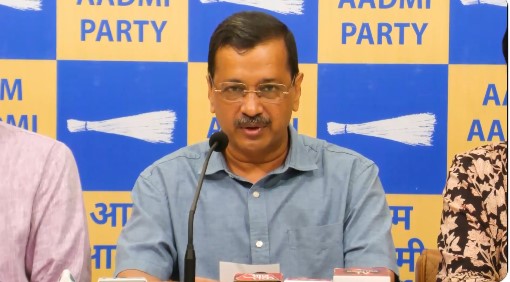
Arvind Kejriwal raises E20 fuel concerns and urges people to pause petrol and diesel vehicle purchases until the government clarifies its stand.
Aam Aadmi Party national convenor Arvind Kejriwal has raised fresh E20 fuel concerns, urging people to hold off on purchasing new petrol and diesel vehicles until the Centre clarifies its position on the higher-ethanol fuel blend.
Speaking at a press conference in Goa, Kejriwal questioned the government’s approach to the implementation of E20 fuel and alleged that adequate testing had not been carried out before its wider adoption. He also claimed that vehicle mileage has declined considerably since the rollout of the fuel blend.
Kejriwal Raises Questions Over Vehicle Mileage
Kejriwal claimed that the mileage of two-wheelers, motorcycles, scooters, cars, SUVs and other petrol-powered vehicles could have fallen by around 25–30 per cent. He argued that such a reduction could increase the overall fuel expenses of vehicle owners.
His comments have added to the ongoing E20 fuel concerns, particularly among consumers who rely heavily on petrol-powered vehicles for daily commuting.
Kejriwal appealed to consumers to wait for greater clarity from the government before making decisions to purchase petrol or diesel vehicles.
Goa Could Face a Bigger Impact, Says Kejriwal
The AAP leader highlighted Goa’s relatively high vehicle ownership while explaining why he believes the state could be particularly affected by the policy.
According to figures cited by Kejriwal, around 45 per cent of families in Goa own a car, while approximately 86 per cent of people have access to a two-wheeler. He claimed that, after accounting for households that own both types of vehicles, nearly 85–90 per cent of families could be affected by changes associated with E20 fuel.
These figures, cited by Kejriwal, formed a major part of his argument about the impact of E20 fuel concerns on households in Goa.
ALSO READ:- BJP-SAD Alliance In Punjab? Kejriwal Fuels 2027 Election…
Kejriwal Questions Pace of E20 Implementation
Kejriwal also compared India’s ethanol-blending approach with the experience of other countries. He referred particularly to Brazil, which has a long history of ethanol use in its transport sector.
According to Kejriwal, Brazil moved gradually from lower ethanol blends to higher concentrations over several decades. He cited the introduction of E5 in 1931 and E20 in 1985 as examples of the country’s phased approach.
He argued that countries adopting higher ethanol blends generally provided consumers and the automobile sector with considerable time to adjust to the transition.
Brazil Example Cited in E20 Debate
Kejriwal said Brazil’s experience demonstrates the importance of a gradual transition and appropriate vehicle technology when increasing ethanol content in fuel.
He further pointed to Brazil’s use of flex-fuel vehicles, which can operate on different ethanol-petrol combinations, as an example of how vehicle technology can evolve alongside fuel policy.
The comparison was presented by Kejriwal as part of his broader argument that India’s transition should address concerns surrounding vehicle compatibility, mileage and consumer costs.
Government Clarification Sought
The AAP national convenor said the government should explain its position clearly on E20 fuel and address questions being raised by vehicle owners.
The latest remarks have brought E20 fuel concerns back into the political debate, particularly around fuel efficiency, vehicle compatibility and the potential financial impact on consumers.
For now, Kejriwal’s claims regarding mileage reduction and the impact on vehicle owners remain part of the political debate. The government’s clarification and relevant technical data will be important for assessing the actual effect of E20 fuel on different vehicle categories.
As India’s ethanol-blending programme continues to evolve, the discussion around E20 fuel concerns is expected to remain significant for motorists, automobile manufacturers and policymakers alike.
For More Hindi News:- newz24india.com