
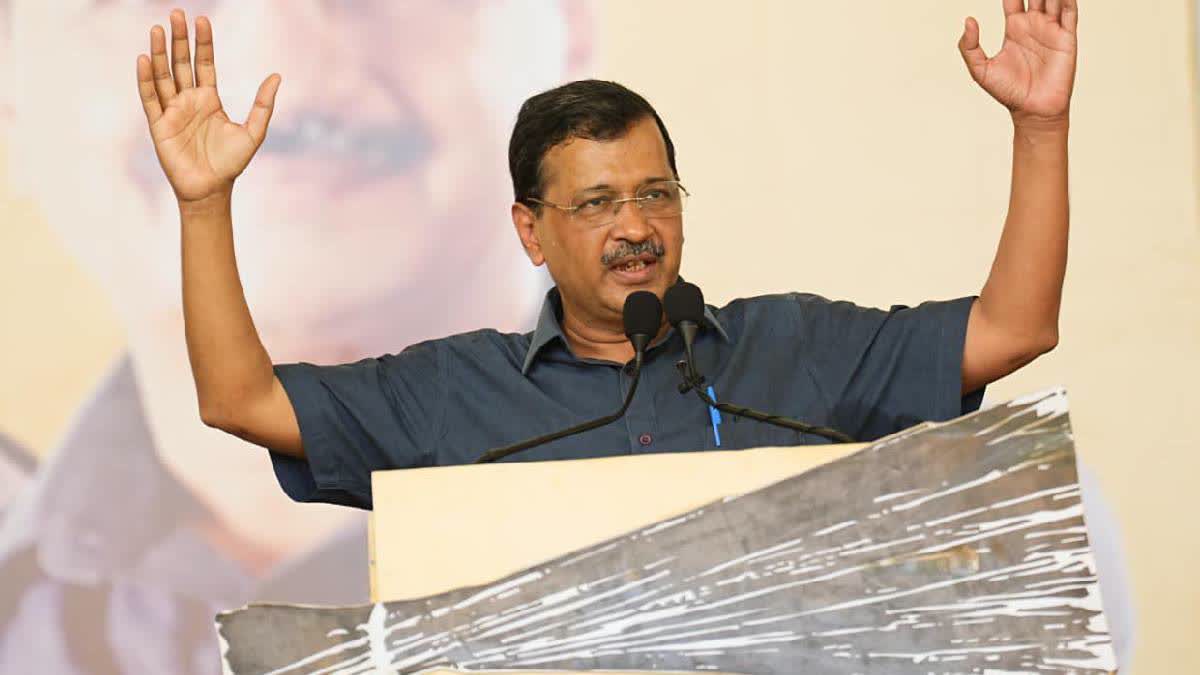
Arvind Kejriwal questions BJP’s surprise win in the 2026 West Bengal elections, citing a shocking shift in mandate. AAP leaders call for poll transparency.
Arvind Kejriwal, the National Convener of the Aam Aadmi Party (AAP) and former Chief Minister of Delhi, has sparked a fresh political debate by raising serious concerns over the Bharatiya Janata Party’s (BJP) landslide victory in the 2026 West Bengal Assembly elections. Expressing deep astonishment, Kejriwal questioned the dramatic shift in the political mandate, noting that a party with a historically limited presence in the state has managed to seize power with a staggering majority.
Questioning the “Unbelievable” Surge
During a recent media interaction, Arvind Kejriwal pointed to the historical electoral data of 2015 and 2016 to highlight what he describes as an “incomprehensible” rise. He remarked that in previous cycles, the BJP struggled to secure more than a handful of seats in states like Delhi and West Bengal.
“It is difficult to understand how the BJP, which won only three seats in Bengal just a few years ago, has now reached a position of such dominance. This change in the political landscape is both sudden and surprising,” Kejriwal stated.
The AAP leader Arvind Kejriwal further noted that while there are various claims regarding the popularity of Prime Minister Narendra Modi, the scale of this victory—especially at a time when many perceived a decline in the ruling party’s influence—raises significant questions about the underlying electoral process.
also read:- AAP Leader Sanjay Singh Questions Election Process,…
जिस दिल्ली और बंगाल को भाजपा ‘मोदी वेव’ की चरम सीमा पर नहीं जीत पाई.. 2015 में दिल्ली में और 2016 में बंगाल में इनकी 3-3 सीट आई..
उस दिल्ली और बंगाल को भाजपा ने तब जीत लिया जब मोदी जी की लोकप्रियता पूरे देश में पाताल में जा रही… कैसे?
— Arvind Kejriwal (@ArvindKejriwal) May 5, 2026
Sanjay Singh Compares Poll Environment to “International Conflict”
Echoing Arvind Kejriwal’s sentiments, senior AAP leader Sanjay Singh took a sharper tone, comparing the intense political atmosphere and the heavy deployment of security forces in West Bengal to an international conflict zone. Singh criticized the manner in which the elections were conducted, suggesting that the massive presence of central agencies and forces created an environment of intimidation rather than a democratic celebration.
Singh’s remarks have further fueled the ongoing war of words between the AAP and the BJP, with the former indirectly questioning the transparency of the democratic mandate in the eastern state.
A Turning Point in Bengal Politics
The 2026 election results have sent shockwaves through the political establishment. The BJP successfully breached what was once considered the “impenetrable fortress” of the Trinamool Congress (TMC), securing 206 seats in the 293-member assembly. This victory marks the first time the BJP will form a government in West Bengal, effectively ending Mamata Banerjee’s decade-long tenure.
The results have led to a flurry of reactions across the national political spectrum. While the BJP celebrates its “historic mandate” as a rejection of “misrule and corruption,” opposition leaders like Kejriwal and the wider INDIA bloc are calling for a deeper analysis of the factors—including the role of central machinery—that led to such a massive reversal of fortunes.
For More Hindi News: http://newz24india.com