
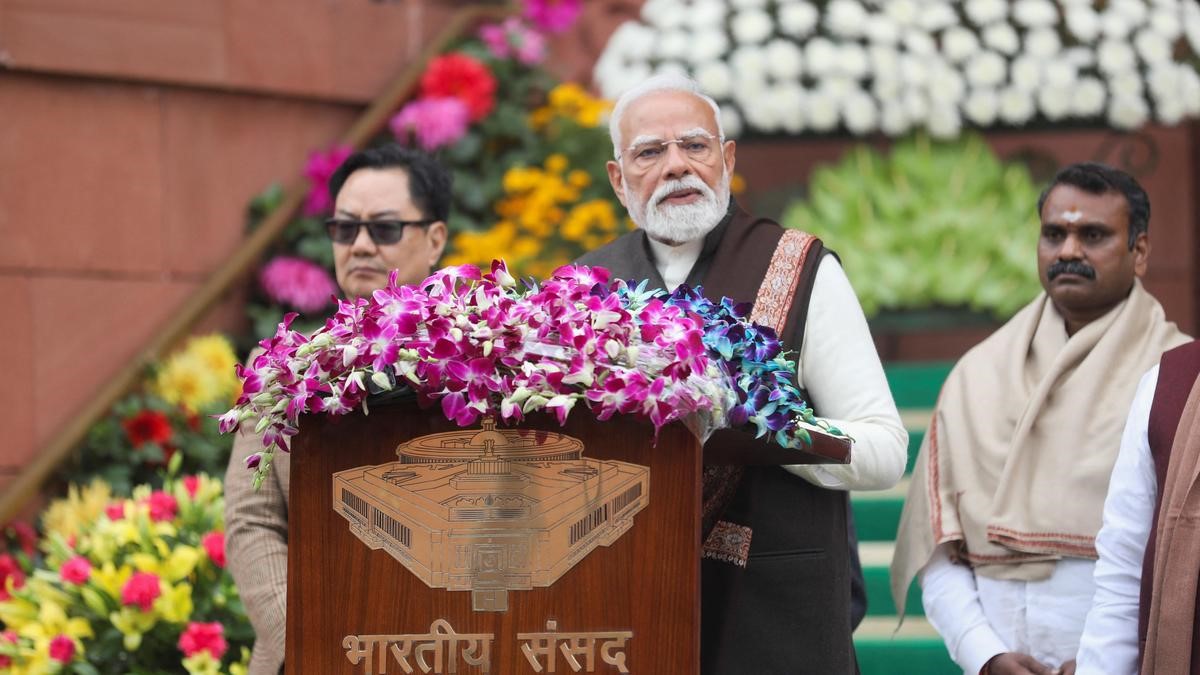
PM Modi unveils India’s 2026 budget to protect the economy from US tariffs, boost defense, infrastructure, and strategic sectors like semiconductors and rare earth minerals, ensuring economic resilience and self-reliance.
Prime Minister Narendra Modi presented India’s annual budget with a clear focus on insulating the economy from external threats, particularly rising tariffs from the United States, while bolstering key sectors like defense, semiconductors, and rare earth minerals.
The budget announced on Sunday includes an 18% increase in defense spending and fresh outlays for infrastructure, signaling India’s intent to remain resilient amid geopolitical tensions with China and Pakistan. Despite these expansions, the government maintained fiscal discipline, avoiding broad-based tax cuts or extravagant spending, keeping total outlays in check in a year marked by crucial state elections.
Economic Strategy in a Volatile Global Environment
Finance Minister Nirmala Sitharaman highlighted that India faces “an external environment where trade, multilateralism, and supply chains are disrupted.” In response, the budget focuses on boosting exports, attracting long-term investments, and fostering self-reliance in strategic sectors.
The U.S. tariffs, including the 50% duty targeting India’s labor-intensive exports like textiles and furniture, appear to have influenced several provisions in the budget. Modi’s administration aims to counter these challenges by strengthening domestic manufacturing, easing business regulations, and opening sectors like nuclear and finance to greater investment.
“The government continues to emphasize productivity enhancement, deregulation, and sector-specific ease of doing business,” said Madhavi Arora, economist at Emkay Global Financial Services.
also read:- Mahatma Gandhi’s 78th Death Anniversary: President, PM Narendra Modi and Leaders Pay Homage at Rajghat
Strengthening Global Trade Partnerships
India is simultaneously expanding trade ties to offset external threats. The government recently finalized a long-awaited free trade agreement with the European Union and sealed deals with the UK and New Zealand, providing exporters much-needed relief from global tariff pressures.
Self-Reliance and Strategic Industry Boost
Budgetary allocations also prioritize India’s strategic self-reliance. Funding has been earmarked to strengthen semiconductor and pharmaceutical production, as well as mining and processing of rare earth minerals in mineral-rich eastern and southern states. “These initiatives are essential for a resilient industrial ecosystem capable of thriving amid global uncertainties,” said Anish Shah, CEO of Mahindra Group.
Growth Outlook and Challenges Ahead
The government projects a GDP growth of 6.8%-7.2% for the coming fiscal year, though market analysts remain cautious, forecasting around 6.6%. Critics argue that the budget falls short on addressing pressing concerns such as youth unemployment and low household savings, while the government continues to prioritize stability and fiscal targets.
“This budget was a crucial step given the unpredictable geopolitical climate,” said Angshuman Bhattacharya, partner at EY-Parthenon. “It is designed to safeguard India’s economic trajectory while reinforcing strategic industries.”
With the focus on fiscal prudence, trade resilience, and strategic self-reliance, PM Modi’s budget aims to prepare India for a volatile global environment while laying the groundwork for long-term economic stability.
For More Hindi News:- http://newz24india.com